This post may contain affiliate links. For educational purposes only, not medical advice. Details
If you're in your 60s or 70s and wondering whether it's too late to change how you eat, let me answer that right up front: it isn't. Some of the most rewarding progress I've seen in the readers I hear from comes from people in exactly your age group. In fact, when I look at who actually commits to this way of eating and sticks with it, older adults are consistently among the most dedicated. You've lived long enough to be done with fads, and you want something that works.
The truth is, starting carnivore after 60 isn't a scaled-down version of starting at 30. There are real differences worth respecting, and a few extra guardrails worth putting in place. Let me walk you through them the way I would if we were sitting across the table from each other.
First Things First: Talk to Your Doctor
I put this section first on purpose. By 60, most people are managing at least one health condition, and many are taking daily medications. Carnivore can change your body fast, and that's exactly why your doctor needs to be in the loop before you start.
If you're taking medications or have been diagnosed with any medical condition, you need individualized medical oversight. Don't make changes without consulting your doctor. Here's why that matters in practical terms:
- Blood pressure medications. Many people find their blood pressure comes down when they cut processed food and refined carbs. If your medication dose stays the same while your pressure drops, you can end up dizzy or lightheaded. Your doctor may need to adjust things, and only they can make that call.
- Diabetes medications. This is the big one. Insulin and drugs like sulfonylureas are dosed for the carbs you currently eat. Cut carbs sharply without medical supervision and blood sugar can drop dangerously low. Do not adjust these on your own.
- Blood thinners. Some medications interact with changes in diet, so your care team should know what you're planning.
None of this means you can't do carnivore. It means you do it with your doctor watching your numbers, which honestly is how everyone should do it anyway.
Why Protein Matters More After 60, Not Less
Here's the piece of conventional wisdom I most want to push back on. Somewhere along the way, older adults got the message to eat lightly. Small portions, lean everything, go easy on the meat.
Research suggests the opposite is closer to the truth. As we age, our muscles become less responsive to protein, a phenomenon sometimes called anabolic resistance. In plain language, the same steak that built muscle at 35 builds less at 70. So older adults appear to need more protein per meal, not less, just to hold onto the muscle they have.
And holding onto muscle after 60 isn't about looking good at the beach. It's about getting off the floor if you fall. Carrying your own groceries. Staying independent for another 20 years. From my experience coaching, protecting muscle is the single most underrated health goal for this age group, and carnivore makes it simpler because every meal is built around protein.
How much do you actually need? It depends on your weight, sex, and activity level, which is why I'd rather not hand you a generic number. Our free carnivore calculator will work out a personalized protein and fat target for your body. It takes about a minute, costs nothing, and gives you something concrete to cook from instead of guessing.
Realistic Expectations for the First Month
Let me be honest about the first few weeks, because I'd rather prepare you than surprise you.
Week one can be rough. As your body shifts from burning carbs to burning fat, many people go through an adjustment period. Fatigue, headaches, and irritability are common, and they usually trace back to fluids and electrolytes rather than the meat itself. Salting your food generously helps most people. Fasting or restricting on top of a new diet is something I'd skip entirely at this stage, and if you take any medications, changes like this are another reason to have your doctor involved from day one.
Weeks two and three are transitional. Digestion often needs time to adjust to a meat-heavy plate. Some readers report loose stools early on, others the opposite. Both usually settle. If odd symptoms hang around, like flushing or headaches after certain aged or processed meats, it's worth reading my piece on histamine intolerance on carnivore, because fresher meat sometimes solves problems people blame on the whole diet.
Week four is when the good stuff tends to show up. The wins readers in their 60s and 70s mention most often aren't dramatic scale drops. They're quieter and, I'd argue, better. Steadier energy through the afternoon. Less joint stiffness in the morning. Clearer thinking. I can't promise you those results, and anyone who does is selling something. But those two themes, joint pain and energy, come up again and again in the messages I get from older readers.
A Simple Food List to Start
You don't need exotic organ meats or a chest freezer to begin. Here's the boring, effective starting list I suggest:
- Ground beef. Cheap, easy to chew, easy to cook, and easy on digestion. This can be the backbone of your first month.
- Eggs. Inexpensive protein with built-in fat. Scrambled, boiled, fried in butter, whatever you enjoy.
- Roasts and slow-cooked cuts. Chuck roast in a slow cooker gives you tender meat for days, which matters if dental work makes steak a chore.
- Butter or tallow. For cooking and for adding fat if you're losing weight faster than intended.
- Salt. Not optional. Salt your food to taste, and then a little more in the first two weeks.
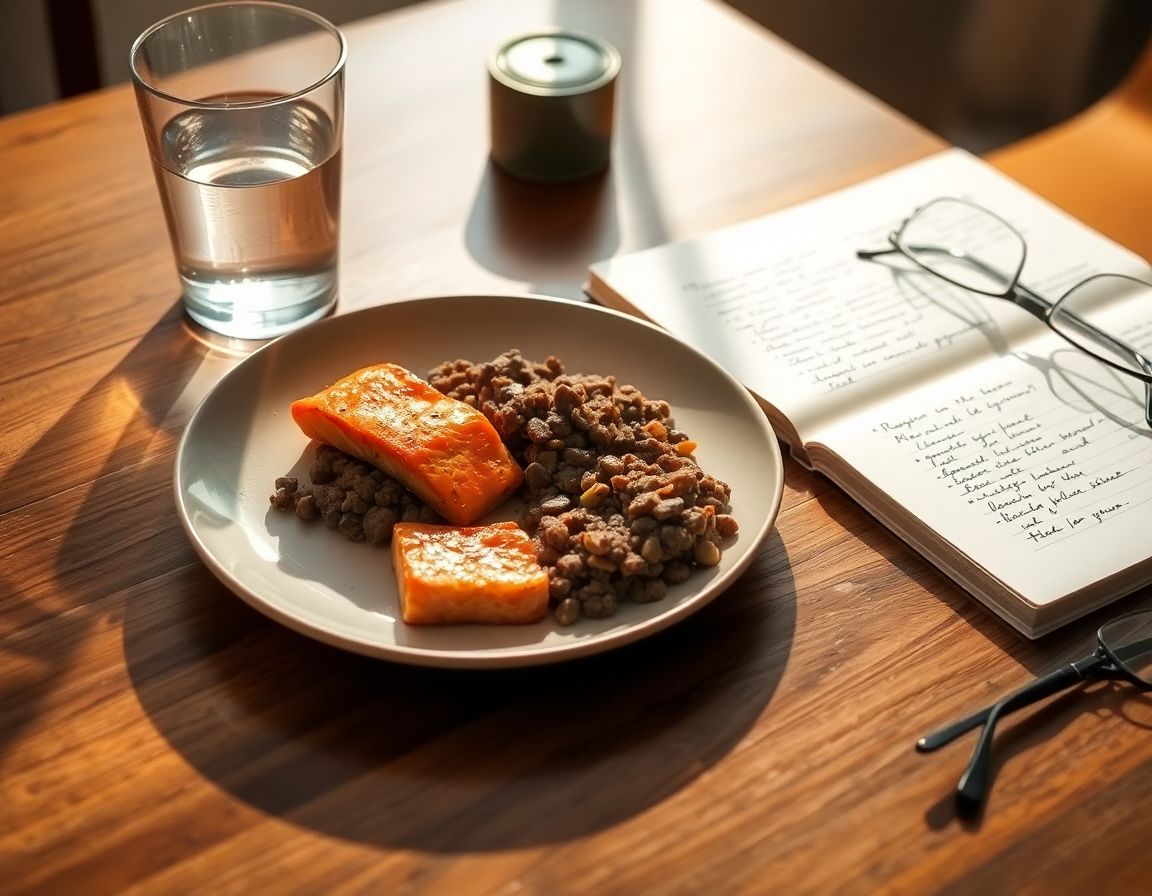
- Fish and canned salmon or sardines. Simple, soft-textured protein with no cooking skill required.
Notice what's not on the list: rules about eating only beef and water. Some people eventually experiment with stricter versions, and if that interests you down the road, Chloe wrote a good explainer on the lion diet and how to transition, which uses a strict elimination phase and then expands foods back in. But you don't start there. Start simple, keep foods you tolerate well, and adjust from evidence, not ideology. Carnivore is a tool, not a religion.
How Much Should You Eat? Get Your Numbers
Portion guessing is where most beginners over 60 go wrong, in both directions. Some eat too little protein out of old habits and lose muscle along with fat. Others follow "eat fat to satiety" advice written for 30-year-old athletes and stall.
What matters most is matching your intake to your actual body: your age, weight, activity level, and goal. That's exactly what the calculator was built for. Answer a few questions, get a protein floor and a fat target, and start your first week with a plan instead of a hope. If you like seeing how the sausage is made, so to speak, I explained the methodology behind it in my breakdown of macro calculators for carnivore and low carb.
Sixty isn't late. For a lot of the readers I hear from, it turned out to be the year things finally started working. Take it one week at a time, keep your doctor in the loop, and eat your protein.
I'm not a doctor. I've researched this deeply and worked with many people, but I'm not your doctor. If you have health conditions, take medications, or need specific guidance, talk to someone who knows your full medical picture. Everything I write is educational based on research and what I've seen work. Your situation might be different.