
This post may contain affiliate links. For educational purposes only, not medical advice. Details
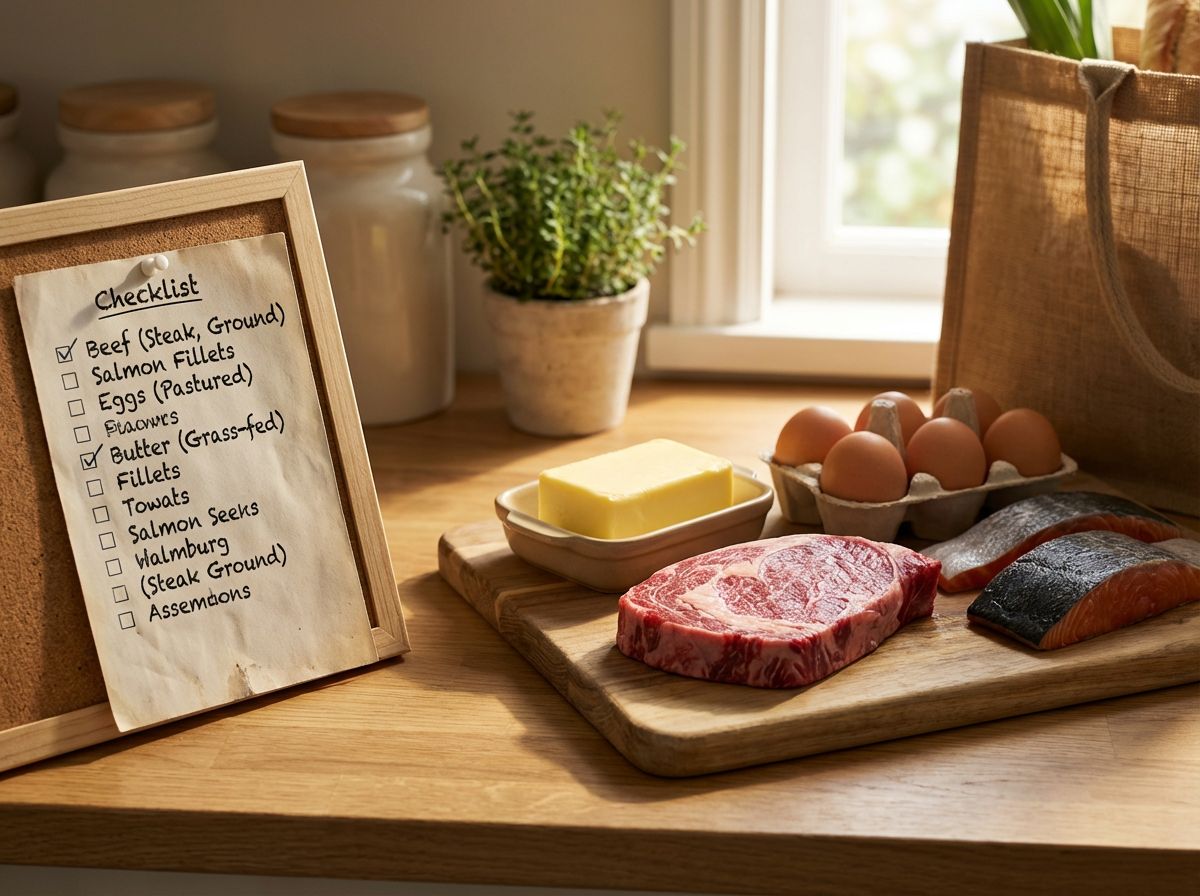
You're going carnivore and you want a straight answer: what can I actually eat?
No philosophy. No 40 minute YouTube rabbit holes. Just the list.
This is the complete carnivore diet food list, organized by category, ranked by nutrient density, and built so you can screenshot it and take it to the store. We cover the obvious stuff, the gray areas people argue about for hours, and what to skip entirely.
The Carnivore Food List in 60 Seconds
Eat: Beef, lamb, bison, pork, chicken, turkey, fish, shellfish, eggs, organ meats, bone broth, and animal fats (tallow, lard, butter, ghee). Salt to season. Water to drink.
Optional, depending on how strict you're going: Dairy such as heavy cream and hard cheese, coffee, black pepper, and a short list of dry seasonings.
Skip: Grains, vegetables, fruit, legumes, nuts, seeds, seed oils, sugar, every sweetener including stevia, and processed meats with fillers.
That's the whole diet. Everything below is the detail: which cuts are worth your money, what to do about dairy, and answers to the questions that show up in week one.
What Are the Types of Carnivore Diet?
People use different names for different levels of strictness, and the names matter because each one changes the list. Here's what they actually mean.
| Version | What's on the list | Who it's for |
|---|---|---|
| Lion diet | Ruminant meat (beef, lamb, bison), salt, water. Nothing else. | The strictest elimination version. Usually run for 30 to 90 days for autoimmune or gut symptoms. |
| Strict carnivore | All meat, fish, eggs, animal fat, salt. No dairy, no plant seasonings, no coffee. | The clean 30 day baseline before you add anything back. |
| Standard carnivore | Everything above plus dairy, coffee, and salt and pepper. | Where most long term carnivores land. |
| Relaxed or modified carnivore | Adds dry seasonings, sugar-free sauces, and for some people a little honey or fruit. | Maintenance, not healing. Easier to stay on for years. |
| Dirty carnivore | Animal foods with no rules about sourcing or processing: fast food patties, sugar-cured bacon, deli meat, pre-seasoned everything. | Adherence over optimization. Fine for staying on plan, useless as an elimination diet. |
| Animal-based | Meat and organs plus raw dairy, honey, and fruit. | Not carnivore in the strict sense. This is Paul Saladino's current approach, and it's a different diet. |
Pick based on your goal, not on what sounds hardcore. If you're trying to work out which food is causing a problem, start at lion or strict, because you can't run an elimination diet with twenty variables in it. If you feel fine and you're maintaining, standard carnivore is far easier to live with.
Going the strict route? We looked at when the lion diet is the right call and when it's overkill.
What Are the Best Meats for Carnivore?
Not all meat is equal. Here's the ranking based on nutrient density, fat content, and how long it keeps you full.
One pattern runs through the whole table: ruminants come out on top. Beef, lamb, bison, goat, and venison carry more iron, zinc, and B12 than poultry does, and their fat keeps you satisfied for hours instead of ninety minutes.
| Meat | Tier | Why it matters |
|---|---|---|
| Ribeye steak | Tier 1 | Ruminant. Close to an ideal fat-to-protein ratio straight off the animal. The gold standard. |
| Ground beef (80/20) | Tier 1 | Ruminant. Cheapest quality protein on the list and endlessly versatile. |
| Chuck roast | Tier 1 | Ruminant. Budget cut, high fat, forgiving in a slow cooker. |
| Brisket | Tier 1 | Ruminant. Very high fat. Cook once, eat off it for four days. |
| Beef short ribs | Tier 1 | Ruminant. One of the fattiest cuts in the case. Expensive per pound, but you eat less of it. |
| Lamb chops and leg | Tier 1 | Ruminant. High in zinc and B12, naturally fatty, strong flavor some people prefer to beef. |
| Bison | Tier 1 | Ruminant. Leaner than beef but packed with iron and B vitamins. Usually grass-fed by default. |
| Venison | Tier 1 | Ruminant. Very lean, so pair it with tallow or butter. Cheap if someone in your family hunts. |
| NY strip | Tier 2 | Leaner than ribeye. Great flavor, solid protein, less satiating gram for gram. |
| Pork belly | Tier 2 | Extremely high fat and cheap. Good energy, easy to overdo. |
| Bacon | Tier 2 | Check the cure for sugar and dextrose. Buy uncured with no added sugar when you can. |
| Pork chops | Tier 2 | Decent fat, budget-friendly, dries out fast. Do not overcook them. |
| Chicken thighs | Tier 3 | Fattier than breast but still lean by carnivore standards. Cheap and easy. |
| Turkey | Tier 3 | Very lean. You'll need added fat or you'll be hungry an hour later. |
| Chicken breast | Tier 3 | Almost pure protein. Works as a side player, fails as a staple. |
The takeaway: red meat and ruminants sit at the top because they have the best nutrient profiles and the most satisfying fat. Poultry works, but it shouldn't be your primary protein. Lean chicken breast alone won't cut it. You'll be hungry, tired, and miserable by day four.
If money is the constraint, ground beef is your best friend. An 80/20 chub from Costco or Walmart gives you everything you need at a fraction of the steak price, and we've written a full breakdown of ground beef meals that come in under three dollars a serving.
Is Seafood Allowed on Carnivore?
Yes. Seafood is animal food. It counts, and on some measures it beats beef.
Plenty of carnivores skip fish because they don't like it, and that's fine. But if you enjoy seafood, it fills the two gaps red meat leaves: omega-3s and iodine.
| Seafood | Tier | Key nutrients |
|---|---|---|
| Wild salmon | Tier 1 | Omega-3s, astaxanthin, vitamin D. Best all-round fish. |
| Sardines (canned) | Tier 1 | Calcium from the bones, omega-3s, B12. Around two dollars a tin. |
| Mackerel | Tier 1 | Very high omega-3s. Excellent canned, better fresh. |
| Oysters | Tier 1 | The highest zinc food there is, plus B12 and copper. Canned smoked oysters count. |
| Shrimp | Tier 2 | High protein, low fat, good selenium. Add butter. |
| Cod and halibut | Tier 2 | Very lean white fish. Fine, but you'll need added fat with them. |
| Crab and lobster | Tier 2 | Nutrient-dense and expensive. A treat, not a staple. |
| Canned light tuna (skipjack) | Tier 2 | Cheap and convenient. The FDA lists it as a best choice at two to three servings a week. |
| Albacore and yellowfin tuna | Tier 3 | Higher mercury than skipjack. The FDA caps these at one serving a week. |
Sardines deserve a special mention. They're the most underrated food in the whole carnivore world. One tin gives you calcium, omega-3s, protein, and B12 for pocket change. If you're doing carnivore on a tight budget, sardines and ground beef can carry you for weeks.
On tuna, the mercury guidance is worth getting right rather than guessing at. The FDA and EPA put canned light tuna in the "best choices" group at two to three servings a week, and albacore and yellowfin in "good choices" at one serving a week. If you're pregnant or feeding children, those limits are the ones that matter.
Can You Eat Eggs on Carnivore?
Yes, and most carnivores do.
Eggs are one of the most nutrient-complete foods that exists. The yolk carries choline, vitamin A, vitamin D, B12, selenium, and the fat that makes the whole thing worth eating. If you tolerate eggs, eat them.
How many? Three to six a day is normal. Some people eat a dozen. There's no magic number, and the old cholesterol warnings around eggs have not held up.
Best preparation: scrambled in butter, fried in tallow, or soft-boiled. Don't throw out the yolk. That's where the nutrition lives.
Some people do react to eggs, usually with bloating or a skin flare, and the reaction is easy to miss because eggs are in everything. If you suspect them, cut them for two weeks and reintroduce. Carnivore works fine without eggs: beef, salt, and water is a complete diet on its own.
If you're new and steak every morning feels like a chore, there's a case for starting with eggs instead of steak.
What Dairy Is Allowed on Carnivore?
Dairy is the most argued-about food in the carnivore world, and the honest answer is that it depends entirely on why you're doing this.
Lactose is the first problem and casein is the second. Aging removes most of the lactose, which is why hard cheese is tolerated far more often than milk.
| Dairy | Tier | The honest read |
|---|---|---|
| Butter | Tier 1 | Almost universally tolerated. Trace lactose. On nearly every version of carnivore. |
| Ghee | Tier 1 | Butter with the milk solids removed, so effectively zero lactose and casein. The safest dairy there is. |
| Heavy cream | Tier 2 | Low lactose, works for most people, easy to drink a thousand calories of without noticing. |
| Parmesan, aged cheddar, gouda | Tier 2 | Aging strips out nearly all the lactose. These are the cheeses most commonly kept on carnivore. |
| Cream cheese and sour cream | Tier 2 | Moderate lactose. Check the label, because many brands add gums and starches. |
| Mozzarella, brie, feta | Tier 3 | Soft and young, so more lactose. More likely to bloat you. |
| Cottage cheese | Tier 3 | Animal-based and high protein, so it's technically carnivore, but it's one of the highest-lactose cheeses and most brands add gums. Strict carnivore excludes it. |
| Milk | Tier 3 | Roughly 12 grams of sugar per cup. Not carnivore on any version of the diet. |
| Yogurt and kefir | Tier 3 | Fermentation cuts the lactose but doesn't remove it. Flavored versions are sugar. Skip them. |
The rule of thumb: if you're doing carnivore for weight loss and dairy doesn't bother you, keep it. If you're doing it for autoimmune symptoms, gut healing, or skin problems, cut dairy completely for 30 days and watch what happens. A lot of people find out that dairy, not meat, was the thing they were reacting to the whole time.
Cheese has one more catch worth knowing about: it's easy to eat and hard to stop eating. If your weight loss has flattened out, cheese is the first thing to look at. We ran through whether cheese is actually stalling your weight loss and what the numbers say.
What About Organ Meats?
Organ meats are the original multivitamin. Gram for gram, nothing else on this list comes close on nutrient density.
You don't have to eat them. Plenty of carnivores do fine on muscle meat alone. But if you want to cover your bases without a supplement shelf, organs are the shortcut.
| Organ | Key nutrients | How to eat it |
|---|---|---|
| Beef liver | A 4 ounce serving carries roughly 19,000 IU of vitamin A and well over 1,000 percent of the daily value for B12, plus folate, copper, and iron. | Pan-fry in butter. Mix a quarter pound into a pound of ground beef. Or freeze it in pea-sized pieces and swallow them like pills. |
| Beef heart | One of the richest natural sources of CoQ10, plus B12, iron, and zinc. | Slice thin and cook it like steak. Mild and beefy. Most people like it on the first try. |
| Kidney | Selenium, B12, riboflavin. | Soak in cold water for 30 minutes first. Strong flavor. Start with a small piece. |
| Bone marrow | Fat-soluble vitamins, collagen, and a lot of fat. | Roast marrow bones at 450F for 15 to 20 minutes. Spread it on meat like butter. |
| Tongue | Zinc, iron, B12, fatty acids. | Slow-cook until tender, then peel the outer skin. Rich, fatty, and better than it sounds. |
| Sweetbreads | Vitamin C, B vitamins, phosphorus. | Soak, poach, then sear in tallow. The gateway organ for people who hate liver. |
How much do you need? One to two servings of liver a week, at 2 to 4 ounces a serving, covers it. You do not need organs every day, and with liver you can genuinely overdo the vitamin A if you eat it daily for months.
If you can't stand the taste, the frozen liver method works. Cut raw liver into pea-sized pieces, freeze them on a tray, then swallow five or six a day with water. No taste at all. We put the actual numbers behind this in our guide to organ dosing, and there's a full nose-to-tail meal plan if you want to build it into a week.
What Fats and Oils Are Carnivore?
This is the section most food lists skip, and it's the one that decides whether you actually feel good on this diet. Lean meat plus no fat equals misery.
- Beef tallow: rendered beef fat. The most carnivore fat there is. High smoke point, cheap if you render it yourself from suet.
- Lard: rendered pork fat. Milder than tallow, great for eggs.
- Butter: mild dairy, grass-fed if the budget allows, but any butter beats no butter.
- Ghee: butter with the milk solids removed. Use it if dairy bothers you.
- Duck fat: excellent flavor, expensive, worth it occasionally.
- Bone marrow: counts as a fat and as an organ.
- Fat trimmed off your own steaks: free. Render it and keep it in a jar.
What to avoid: canola, soybean, sunflower, safflower, corn, grapeseed, and "vegetable oil." These are seed oils, they're not animal foods, and they don't belong on this diet or arguably on any other.
Tallow has had a strange year in the mainstream press. Sarah looked at what beef tallow actually does and why it's suddenly trending, and we compared rendered fat against butter for everyday cooking.
What Foods Should You Avoid on Carnivore?
This is where people get tripped up, because a handful of gray-area foods generate endless argument online. Here's the definitive split.
Always Avoid
- All grains: bread, rice, pasta, oats, cereal, corn, quinoa. No exceptions.
- All vegetables: yes, all of them. Broccoli, spinach, lettuce, peppers, onions, tomatoes, potatoes. There's no "allowed vegetables" list on carnivore, and searching for one is how most people end up back on keto.
- All fruit: including berries, avocado, olives, and lemon.
- All legumes: beans, lentils, peanuts, peanut butter, soy, chickpeas.
- Seed oils: canola, soybean, sunflower, safflower, corn, grapeseed.
- Sugar and every sweetener: including honey, maple syrup, agave, stevia, monk fruit, erythritol, and artificial sweeteners.
- Nuts and seeds: almonds, walnuts, cashews, chia, flax. All plant foods.
- Processed meat with fillers: read the label. Plenty of sausage, deli meat, and jerky carries sugar, dextrose, soy protein, and starch.
Are Vegetables Ever Allowed?
No, and this comes up often enough to answer directly.
Carnivore is an elimination diet. Removing plants is the entire mechanism, whether the target is an autoimmune symptom, a gut problem, or just simplicity. A salad on the side isn't a small deviation, it's the variable you were trying to remove.
If you want a diet with some vegetables in it, that diet exists and it's called keto. It's a reasonable place to start, and plenty of people go keto first and tighten to carnivore later. Just don't call it carnivore while you're doing it, because the results won't tell you anything.
The Gray Areas, Answered Honestly
- Coffee: it's a plant. Strict carnivore says no. Most long-term carnivores drink it anyway with no problem. If you're healing from an autoimmune issue, cut it for 30 days and see. Otherwise black coffee is probably fine, and we went deeper on that in carnivore and coffee.
- Salt: a mineral, not a plant. Universally accepted, and you need more of it than you think once the water weight starts moving.
- Black pepper: technically a plant, but the amount you use is negligible. Most people keep it.
- Dry seasonings: garlic powder, onion powder, and paprika are all plant-derived. Strict carnivore drops them. Standard carnivore keeps them. Our guide to seasonings and condiments sorts the ones that are basically inert from the ones carrying sugar and starch.
- Honey: made by an animal, but it's still sugar. Most carnivore protocols exclude it. Animal-based eaters include small amounts. It is not strict carnivore.
- Bone broth: fully carnivore. Drink it freely. Good for electrolytes and easy on a sore gut.
- Collagen and gelatin: animal-derived and accepted.
- Alcohol: no version of carnivore includes it. Dry spirits are the least bad option if you're going to drink anyway, but it stalls fat loss and worsens sleep.
Can I Eat This? Quick Answers
These are the questions that show up most in our inbox and in search. Short answers, no hedging.
| Food | Carnivore? | Why |
|---|---|---|
| Lettuce and salad greens | No | A plant. Near-zero calories doesn't make it animal food. |
| Corn | No | A grain. One of the ones to be most careful about, because it hides in seasonings and cures. |
| Peanut butter | No | Peanuts are legumes, and most jars add sugar and seed oil on top. |
| Cottage cheese | Only if you include dairy | Animal-based, but high lactose and usually gummed. Not on strict carnivore. |
| Cheese | Usually yes | Hard aged cheese is standard carnivore. Cut it if you're doing an elimination round or you've stalled. |
| Avocado | No | A fruit. Popular on keto, not on carnivore. |
| Pickles | No | A cucumber in brine. It's still a plant. |
| Mayonnaise | Almost never | Nearly every jar is soybean or canola oil. Homemade with egg yolk and tallow is fine. |
| Hot sauce and mustard | Gray area | Plant-derived and often sugared. Check the label, and drop them during an elimination round. |
| Diet soda | No | Artificial sweeteners keep the sweet-craving loop alive, which is half the point of quitting sugar. |
| Bone broth | Yes | Pure animal food. One of the better things you can drink in week one. |
| Butter | Yes | Trace lactose. Included on almost every version of carnivore. |
| Deli meat and jerky | Check the label | Often carries dextrose, soy, and starch. Some brands are clean. Most aren't. |
| Eggs | Yes | Standard on carnivore, and easy to drop if you suspect a reaction. |
How Much Should You Eat?
This depends on your size, your activity, and your goal. Here's the general framework.
Most carnivore men eat 2 to 3 pounds of meat a day. Most women eat 1.5 to 2 pounds. Athletes eat more, desk workers eat less.
Don't count calories. One of the real advantages of this diet is that appetite self-regulates when protein and fat are the only things on the plate. Eat until you're full. Stop when you're satisfied. Eat again when you're hungry.
That said, some people want a number to aim at. Here's the rough breakdown.
| Goal | Daily meat | Daily protein (approx) |
|---|---|---|
| Fat loss, sedentary | 1.5 to 2 lbs | 120 to 160g |
| Maintenance | 2 to 2.5 lbs | 150 to 200g |
| Muscle gain or high activity | 2.5 to 3.5 lbs | 200 to 280g |
Want a number matched to your body instead of a range? The free carnivore calculator gives you protein, fat, and calorie targets in about two minutes, and our macro calculator breakdown explains how the math works if you'd rather see it first. For the protein side specifically, we covered how much protein you actually need on carnivore.
The Carnivore Grocery List
Here's the practical shopping list. This is one week for one person eating about 2 pounds of meat a day.
The Weekly Essentials
- Ground beef 80/20: 5 lbs
- Ribeye or NY strip: 3 to 4 lbs
- Eggs: 2 to 3 dozen
- Butter, grass-fed if the budget allows: 1 lb
- Salt, sea salt or Redmond Real Salt: 1 container
Add If Budget Allows
- Bacon, uncured and no added sugar: 2 lbs
- Salmon fillets: 1 to 2 lbs
- Sardines, canned in olive oil or water: 4 to 6 tins
- Beef liver: half a pound to a pound, frozen in portions
- Lamb chops or ground lamb: 1 to 2 lbs
- Beef tallow: 1 jar
- Heavy cream: 1 pint
- Hard cheese such as parmesan or aged cheddar: half a pound
Where to Buy It
Costco: best prices on Choice ribeye, ground beef in 5 lb tubes, and eggs by the five-dozen flat. Kirkland bacon is uncured and affordable. Rotisserie chicken works in a pinch, but check the ingredients for additives.
Walmart: Great Value 80/20 ground beef is solid at the lowest price point, and their butter is fine. Check the markdown section for steaks at 30 to 50 percent off near the sell-by date, then freeze them the same day.
Local butcher: the best source for organ meats, marrow bones, suet for rendering, and the cuts supermarkets don't carry: tongue, oxtail, cheeks. Build a relationship and ask about bulk pricing on a whole primal.
Online (ButcherBox, Crowd Cow, US Wellness Meats): best for grass-fed and grass-finished if that matters to you. More expensive than retail, more consistent in quality, and they usually run a first-order deal.
Budget Carnivore, Under $10 a Day
If money is tight, this is the bare-bones list that still covers your nutritional bases:
- Ground beef 73/27, the fattiest and cheapest: 2 lbs a day
- Eggs: 4 to 6 a day
- Salt
- Water
That's roughly seven to nine dollars a day depending on where you live. Not glamorous, but nutritionally complete. You can eat like this for months and feel fine. Add liver once a week when there's room, because per pound it's one of the cheapest things in the case. There's a fuller version in our first month budget guide.
Carnivore Staples: The Six Things to Always Have
Strip everything else away and this is the list that keeps you on plan when you haven't shopped, haven't planned, and it's 7pm.
- Ground beef 80/20. Fifteen minutes from freezer to plate.
- Eggs. Three weeks in the fridge and no cooking skill required.
- Butter or tallow. Turns any lean cut into a real meal.
- Salt. The single most common thing beginners under-do, and the reason half of week-one headaches happen.
- Canned sardines or tuna. Shelf-stable protein for the day you didn't shop.
- Frozen liver. Portioned, in a bag, ready once a week.
Salt is worth one more line. Cutting carbs drops your insulin, your kidneys flush sodium and water, and if you don't replace it you get the headache, the leg cramp, and the fatigue that gets blamed on "keto flu." Our breakdown of the carnivore electrolyte problem covers the doses.
Frequently Asked Questions
What can you eat on the carnivore diet?
Meat, fish, shellfish, eggs, organ meats, bone broth, and animal fats such as tallow, lard, butter, and ghee, with salt to season and water to drink. Depending on how strict you are, dairy, coffee, and a short list of dry seasonings are optional additions.
What foods are not allowed on the carnivore diet?
Grains, vegetables, fruit, legumes, nuts, seeds, seed oils, sugar, and all sweeteners including stevia and monk fruit. Processed meats with sugar, dextrose, soy, or starch in the ingredients are also out, so read the label on bacon, sausage, deli meat, and jerky.
Can you eat vegetables on the carnivore diet?
No. Removing plant foods is the entire mechanism of the diet, so there is no allowed vegetable list. If you want a diet that includes some vegetables, keto is the one you're looking for, and plenty of people start there before tightening to carnivore.
Can you eat cheese on the carnivore diet?
On standard carnivore, yes. Hard aged cheeses such as parmesan, aged cheddar, and gouda have almost no lactose left and are the most commonly included. Strict carnivore and the lion diet exclude all dairy. If your weight loss has stalled or you have skin or gut symptoms, cheese is the first thing to cut for 30 days.
Is cottage cheese carnivore?
Technically it's an animal food, but it's one of the highest-lactose cheeses and most brands add gums and stabilizers. It's fine on a relaxed version of the diet if it agrees with you, and it's excluded on strict carnivore.
What is the dirty carnivore diet?
Dirty carnivore means eating only animal foods without any rules about sourcing or processing: fast food patties with the bun removed, sugar-cured bacon, deli meat, pre-seasoned meat. It's easier to stick to than strict carnivore and it works for adherence, but it's useless as an elimination diet because you can't tell what you're reacting to.
Can you do the carnivore diet without eggs?
Yes. Eggs are common on carnivore but they are not required. Beef, salt, and water is a complete version of this diet on its own. If you suspect an egg sensitivity, cut them for two weeks, then reintroduce one and watch for bloating or a skin flare.
What meats can you eat on the carnivore diet?
All of them. Ruminant meat is the best foundation, so beef, lamb, bison, goat, and venison first, then pork, then poultry. Fattier cuts beat lean cuts because they keep you full, which is why ribeye, chuck, brisket, and 80/20 ground beef come up so often.
The Bottom Line
The carnivore food list is shorter than any other diet's list. That's the point. You're not reading ingredient labels for twenty minutes, counting macros across 47 food categories, or googling whether something is allowed.
Meat. Fish. Eggs. Animal fats. Salt. Water.
That's the foundation. Everything else, from dairy to coffee to seasonings, is a choice you make based on your goal and how your body answers.
Start strict. Eat that way for 30 days. Then decide what's worth adding back, one thing at a time, with two weeks between each. Your body will tell you what works, but only if you give it a clean baseline to compare against.
If you want to know how much to eat for your own body and goal, try the free carnivore calculator. Two minutes, no payment, and you leave with a real starting point instead of a range.
Now go fill that cart.
Want this list on your fridge?
I put together a printable carnivore food list card with every animal-based food organized by category. Print it, stick it on the fridge, and you don't have to think about it again. If you're easing in through keto first (totally normal), there's a keto version too. They're $4.49 each.
References:
- Saladino P. The Carnivore Code: Unlocking the Secrets to Optimal Health by Returning to Our Ancestral Diet. Houghton Mifflin Harcourt. 2020.
- Baker S. The Carnivore Diet. Victory Belt Publishing. 2019.
- USDA FoodData Central. U.S. Department of Agriculture, Agricultural Research Service. fdc.nal.usda.gov. 2024.
- U.S. Food and Drug Administration and U.S. Environmental Protection Agency. Advice About Eating Fish. 2021.
- O'Hearn A. Can a carnivore diet provide all essential nutrients? Curr Opin Endocrinol Diabetes Obes. 2020;27(5):312-316.