
This post may contain affiliate links. For educational purposes only, not medical advice. Details
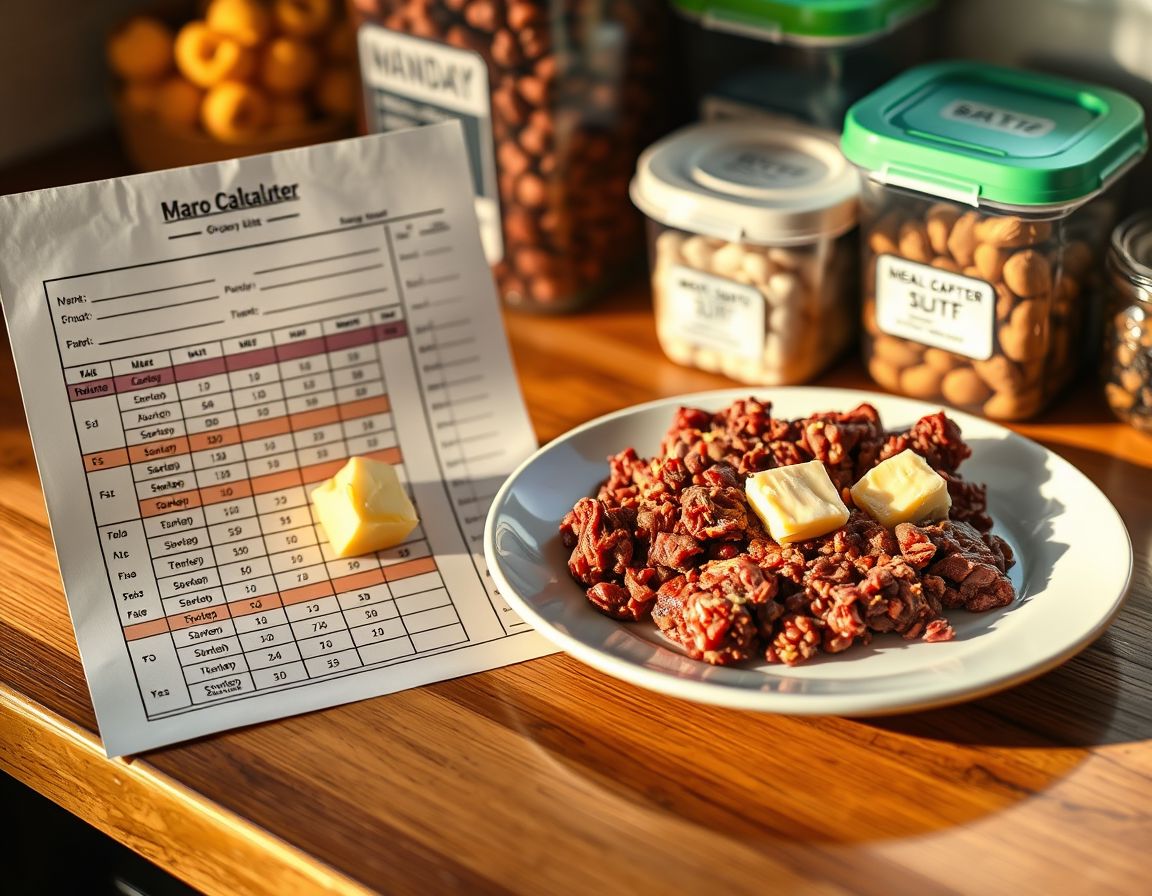
You ran the numbers. Now you're staring at four lines: calories, protein, fat, and a deficit. Here's what each one means in plain terms. Protein is the number you build meals around. Fat is the one you adjust. Calories and the deficit are background guides, not a daily test.
That's the whole answer. The rest of this post walks through one real-world example line by line, then turns it into a grocery list and three simple meals you can start on Monday morning.
The Example We'll Use
Meet a reader we'll call Linda. She's 58, 5'5", weighs 190 lb, and wants to reach 150 lb. She walks the dog and gardens.
Your numbers will differ. The method won't.
Line 1: Calories
The calorie line is an estimate. The calculator starts with what a body your size, age, and activity level likely burns in a day, then subtracts a deficit based on the pace you chose. The result is a rough daily target.
Rough is the key word. Every calorie formula is an educated guess. It can be off by a few hundred calories in either direction for any one person.
So here's the protocol. Don't count calories for your first 8 weeks. Eat protein first, eat until you're comfortably full, and stop. The calorie number earns its keep later, if you truly stall for 3-4 weeks. That's when you run a 7-day food log and compare it to this line. We cover that step in whether you need to count calories on carnivore.
Line 2: Protein
This is the number that matters most. Our standard is 0.8-1.0 g of protein per pound of goal body weight. When you enter a goal weight, the calculator bases your protein on it.
For Linda, the math is simple:
- 150 lb goal x 0.8 = 120 g
- 150 lb goal x 1.0 = 150 g
Why goal weight and not current weight? Because you're feeding the body you're building. Using 190 lb would push her toward 190 g a day, which is more food than most women her size want to eat. Goal weight keeps the target realistic.
Why does protein matter so much after 50? It protects muscle while you lose fat, and it's the most filling thing on the plate. We go deeper in protein after 50 and keeping your muscle.
Split it into meals of 30-40 g each. Your body uses protein better in a few solid servings than in one giant one. For Linda, three meals of about 40 g lands her right at 120 g. Two meals would mean 60 g or more each, which is a lot of meat in one sitting. If you only want two meals, add a small third hit, like 3 eggs.
Line 3: Fat
Protein is the anchor. Fat is the lever. The fat line tells you roughly how much fat fits your target, but you don't need to chase it with a measuring spoon.
Start with the fat that comes with your food: the fat in 80/20 ground beef, egg yolks, chicken thighs. Add a little butter to cook. A good starting point is roughly equal grams of fat and protein.
Then adjust based on how you feel:
- Hungry an hour after meals? Add a bit more fat. A pat of butter on the beef, skin-on thighs.
- Stalled for 3-4 weeks? Trim added fat first. Less butter, leaner cuts. Never cut the protein.
If you want the full breakdown on why that ratio matters, read how the fat-to-protein ratio can stall fat loss.
Line 4: The Deficit
The deficit is the gap between your estimated burn and your calorie target. It's what moves the scale. A bigger gap sounds faster. It isn't better.
Over 50, losing 0.5-1 lb a week is a good pace. Your first week will likely show a bigger drop, often 3-7 lb, and most of that is water. After that, expect slower, steadier loss. For Linda, 40 lb at that pace is a project measured in months, not weeks. That's normal, and it's how you keep muscle along the way.
Give it 60-90 days before you judge whether it's working. The first few weeks are about getting used to the food.
Monday Morning: Three Meals
Here's how Linda's 120 g turns into food. These numbers use cooked weights.
- Breakfast (about 40 g): 3 large eggs (18 g) plus 3 oz leftover ground beef (about 22 g). Cook in butter.
- Lunch (about 40 g): 5.5 oz cooked 80/20 ground beef as a patty or crumbles. Salt it well.
- Dinner (about 40 g): 6 oz cooked chicken thighs. Leave the skin on if you're hungry.
Quick check on the math: 4 oz of cooked 80/20 ground beef has about 28-30 g of protein, and a large egg has about 6 g. That puts 5.5 oz of beef right around 40 g.
Stop overthinking it. You don't need to weigh every meal forever. Weigh your portions for the first week so you learn what 5-6 oz looks like on your plate. After that, eyeball it.
The Grocery List for One Week
Raw meat loses about a quarter of its weight when cooked, so buy more than the cooked amounts above.
- Ground beef, 80/20: 5 lb
- Eggs: 2 dozen
- Boneless chicken thighs: 3.5 lb
- Butter: 1 lb (lasts longer than a week)
- Salt
At typical grocery prices, that's roughly $50-55 a week, or about $7-8 a day. Most people land somewhere between $5 and $10 a day depending on cuts and where they live. Brown all 5 lb of beef on Sunday and your week is half done.
What If You're on Medication?
This part isn't optional. Eating this way can shift blood sugar and blood pressure faster than people expect. If you take medication for diabetes or blood pressure, or you have a diagnosed condition, talk with your doctor before you start. Any change to your medication is your prescriber's call. Bring your calculator results to that appointment.
The Numbers Are a Starting Point
Your results aren't a verdict. They're a first draft. Build every plate around protein. Let fat follow your hunger. Leave the calorie line alone for 8 weeks. If you stall for a real 3-4 weeks, then recalculate at your current weight and tighten up. KetoDial explains why that recheck matters in why you should recalculate your macros every 10 pounds.
If you haven't run your own numbers yet, or want to redo them with a goal weight, the free carnivore macro calculator takes a few minutes.
Not a doctor: This article is general information, not medical advice. If you have a health condition or take medication, talk with your doctor before changing your diet.