
This post may contain affiliate links. For educational purposes only, not medical advice. Details
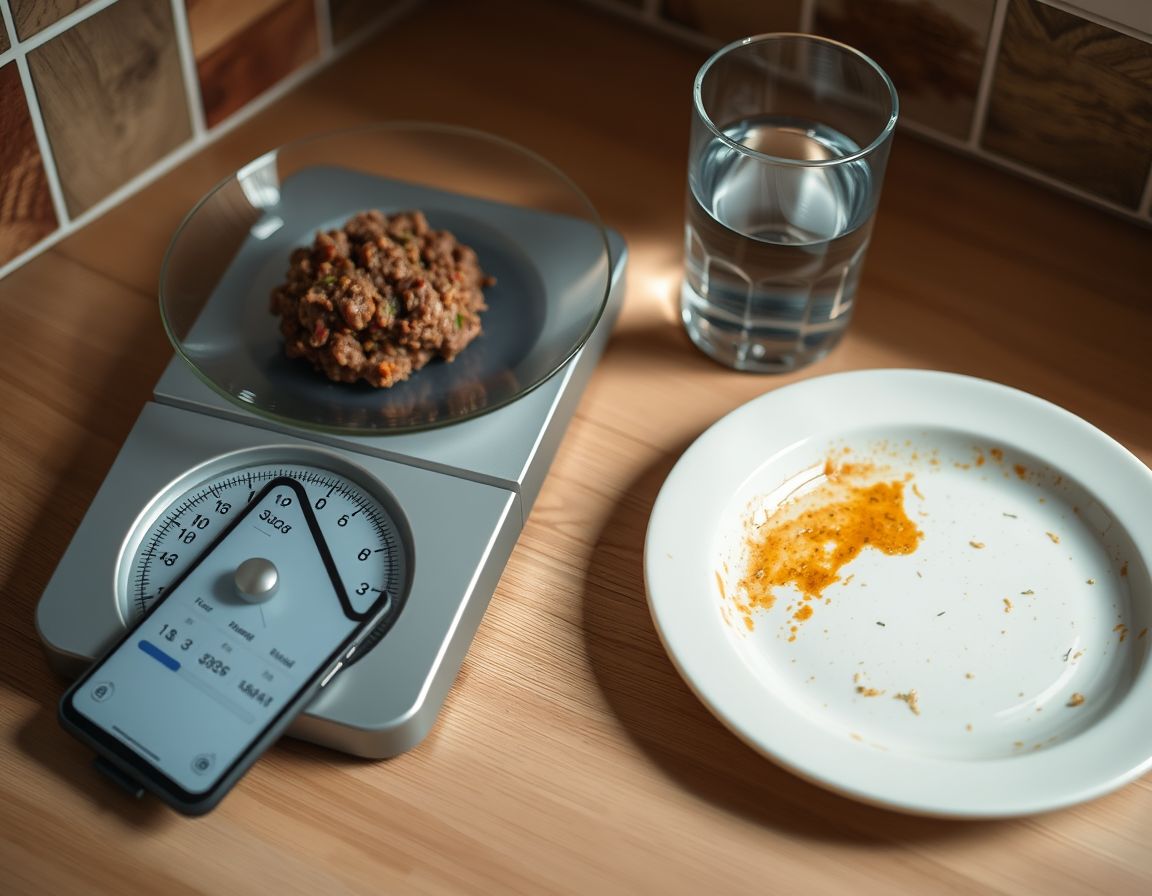
No, you don't have to count calories on carnivore. For most people starting out, protein and fat do the counting for you. You eat until you're full, you stop, and the numbers land somewhere reasonable without you ever opening an app. That's not a marketing claim. It's the single biggest reason this way of eating sticks for people who've failed at every other diet.
But there's a second half to that answer, and it's the part nobody tells you. Appetite regulation does most of the work for about the first two months. After that, if the scale has stopped moving for four weeks or more, you need two weeks of honest tracking to find out what's actually going in. Not forever. Two weeks. Then you put the app away again.
Why you can skip counting at the start
Protein is the most filling thing you can eat. Fat slows digestion down. Put them together with no sugar and no snack foods, and your hunger signal starts working the way it's supposed to. Most people eat less without trying, and they don't feel deprived doing it.
There's also a practical reason to skip tracking early. You're already changing a lot. New foods, new schedule, maybe your electrolytes are off, maybe you're tired for a week or two. Adding a food scale and a logging app to that pile is how people quit in week three. Do the diet first. Measure it later, only if you need to.
So for the first eight weeks or so, your job is simple. Eat meat, eggs, and fish until you're satisfied. Salt your food. Drink water. Don't count anything.
When it's time to start tracking
Here's the trigger, and it's worth being strict about it so you don't start tracking out of anxiety on day nine.
- You've been consistent for at least eight weeks.
- The scale hasn't moved in four weeks or more.
- Your clothes aren't fitting differently either. If your waistband is looser, you're still making progress and the scale is just being slow.
If all three are true, appetite regulation has stopped doing the job by itself. That's normal. It happens to almost everyone eventually, and it doesn't mean you did anything wrong. I've written before about what's usually going on when things stall around month three, and calorie creep is only one of the possible causes. Tracking is how you rule it in or out instead of guessing.
How to run a clean two-week window
A tracking window only works if it's honest. Most people run a dirty one without realizing it, then conclude tracking doesn't work. Here are the rules.
Week one: change nothing. This is the hardest rule and the most important one. You're not dieting during week one. You're taking a photograph of what you already do. If you start eating less the moment you open the app, you've measured a diet you weren't on, and the data is useless.
Weigh your food in grams. Not "one steak." Not "a handful." A kitchen scale costs about twenty dollars and it's the whole reason this works. Eyeballing portions is where the error lives, and the error is usually 20 to 40 percent on the high side.
Log the invisible stuff. Cream in your coffee. The cheese you grate over dinner. The bites you take while cooking. The bacon fat you cook in. These are the items that turn a 1,600 calorie day into a 2,300 calorie day, and they're the ones people leave out.
Log weekends too. A lot of stalls are five clean days and two loose ones. You'll never see that pattern if you only track Monday through Friday.
Week two: keep tracking, still don't change anything. Two weeks gives you an average. One week gives you an anecdote. Your intake naturally swings a few hundred calories a day, and the average is the number you actually want.
What you're looking for at the end
On day fifteen, add up your daily totals and divide by fourteen. That's your real intake. Then ask three questions.
First, is the average higher than you expected? For most people it is, and the surprise is the whole point. It's genuinely useful to see what a given calorie target actually looks like on a plate, because carnivore portions can be deceiving in both directions.
Second, which single food is driving the number? Nine times out of ten there's one item doing a lot of quiet damage. Cheese is the usual suspect, and I've gone through why cheese stalls so many people in detail. Nuts, cream, and cooking fat are close behind.
Third, how big is the day-to-day swing? If you've got four days at 1,500 and three days at 2,600, you don't have a calorie problem so much as a consistency problem, and those get fixed differently.
Then make one change and stop tracking
Pick one thing. Cut the cheese back, or trim the cooking fat, or fix the two loose days. Not all three at once. Then give it three to four weeks and watch the scale and the tape measure.
If you want a rough starting point for what your numbers should be before you compare them to what you tracked, the free macro calculator will give you one in about a minute. Treat it as a reference point, not a rule. Your tracked average is the more useful number because it's real.
And then genuinely stop. Long-term tracking wears people down, and it slowly turns eating into arithmetic. You track to answer a question. Once the question is answered, you go back to eating until you're full. If you stall again in six months, you run another two-week window. That's the whole system. There are also plenty of stall causes that have nothing to do with calories, so if your tracked average comes back looking perfectly sensible, don't force the calorie explanation. Look elsewhere.
Most people never need to count. The ones who do, only need to for fourteen days at a time.
I'm not a doctor. I coach people on nutrition and I've spent years testing this stuff on myself, but I don't know your history and I'm not the person to manage it. If you're on medication, especially for blood pressure or blood sugar, talk to your doctor before you cut your intake, because those doses often need adjusting as you lose weight. And if tracking food has ever pushed you toward disordered eating, skip this protocol entirely. It isn't worth it.