This post may contain affiliate links. For educational purposes only, not medical advice. Details
What 1,500 calories of carnivore actually looks like on a plate
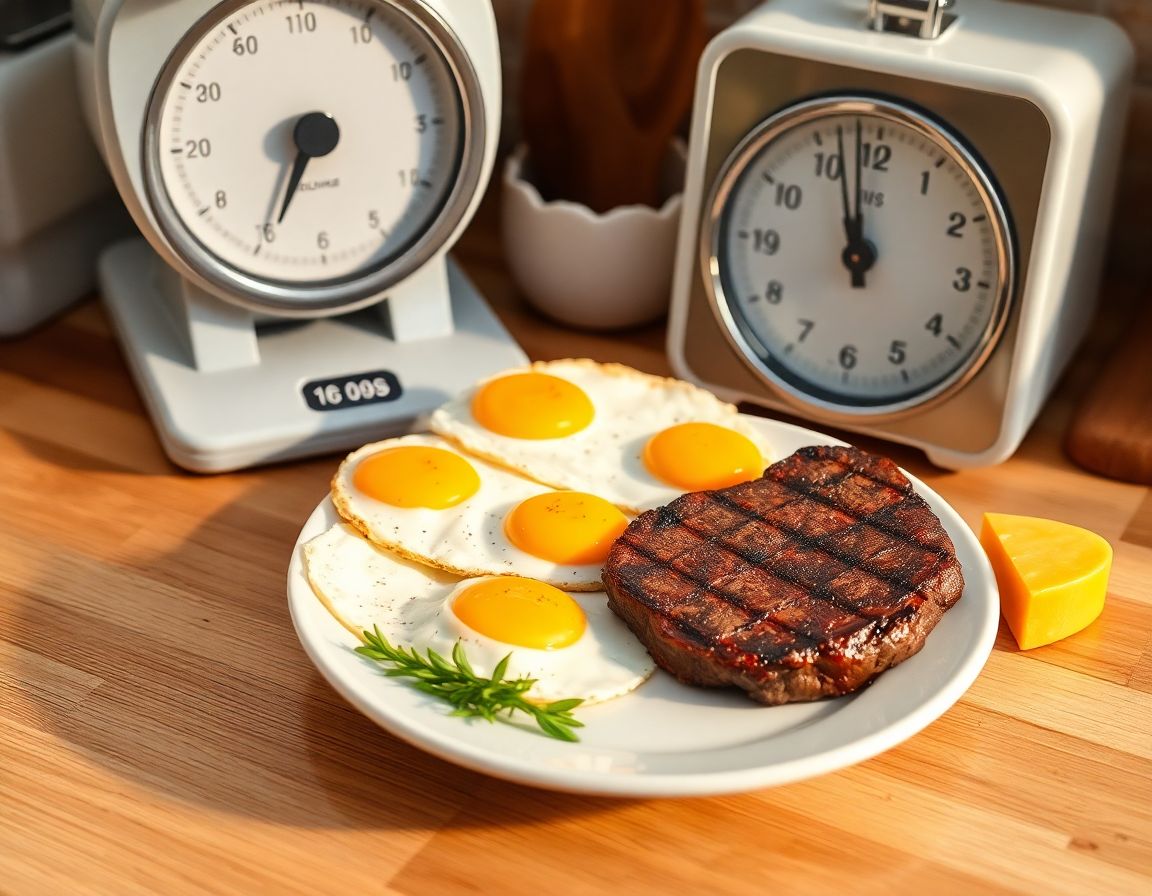
Here's the short answer. At 1,500 calories with about 120 grams of protein, you're eating somewhere between 14 and 20 ounces of cooked meat per day, plus eggs, butter, and a little cheese if you want it. That's it. One ribeye, some eggs, and a piece of cheese can get you most of the way there.
Below are three full days built to land near 1,500 calories and 120 grams of protein. One is two meals, one is three meals, one is a single meal. Same numbers, three different shapes. Pick whichever fits your day and stop guessing at portions.
First, about these numbers
Every number here is an estimate. Cuts vary, fat trim varies, and your ribeye isn't the same ribeye as the one in the USDA database. Two steaks with the same weight can be 100 calories apart depending on marbling.
So don't chase precision you can't measure. If you land within 100 calories of your target, you did it right. Consistency across a week matters far more than nailing any single day.
Day 1: Two meals
This is the most common pattern I see with people who aren't hungry in the morning. Coffee or water until late morning, then two solid meals.
- Late morning: 3 large eggs cooked in 1 tablespoon butter, plus 3 slices of bacon. About 445 calories, 28g protein.
- Evening: 8 oz cooked ribeye, 4 oz cooked shrimp, 1 tablespoon butter on the steak. About 845 calories, 84g protein.
- If you're still hungry: 1.5 oz sharp cheddar. About 170 calories, 10g protein.
Day total: roughly 1,460 calories and 122g protein. The shrimp is doing quiet work here. It adds 27 grams of protein for only about 110 calories, which lets the ribeye stay big without blowing past your number.
Day 2: Three meals
If you take medication with food, or you get shaky when you go too long without eating, three meals is the better shape. Nothing wrong with it.
- Breakfast: 3 large eggs, 2 slices bacon. About 300 calories, 25g protein.
- Lunch: 5 oz cooked chicken thigh with the skin on. About 325 calories, 35g protein.
- Afternoon: 2 oz cheddar and 1 hard-boiled egg. About 300 calories, 20g protein.
- Dinner: 6 oz cooked ribeye with 1 tablespoon butter. About 575 calories, 43g protein.
Day total: roughly 1,500 calories and 123g protein. Notice the steak got smaller than Day 1. That's the trade. More meals means each one is smaller, and that surprises people who expected three big plates.
Day 3: One meal a day
OMAD looks like a lot of food on one plate, because it is. If you've never done it, this amount can be hard to finish in one sitting. Take an hour if you need to.
- 10 oz cooked ribeye. About 790 calories, 71g protein.
- 4 large eggs cooked in 1 tablespoon butter. About 390 calories, 25g protein.
- 3 slices bacon. About 130 calories, 9g protein.
- 2 oz cheddar. About 230 calories, 14g protein.
Day total: roughly 1,540 calories and 119g protein. That's about 40 calories over the target, and it doesn't matter. This is inside the margin of error on the steak alone.
Cooked weight versus raw weight
This trips up almost everyone, so read this part twice. All the weights above are cooked.
Meat loses roughly 25 percent of its weight when you cook it, mostly water. So an 8 oz cooked ribeye starts as about 10 to 11 oz raw. If you weigh raw and use cooked numbers, you'll undercount by a few hundred calories a day without knowing it.
Easiest fix: pick one and stick to it. Weigh everything raw and use raw numbers, or weigh everything cooked and use cooked numbers. Don't mix.
Is 1,500 even your number?
For a lot of women in their fifties and sixties, 1,500 calories is a reasonable weight loss target. For others it's too low, and eating too little is one of the fastest ways to end up exhausted, cold, and losing hair.
If your number came out different, the free macro calculator gives you a target based on your own height, weight, age, and activity. Use that number, not this one. These three days are a template for what 1,500 looks like, not a prescription that 1,500 is right.
And if your calculator number lands well below 1,500, or you take medication for blood sugar, blood pressure, or thyroid, talk to your doctor before you cut calories. Meds often need adjusting when you change how you eat, and that's a conversation to have before you start, not after you feel awful.
How to shift these up or down
You don't need a new plan for every calorie level. You need two dials.
- To go down 200 calories: pull the butter and cheese, or drop the steak by 2 oz. Protein barely moves.
- To go up 200 calories: add 2 tablespoons of butter, or swap 4 oz of chicken breast for 4 oz of chicken thigh.
- To keep protein up while calories come down: lean into shrimp, white fish, chicken breast, and eggs. They give you protein cheap.
- To keep calories up when you can't eat much volume: fattier cuts. Ribeye, 80/20 ground beef, salmon.
One more thing. Salt your food generously. When you cut carbs, your body dumps sodium and water fast, and most of the tired, headachy feeling in week one traces back to that. Salt to taste, then a bit more.
Print one of these days. Cook it. See how you feel at 3 p.m. That single data point tells you more than another week of reading.
I'm not a doctor. I've coached people through this and eaten this way myself, so I know what works in practice. But I'm not your doctor. If you have health issues or take medication, check with someone qualified before you change how you eat. All the calorie and protein numbers here are approximate and based on standard USDA values for common cuts. Your food will vary.