
This post may contain affiliate links. For educational purposes only, not medical advice. Details
The short answer
If your carnivore weight loss stalled after 3 months, the most likely explanation isn't that your metabolism broke. It's that you're a smaller person now, eating slightly more than you were in month one. Those two things together are enough to erase a deficit completely, and neither one feels like it's happening while it's happening.
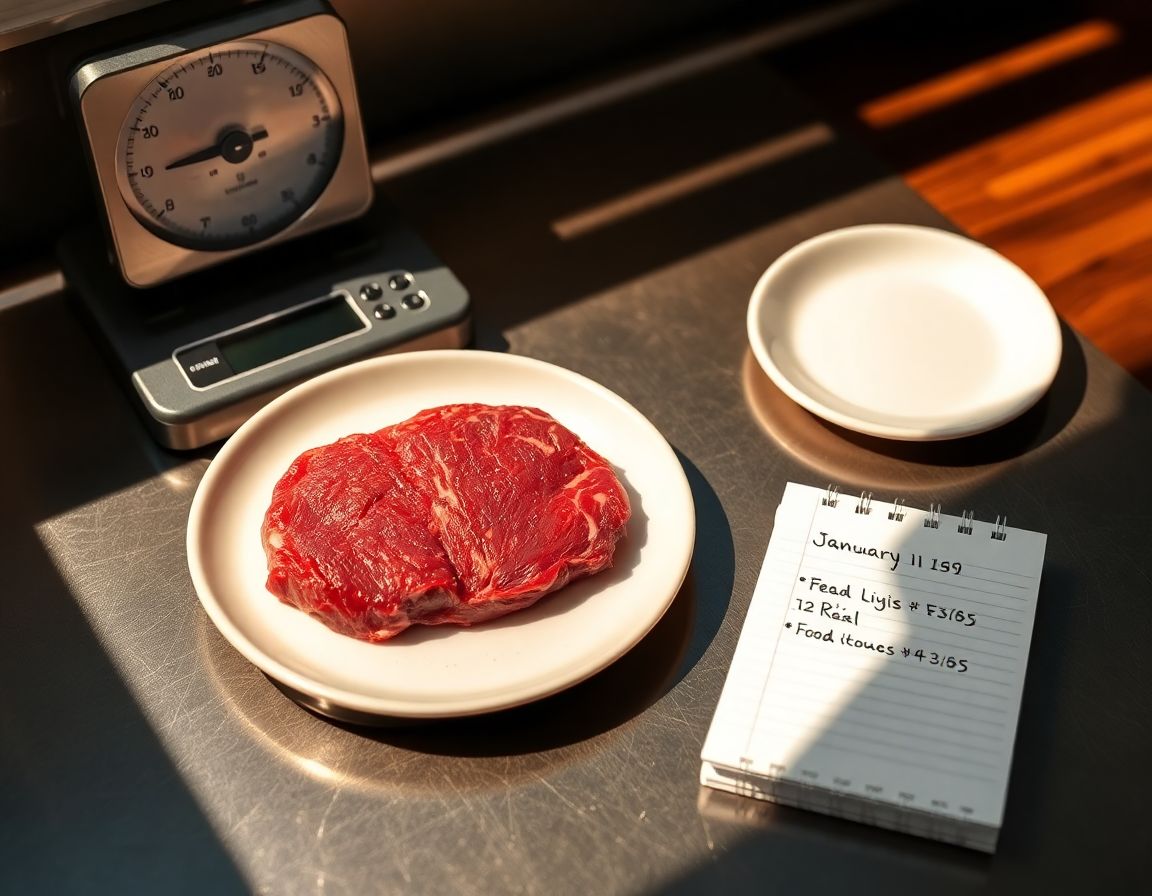
Here's the math that catches almost everyone. Lose 20 pounds and your body burns roughly 150 to 250 fewer calories a day just existing at the new weight. Meanwhile, the ribeye that was 8 ounces in January has quietly become 11 ounces by April, because you stopped weighing it once eating this way got easy. That's another 250 calories. Add those together and the deficit that worked beautifully for twelve weeks is now zero. The scale isn't lying to you. It's telling you your old numbers expired.
Why month three specifically
The timing isn't random. The first several weeks on carnivore usually bring a fast drop from water and glycogen, then a stretch of real fat loss while appetite is suppressed and food is still novel. By week ten or twelve, three things have shifted at once.
- Your body weighs less, so it costs less to run.
- Your appetite has adapted, and portions drift up without you deciding anything.
- You've stopped measuring, because measuring felt unnecessary when the weight was falling off.
None of that is failure. It's the normal shape of the curve. The fix is to update your inputs, not to punish yourself with a harder version of what you're already doing.
Step one: recalculate at your current weight
Before you change a single thing about your food, get an honest current number. Whatever calorie or protein target you started with was built for a body that doesn't exist anymore.
Run your numbers again using your weight today, not your starting weight, and not the weight you're aiming for. If it's been a while and you're not sure where to begin, the free macro calculator at /calculator.html will give you an updated starting point in a couple of minutes. Some people find it easier to see the change on a screen than to trust that a 20-pound loss really moved the target that much.
Write the new number down. You'll need it for step two, and you'll want to compare it to what you're actually eating.
Step two: weigh a week of food and change nothing
This is the step people want to skip, and it's the one that solves most stalls on its own.
For seven days, weigh everything that goes in your mouth. Meat, eggs, butter, cheese, the bit of bacon fat you pour over dinner, the cream in your coffee if you're having it. Don't adjust anything. Don't eat "better" because you're tracking. You're gathering information, not auditing your character.
Most people are surprised in one of two directions. Either they're eating 400 to 600 more calories a day than they assumed, usually from fat, which is easy to underestimate because it's calorie dense and doesn't add volume to the plate. Or they discover they're eating far too little, which brings its own problems with energy, muscle loss, and hormones. Both are fixable, but only after you know which one you're dealing with.
A digital kitchen scale runs about twenty dollars and lasts forever. It's the single most useful tool for breaking a stall, and you only need it for a week at a time, a few times a year.
Step three: look at sleep and stress before you cut anything
If your food data looks reasonable and the scale still won't move, look at what's happening around the food.
Poor sleep raises cortisol, increases hunger the next day, and makes your body hold onto water in a way that can mask fat loss for weeks. So can a stressful stretch at work, a sick parent, a new grandchild, or the general noise of a busy life. Women in their late 40s through 60s often see this most sharply, because perimenopause and menopause already shift how the body handles cortisol, insulin, and water.
Ask yourself honestly: are you getting seven hours most nights? Has anything landed in your life in the past two months that your nervous system is still carrying? If the answer is yes, adding a harder diet on top of it usually backfires. Fixing sleep is often the intervention.
Also worth noting here. If you've started, stopped, or changed the dose of any medication in the last few months, that alone can shift weight, water retention, and appetite. Medication use and diagnosed conditions require professional medical management. Don't alter your treatment plan based on general information, and bring the stall to your doctor rather than trying to out-diet it.
Step four: adjust protein before you cut fat
Once you've updated your numbers, seen your real intake, and ruled out sleep and stress, then you can adjust. The order matters.
Raise protein first. Aim for roughly 0.8 to 1 gram per pound of your goal body weight. Protein is the most filling thing you can eat, it costs your body energy just to digest, and it protects the muscle you're carrying. That last part matters more than most people over 50 realize, because muscle is a large part of what determines your calorie burn at rest. Lose muscle to lose weight and you've made the next stall worse.
Then, and only then, trim fat. Fat is the easiest lever to pull too hard. Cut it a little, maybe 20 to 30 grams a day, hold for two weeks, and watch. Not a crash. A nudge.
What I'd avoid is doing everything at once. Slashing calories, adding fasting, and starting daily cardio in the same week means you'll have no idea what worked, and you'll almost certainly be too hungry and tired to stick with any of it.
One more thing about the scale
Before you decide you've stalled, check whether the scale is the only thing you've measured. Waist measurement, how your clothes fit, ring and shoe fit, blood pressure, morning energy, and joint pain all move on their own timeline. It's genuinely common to hold the same weight for three or four weeks while your waist drops an inch, especially if you've started walking or lifting.
Everyone's baseline is different, and what works for most people may not work for you, especially if you have underlying health conditions. Give any change you make a solid three weeks before you judge it. Two weeks of data on a bathroom scale is mostly noise.
I'm not a doctor. I've researched this deeply and worked with many people, but I'm not your doctor. If you have health conditions, take medications, or need specific guidance, talk to someone who knows your full medical picture. Everything I write is educational, based on research and what I've seen work. Your situation might be different.
A month-three stall isn't a sign that carnivore stopped working for you. It's a sign that you changed, and your numbers haven't caught up yet. Update them, measure for a week, protect your sleep, and adjust protein before anything else. That order will get most people moving again without making the process miserable.