
This post may contain affiliate links. For educational purposes only, not medical advice. Details
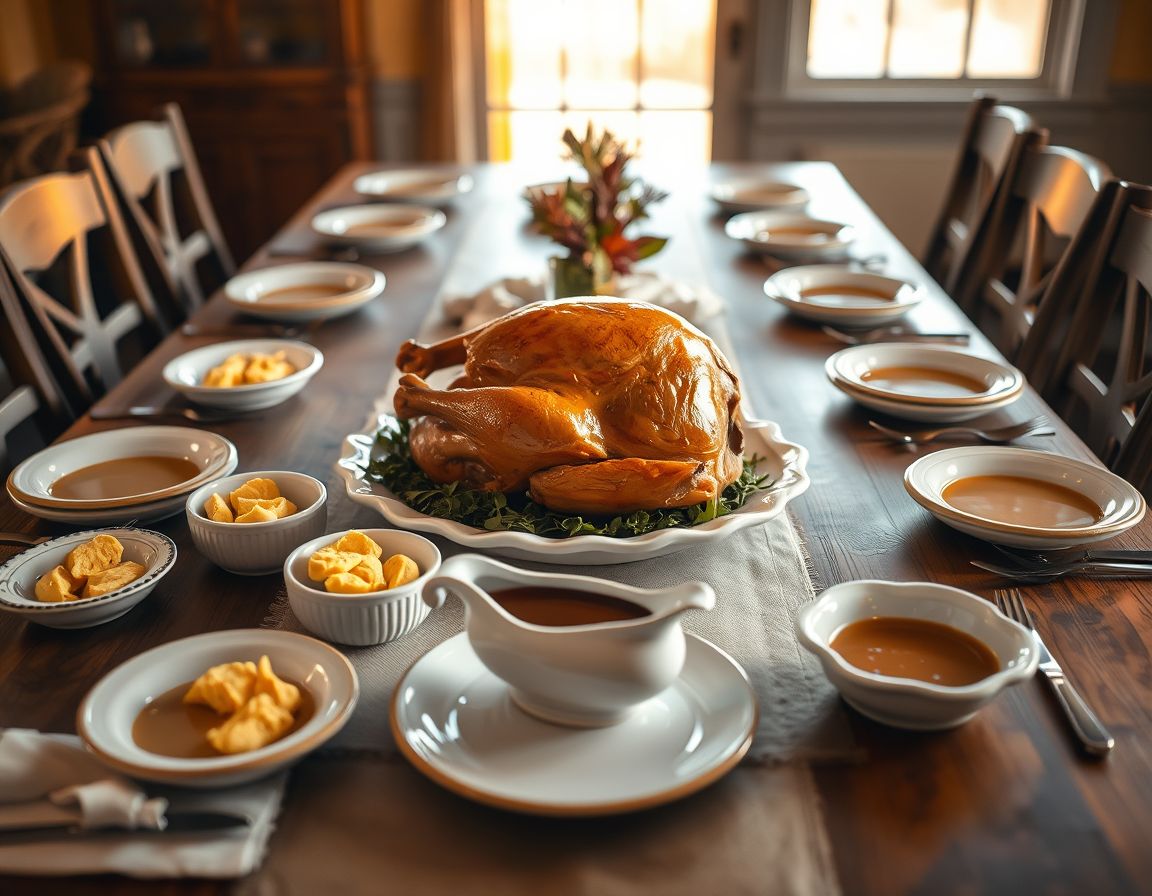
Okay so, here's the short answer. A carnivore Thanksgiving dinner is easier to host than a regular one, because the star of the table is already meat. You roast the turkey, make gravy from the drippings, put out deviled eggs before dinner, and maybe add a second roast. That's your whole cooking job. Everyone else brings their own sides, and nobody leaves hungry.
This one is for the host. If you're the one with the big oven, the extra chairs and the grandkids arriving Thursday, you don't need to cook two meals or apologize for your plate. You need a plan you can actually run at 60 without wearing yourself out. If you're going to someone else's house instead, I covered that in getting through the holidays without starting over.
And if you want a starting point for your own daily numbers before the big week, the free macro calculator gives you one in a couple of minutes.
Here's the thing: you only cook one meal
The first-holiday mistake is turning into a short-order cook, standing at the stove until 9 p.m. Don't do that.
Your menu is the meat. That's the part of the meal everyone wants anyway. Here's what you make:
- The turkey. Plan on roughly 1 to 1.5 lb of whole bird per person. For 10 people, a 12 to 15 lb turkey is right.
- A second meat, if you want one. A beef chuck roast or a pork shoulder in the slow cooker is almost no work and keeps the dark-meat fans happy. Skip the store ham with the glaze packet. That packet is mostly sugar.
- Gravy from the drippings. No flour needed. More on that below.
- Deviled eggs for the appetizer. Bacon-wrapped anything works too, and a bowl of pork rinds disappears faster than you'd think.
What you hand off
Real talk: delegating isn't lazy, it's how big family dinners have always worked. Make a short list and assign it the week before. Your daughter brings the potatoes. Your brother-in-law brings rolls. Whoever always shows up with pie keeps that job, and you don't have to make or touch it.
Say it plainly when you call: "I've got the turkey, the gravy and the appetizers. Could you bring a side?" Most families are relieved to be asked. It's when you try to do everything that people start fussing about what you're not eating.
Your timeline, a few days out
Thanksgiving 2026 is Thursday, November 26. Here's a simple countdown.
- Saturday, November 21: If your turkey is frozen, move it to the fridge today. A fridge thaw takes about a day for every 4 to 5 lb, so a 15 lb bird needs 3 to 4 days. A fresh turkey skips this step.
- Sunday or Monday: Send the side-dish texts. Shop for eggs, butter, bacon and your second roast.
- Wednesday morning: Dry brine the turkey. Pat it dry, rub salt all over and under the skin, and leave it uncovered in the fridge overnight. Boil your eggs and make the deviled egg filling.
- Wednesday night: Set the table. Future you will be grateful.
A quick word on that salt, since it's a lot of salt on one bird. Most of it stays on the turkey and seasons the meat, not you. For context, most people on carnivore land around 3-5 g of sodium a day, spread through their meals. This is not for everyone. Talk to your doctor first if you have high blood pressure, kidney or heart problems, diabetes, are pregnant, or take medicine.
Thanksgiving morning
Let's say dinner is at 3 p.m. and you've got a 14 lb bird, unstuffed.
- 9:30 a.m.: Turkey out of the fridge. Oven to 325°F. Start the slow-cooker roast if you're doing one.
- 10:30 a.m.: Turkey in. Butter on the skin. A 14 lb bird usually takes 3 to 3.75 hours at this temperature.
- Around 1:45 p.m.: Start checking. It's done when the thickest part of the thigh and breast reads 165°F on a meat thermometer. Trust the thermometer, not the pop-up button.
- 2:15 p.m.: Turkey out to rest for 30 to 40 minutes under foil. This is when you make gravy and put out the deviled eggs.
- 3:00 p.m.: Carve and eat.
Gravy without the flour
Pour the pan drippings into a measuring cup and let the fat rise. Spoon off some fat (save it, it's gold), then pour the rest back into the pan with a cup or two of bone broth. Scrape up the brown bits and simmer until it's reduced by about half. Whisk in a few pats of cold butter at the end and salt it.
It's thinner than the flour kind, more like a rich pan sauce. People just pour more.
When the comments start at your own table
Here's what's different about hosting. At someone else's house, you can slip out of a conversation. At your own table, you're the one setting the tone. And honestly, that's a gift.
When somebody says, "You're not having any stuffing?" you can smile and say, "Not this year, but I'm glad you're enjoying it." Then ask them about their drive, or the grandkids, or their new job. You don't owe anyone a nutrition lecture over the turkey.
If someone pushes, try: "This is what's working for me right now. Can you pass the gravy?" Warm, short, done. The people who love you will follow your lead. If it's your spouse who's the skeptic, I wrote about that in family integration hacks too.
Leftovers for the week after
This is the best part of hosting carnivore. You get a fridge full of ready-made meals.
- Days 1 to 3: Cold turkey with butter or leftover gravy, reheated slices for breakfast, and turkey fried in that saved fat until crispy.
- Freeze the rest in meal-sized bags within 3 to 4 days. Label them. December you will thank you.
- Make broth from the carcass. Bones, water, a little salt, and a slow cooker on low overnight. Sip it all week.
Send the sides home with whoever brought them. Your fridge stays simple.
The real point
You're not hosting a carnivore Thanksgiving. You're hosting Thanksgiving, and you happen to eat carnivore. Cook the meat beautifully, let your family fill in the rest, and sit down at your own table without stress. That's the whole plan.
Not a Doctor: I'm not a doctor. I'm just someone who's deep in the community and reads everything. I can tell you what people are doing and what works at real family tables, but you make your own calls.