This post may contain affiliate links. For educational purposes only, not medical advice. Details
Okay, so here's the pattern I see every year. Someone does great on carnivore all fall. Then Thanksgiving hits, one plate turns into a week, the week turns into "I'll start fresh in January," and by New Year's she's back at day one, feeling rotten.
Real talk: you can stay on a carnivore diet during the holidays without being the difficult guest or the miserable host. The plan is simple. Fill the table with meat you'd happily eat anyway, have a few sentences ready for family, and treat any off-plan meal as one meal, not a reason to quit until January.
One thing that makes every holiday buffet less stressful: knowing roughly how much protein you need in a day. If you want a starting point for your numbers, our free macro calculator gives you one in a couple of minutes. Our general guidance is 0.8-1.0 g of protein per pound of goal body weight, and 30-40 g per meal, which matters more as we get older. Once you know your number, fill your plate with meat until you're there and ignore the rest.
This is not for everyone. Talk to your doctor first if you have high blood pressure, kidney or heart problems, diabetes, are pregnant, or take medicine.
Why Restarting Costs More Than Staying On
Some folks quit for a few months, come back, and feel better within a day or two. Others say it takes them a full month to feel human again. Plenty of people admit their first attempt only lasted four days before the cravings won.
You don't know which of those you'll be. That's the problem. If you're one of the people who gets a month of fog, low energy and bloating on the way back in, you've just traded six weeks of holiday food for a month of feeling lousy in January. Many people also say carbs leave them tired, achy and bloated once they've been off them a while.
Staying on through the season, even imperfectly, keeps everything you've already earned.
If You're Hosting, You Already Have the Upper Hand
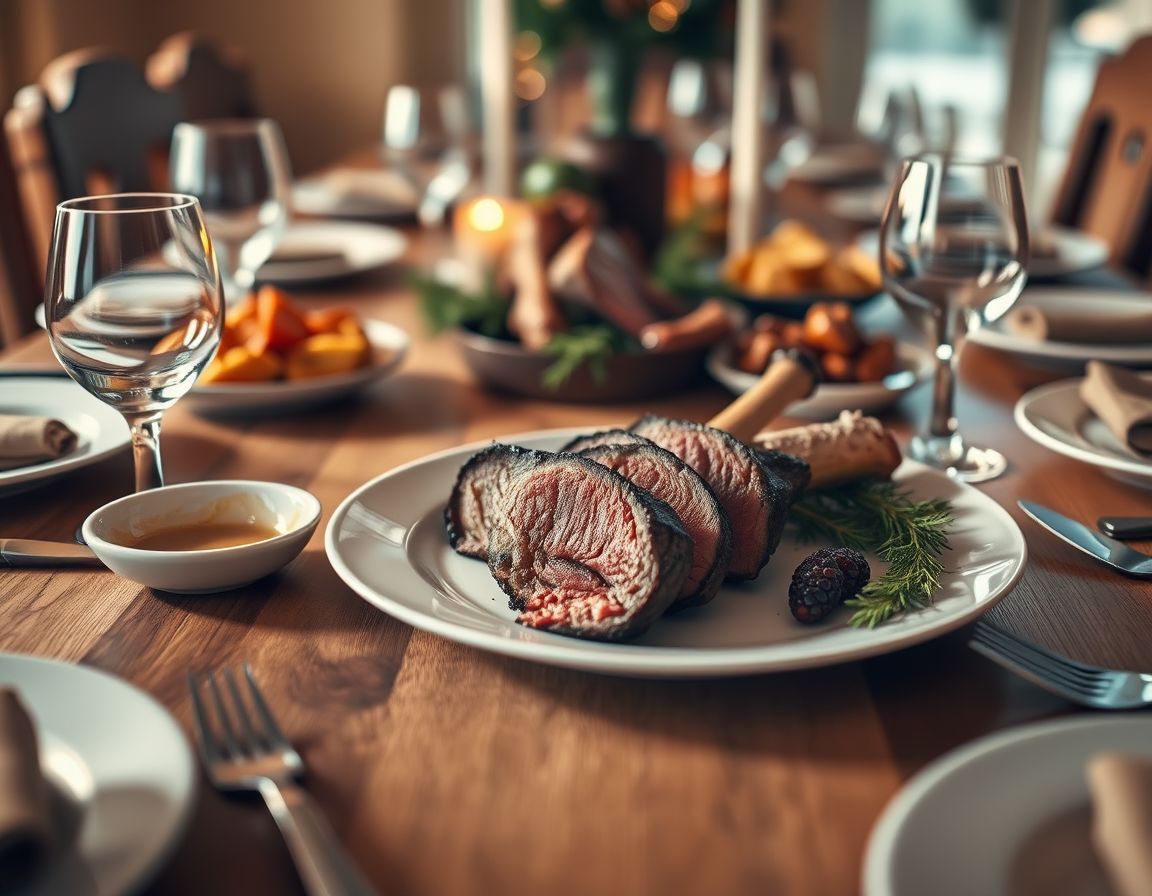
Here's the thing a lot of our readers forget: if you're the one cooking, you decide what goes on the table. And the centerpiece is already meat.
- Turkey. Roast it with butter and salt. Dark meat and skin are your friends.
- Ham. Watch the glaze. Most store hams come with a sugar glaze packet or are cured with sugar. Skip the packet, check the label, or carve your slices from a section before glazing the rest for guests.
- Roast beef or prime rib. The easiest crowd-pleaser there is.
- Deviled eggs. Make them with mayo, salt and a little mustard if you tolerate it.
- Shrimp cocktail. Shrimp are perfect. The red cocktail sauce usually has sugar, so skip it or read the jar.
Dairy is optional. If cheese and butter sit well with you, a cheese board is an easy add. If they don't, nobody needs them.
If You're a Guest, Bring Your Own Main
Don't hope there'll be enough turkey. Bring a dish you can make a full meal of: sliced roast beef, deviled eggs, or a big plate of shrimp. You're being generous, and you're guaranteed a meal.
It also helps to eat a normal carnivore meal earlier in the day. Arriving hungry is how good intentions fall apart in front of the bread basket.
And please don't do the "fast for two days so I can feast" thing. Long fasts get talked up a lot online, but arriving at a feast after one tends to make overeating more likely, and it's not a great idea if you're on medication. Eat normally, then eat the meat at dinner.
What to Say to Family (Before Anyone Picks a Fight)
Family pushback at the table is incredibly common. One story going around right now involves a relative, a nurse no less, who started an argument at Christmas because someone said no thanks to pie. Her line was that the brain needs sugar.
For the record, your body can make the glucose it needs on its own, which is part of why so many people on low-carb diets think clearly. But the dinner table is not the place to win that debate. Nobody changes their mind over stuffing.
A few lines that work:
- "I'm good, thanks. I'm full of turkey."
- "I've been feeling so much better eating this way, so I'm sticking with it."
- "My doctor and I are working on some things, and this is part of it." (Only if that's true, and if you're on medication it really should be.)
Short, warm and boring wins. Our post on doing carnivore around family covers the year-round version.
So You Had an Off-Plan Meal. Now What?
This is the part that decides whether you're starting over in January. So you had stuffing, or three of your aunt's rolls. Here's the plan:
Your next meal is a normal meal. That's it. No punishment fast, no "I already blew it" weekend. Just eggs, ground beef or leftover turkey at the next mealtime, like nothing happened.
Expect the scale to jump a few pounds. When you eat carbs after being off them, your body stores them with water. A jump of a few pounds in the next day or two is mostly water, not fat. It usually comes back off within a week of eating your normal way again.
Expect a few days of cravings. A lot of people say the hunger and carb cravings hang around for two or three days after an off-plan meal. Lean on protein, salt your food well, drink water, and let time do its job.
The people who make it through the holidays aren't the ones who never slip. They're the ones who don't turn one meal into six weeks.
Your Holiday Season Checklist
- Check ham glazes and cocktail sauce for sugar.
- Bring a full-meal dish when you're a guest.
- Eat a normal meal earlier in the day. No long fasts before a feast.
- Know your daily protein number so the buffet is easy.
- Have two or three short, friendly lines ready for family.
- After an off-plan meal, the next meal is just a normal one.
Medication changes, holiday or not, are your prescriber's call, not the internet's.
I'm not a doctor. I'm just someone who's deep in the community and reads everything. I can tell you what people are trying and what tends to work for them, but you've got to make your own calls with the people who know your health history. This is the real talk, not medical advice.