
This post may contain affiliate links. For educational purposes only, not medical advice. Details
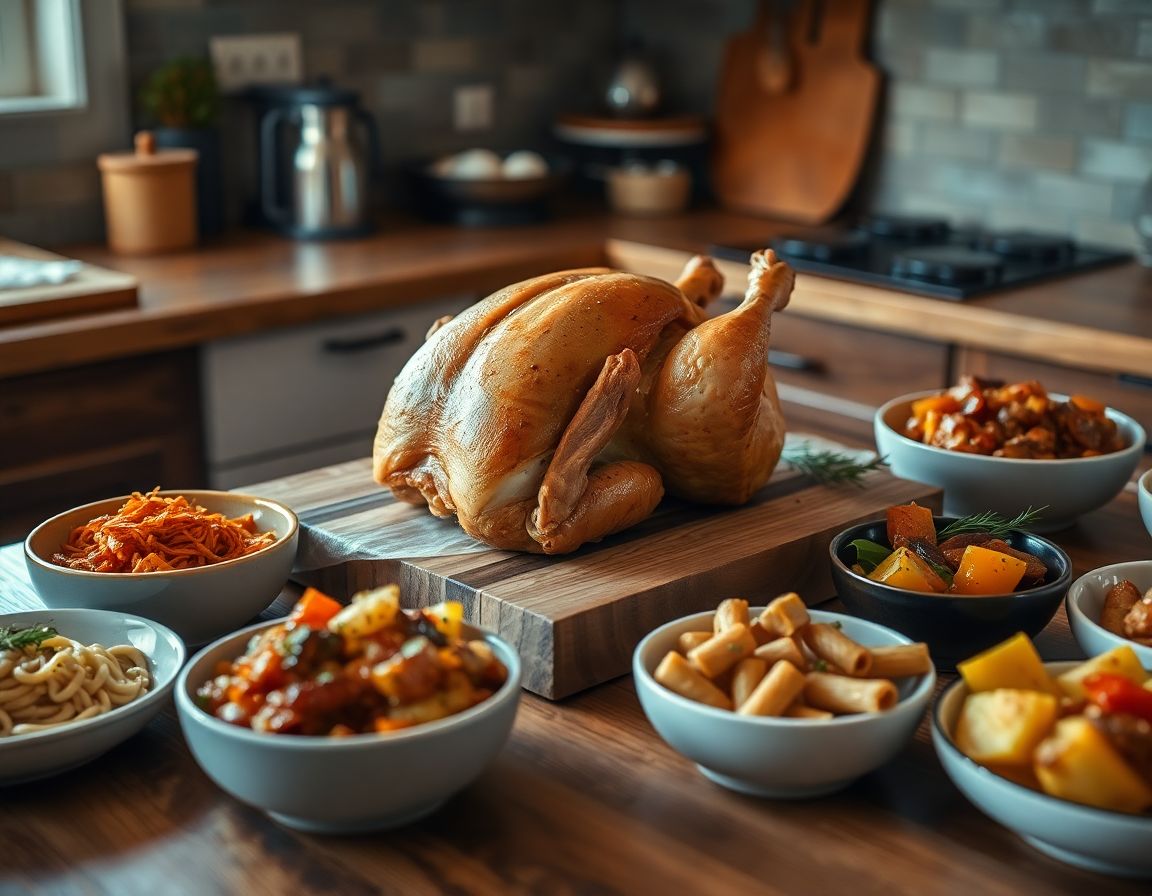
Okay, so you're standing at the stove at 6pm making a chicken breast for yourself and a whole pasta situation for your partner, and you're doing this every single night, and you're starting to feel a little bit like a short-order cook in your own kitchen. Here's the short answer: you stop cooking two meals. You cook one protein for everybody, and then their carbs get added on the side. That's it. That's the whole system.
The mistake most of us make in the first month is treating carnivore like a separate cuisine. It isn't. Almost every normal family dinner already has a meat at the center of it. Roast chicken. Taco night. Burgers. Pot roast. You're not building a different meal, you're just not putting the potatoes on your plate. Once that clicks, dinner goes back to being one pan of meat plus whatever else the household wants around it.
The shared base, and where it splits
Here's the thing that makes this work: season the protein plainly, then let the flavor happen at the table. Salt and fat on the meat. Sauces, spice blends, and toppings go in bowls that people help themselves to. Nobody feels deprived, and you're not picking herbs off your steak.
Real examples, with the exact split point:
- Roast chicken. One bird, salt, butter under the skin, into the oven. You eat chicken and skin. Their potatoes and carrots roast in a second pan on the lower rack. Same oven, same 45 minutes, zero extra effort.
- Taco meat. Brown a big batch of ground beef with salt. Pull your portion out. Then add the taco seasoning to what's left in the pan. They get tortillas, beans, cheese, salsa. You get a bowl of beef, maybe with cheese if dairy works for you.
- Steak night. Cook everyone's steak in the same pan. Theirs comes with a baked potato and a salad. Yours comes with a knob of butter. This one's basically free.
- Pot roast. Chuck roast in the slow cooker with broth and salt. Around the last hour, ladle some broth into a separate dish with the potatoes and carrots and finish those in the oven. Your roast never touches a vegetable.
- Burgers. Same patties, everybody. Buns and fries on their side of the counter. You stack yours with cheese, bacon, or a fried egg and eat it with a fork.
- Pork shoulder. Slow-cook it for eight hours with salt. Shred it. Theirs goes on buns with BBQ sauce, or over rice. Yours goes in a bowl with the fatty bits, which are the good bits anyway.
Notice the pattern. The split is always the last step, and it's always additive. You're never removing something from your food, they're adding something to theirs.
A realistic week
Real talk: the goal isn't a perfect meal plan. It's getting to Thursday without wanting to order a pizza out of pure exhaustion. So build the week around two big cooks and let leftovers carry the middle.
- Sunday. Big cook. Pork shoulder or two roast chickens. This is your engine for the week.
- Monday. Leftovers from Sunday. They get rice or a bun, you get a bowl.
- Tuesday. Taco meat. Make double.
- Wednesday. Burgers, or the extra taco meat over eggs for you and in a wrap for them.
- Thursday. Breakfast for dinner. Eggs, bacon, sausage. They add toast or pancakes.
- Friday. Steak, or whatever's on sale.
- Saturday. Nobody cooks. Order in, and get the meat dish.
That's one real cooking session and a handful of twenty-minute nights. If you also batch a few sides on Sunday, a pot of rice, a tray of roasted vegetables, a big salad in a container, your partner can plate their own for three or four days straight.
The sides are not your job anymore
This is the part people skip, and it's the part that actually stops the resentment.
You're cooking the protein. That's the meal. The sides belong to the person eating the sides. Any adult can microwave rice, boil pasta, toast a bun, or dress a salad. If someone in your house is old enough to have opinions about needing bread with dinner, they're old enough to put the bread on a plate.
Say it once, kindly, and then let it be normal. Something like: "I'm going to keep making dinner, but I'm not making two dinners. The meat's on me. If you want potatoes with it, they're yours to handle." Most partners hear that and shrug, because honestly, they were never asking for two meals. They were just eating what showed up.
The feelings part, briefly
Everyone talks about the food, but the tension is almost never really about food. It's about a change happening to someone else's routine without their say. Your partner might miss the shared plate. They might worry this diet is a phase, or that it isn't.
You don't have to solve that at dinner. Keep eating together, keep the table the same, and let time do the convincing or not. Plenty of us have partners who've never gone carnivore and never will, and dinner is still fine. I'm not the only one who's found that the peace comes from splitting the logistics, not from winning the argument.
Five rules that carry the whole thing
- One protein, cooked big. Always more than tonight needs.
- Season plain, flavor at the table. Sauces and spice blends stay in bowls.
- Split before the carb goes in. Pull your portion out first, every time.
- Second pan, same oven. Their sides ride along, they don't get their own production.
- Their plate, their assembly. You're not the buffet line.
One last practical note. When you're cooking one shared protein, it helps to know roughly how much of it is actually yours, so you're not guessing or under-eating. If you've never run the numbers, the carnivore calculator gives you a starting point, and then you can just weigh out that much before the pan hits the table.
Give this two weeks. Not because it's magic, but because the first few nights feel weird and by night ten it's just how your kitchen works.
I'm not a doctor. I'm someone who's deep in this community and reads everything people are trying. Take the health stuff with a grain of salt, pun fully intended. If you're on medications or managing a diagnosed condition, loop in your healthcare provider before you change how you eat. That's a conversation for them, not for a blog post.