
This post may contain affiliate links. For educational purposes only, not medical advice. Details
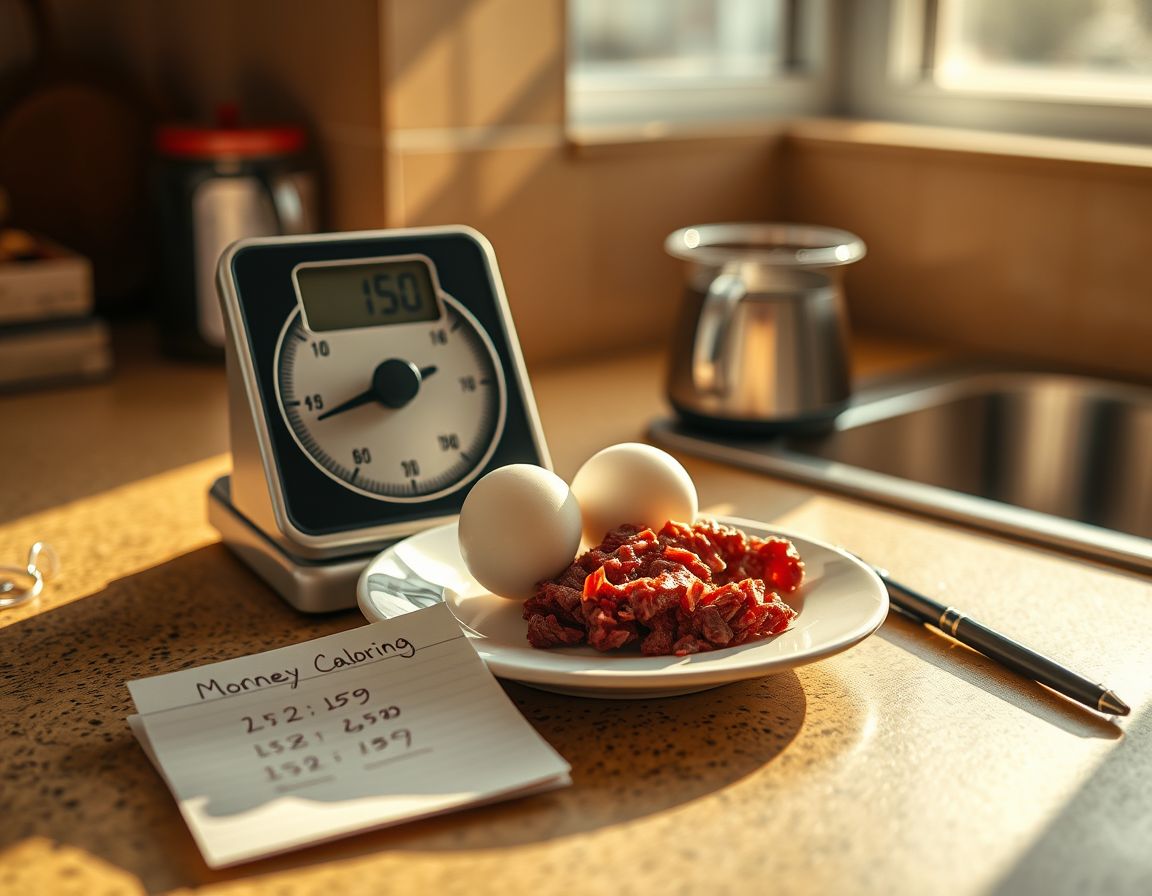
If every diet since your twenties handed you the same number, somewhere between 1,200 and 1,500 calories, it makes sense that you'd arrive at carnivore looking for a 1,500 calorie meal plan. For a smaller woman over 50 who sits most of the day, 1,500 calories is about right. For a taller or more active woman, it's too low. It's not everyone's number.
And on carnivore, we don't start there anyway. For the first 8 weeks, the house position is to eat protein to satiety and leave the calorie math alone. Here's why, and what 1,500 calories looks like in actual meat and eggs.
If you want a starting point built for you instead of a number borrowed from a 1990s diet book, the free calculator at /calculator.html works from your goal weight and gives you a personal protein and calorie starting point. A lot of you write in that it gave you 1,800 and that scared you. We'll get to that too.
This is not for everyone. Talk to your doctor first if you have high blood pressure, kidney or heart problems, diabetes, are pregnant, or take medicine.
What 1,500 calories looks like in carnivore food
Raw weights, because that's what the package says.
- Ground beef, 80/20. A pound raw is about 1,150 calories, so 1,500 calories is roughly 1.3 pounds, or about 21 oz. Split over three meals, that's a 7 oz portion each, and about 100 g of protein for the day.
- Eggs. A large egg is about 70-75 calories. Getting to 1,500 would take around 20 eggs. Nobody eats that. Eggs are a side, not the whole day.
- Ribeye. An 8 oz raw ribeye is about 600-650 calories. So 1,500 calories is roughly 19-20 oz of raw ribeye, carrying around 110 g of protein.
A realistic mixed day: three eggs cooked in a tablespoon of butter at breakfast (about 320 calories), 8 oz of 80/20 ground beef at lunch (about 575), and an 8 oz ribeye at dinner (about 625). That lands right around 1,500 with roughly 100 g of protein.
"I can't eat that much meat" is something I hear from a lot of you. Then you look at a 7 oz patty and realize you've eaten more than that at a barbecue.
Why I don't want you counting for the first 8 weeks
I did the 1,200 calorie thing too, more than once, and I know how hard that box is to climb out of. Counting in the first weeks of carnivore puts you right back in it. You end up forcing meat into 1,500 on a day your body wants 1,900.
So for the first 8 weeks, eat protein first, eat until you're comfortably full, stop, and don't look at the number. Judge the trial at 60-90 days, not before.
The most common mistake I see in women with a long dieting history is eating too little in weeks one to three. If you're cold, tired and foggy, that's usually why. I wrote up the pattern in signs you're not eating enough on carnivore. The keto version of that checklist lives on KetoDial: am I eating enough on keto.
When 1,500 is too low, and when it's about right
Picture two women, both 58. The first is 5'2", works at a desk, and has a goal weight of 130. For her, 1,500 calories is close to right.
The second is 5'8", walks the dog twice a day, lifts twice a week, and has a goal weight of 160. She's the one the calculator hands 1,800 to, and 1,800 isn't a mistake. A bigger, more active body burns more. For her, 1,500 is a deficit stacked on a deficit, and that's where the hair thinning and 3 am waking come from. Marcus explains the math in why your carnivore calorie number looks low.
Over 50, a good pace after the water-weight week is 0.5-1 lb a week. If you're losing at that pace on 1,800, dropping to 1,500 doesn't make it faster. It makes it harder to hold, and harder to keep your muscle.
Protein matters more than the calorie line after 50
Most readers do well at 0.8-1.0 g of protein per pound of goal weight. With a goal weight of 140, that's 112-140 g a day, spread as 30-40 g per meal. The spread matters more after 50, because muscle responds less to small doses than it did at 30.
At 1,500 calories, protein has to be deliberate. If your 1,500 is mostly fatty cuts with butter on top, you can hit the calorie line and still come in under 100 g of protein. Protein is the anchor and fat is the lever, so when calories are tight, trim the added fat first, never the meat. The fat side of this is covered in carnivore macros for women over 45.
"I'm not losing on 1,400. Do I go lower?"
Not first. A real stall is 3-4 weeks with no movement on the scale and no movement on the tape measure. A flat scale with an inch off your waist isn't a stall.
If it's a real stall, here's the order before anyone cuts calories:
- Sleep, stress and salt. Most people on carnivore land around 3-5 g of sodium a day, spread through the day, and under-salting looks a lot like a stall.
- A 7-day food audit. Write down everything, including the butter, the cream in your coffee and the cheese.
- Recalculate at your current weight. The number you started with isn't your number 20 lb later.
- Then a 2-week dairy break, or a deliberate maintenance break if you've been in a deficit for months.
Cutting below 1,400 is the last door, not the first, and most women over 50 never need to open it.
If you take medicine or have a health condition
For you, calories at maintenance is the sensible starting place. Maintenance means eating roughly what you burn, no deficit built in. The food change does a lot of the work on its own. If you take diabetes medicine and find yourself eating far less than you used to, tell your prescriber what you're eating. Any change to your medicine is their decision, and they can only make it if they know.
So, is 1,500 calories enough after 50? For some of you, yes. For many of you, it's the old box talking. Eat your protein, salt your food, give it 8 weeks, and let the number find you.
I'm not a doctor. I've researched this deeply and worked with many people, but I'm not your doctor. Everything I write is educational based on research and what I've seen work. Your situation might be different.