
This post may contain affiliate links. For educational purposes only, not medical advice. Details
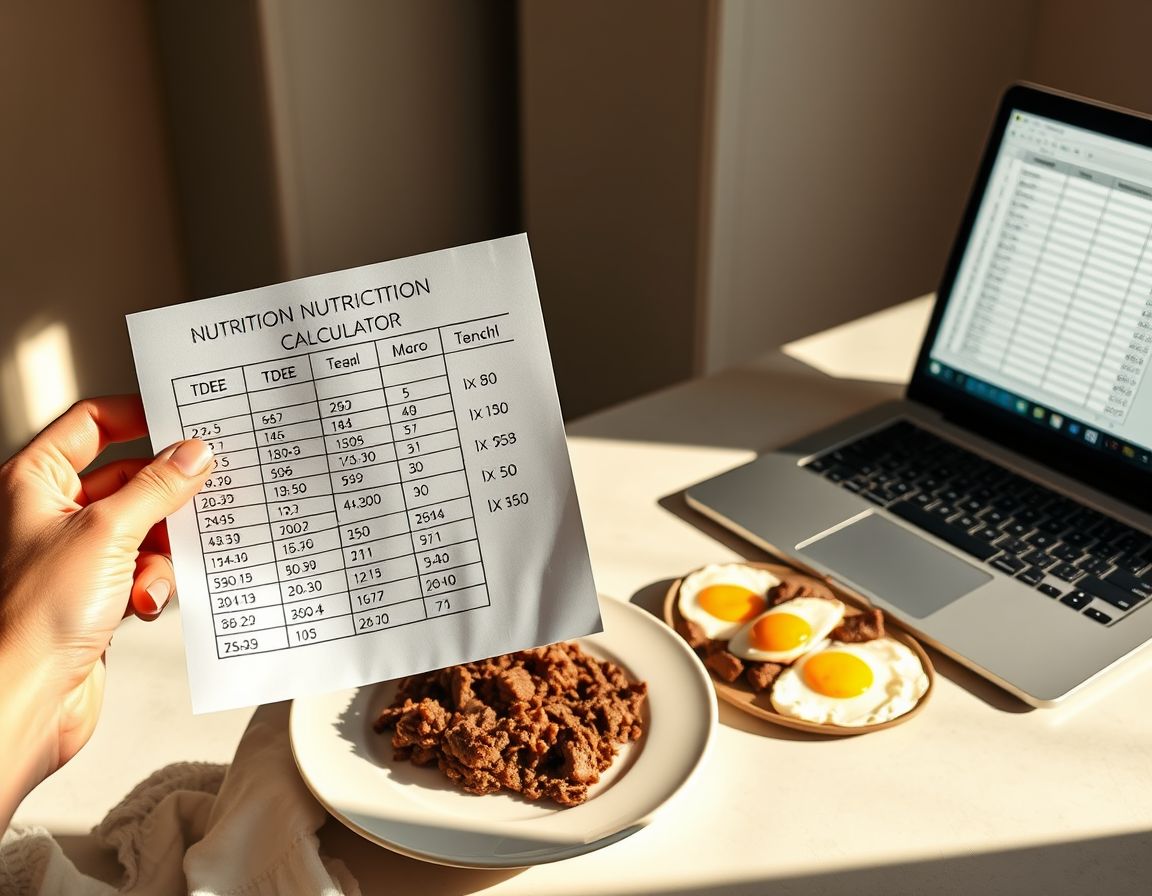
Your carnivore TDEE is the number of calories you burn in a day, and for most women over 45 it's lower than you'd guess. A typical estimate lands somewhere between 1,600 and 2,100 calories. That's not a sign something is broken. It's what the math says about a body that's older and moves less than it used to.
So if your number looks low, you're normal. The fix isn't to eat less or to panic. It's to treat the number as a starting point. Our free macro calculator gives you one in about two minutes, and the rest of this post shows you how to use it.
What TDEE actually is
TDEE stands for total daily energy expenditure. It's what your body burns in 24 hours, all in. Think of it as your maintenance number: eat that much and your weight holds steady.
It has four parts:
- Resting burn: the energy to keep you alive while lying still. Breathing, circulation, brain, temperature. This is usually 60 to 70 percent of the total.
- Digesting food: about 10 percent. Protein costs more to digest than fat does.
- Everyday movement: walking to the car, cooking, laundry, gardening. This part swings the most from person to person.
- Planned exercise: for many people, this is small.
No gym required. A calculator just asks how much you move in a normal week and picks a multiplier.
Why the number comes out lower than you expect
Three things pull it down after 45.
1. Less muscle. Muscle burns more energy at rest than fat does. Many people lose muscle slowly through their 40s and 50s, and the loss speeds up if protein is low or activity drops. Less muscle means a lower resting burn.
2. Smaller body than the one you remember. Calorie needs follow body size. A woman who weighed 140 lb at 30 and now weighs 190 lb has a bigger body, but the extra weight is mostly fat, and fat burns very little.
3. Honest activity levels. Most of us pick "moderately active" because we feel busy. But a desk job plus a daily walk usually counts as light activity. Pick the honest one and the number drops.
Here's the arithmetic for an example. A 58-year-old woman, 5 feet 5 inches, 190 lb. A standard estimating equation puts her resting burn near 1,440 calories. Multiply by 1.2 for a mostly seated day and her TDEE is about 1,730. Multiply by 1.375 for light activity and it's about 1,980.
That's a range of roughly 250 calories, just from how she answers one question. Estimates carry that kind of wiggle room, and it's the first reason to hold the number loosely.
Where "low" comes from on a weight loss goal
If you tell a calculator you want to lose weight, it subtracts a deficit from your TDEE. Using the same example, a modest deficit of 15 percent takes 1,730 down to about 1,470.
Seeing 1,470 can feel brutal. It's less than you ate on a bad day. But remember what this number is for. It's an estimate of where fat loss starts, not a rule you have to hit on a plate.
Pace matters here too. Past 50, a good loss rate is 0.5 to 1 lb a week. A pound of body fat is roughly 3,500 calories, so that pace needs a gap of about 250 to 500 calories a day. The example above sits right in that window. Faster isn't better. It tends to cost muscle, and muscle is what you're trying to keep.
How to use your number: the protocol
Here's the protocol. It's simple on purpose.
- Run the calculator once. Use your real weight, your honest activity level, and a goal weight if you have one.
- Write the number down and don't count for the first 8 weeks. Eat meat until you're satisfied. Protein-rich food is filling, and many people eat less on carnivore without trying.
- Anchor on protein, not calories. Aim for 0.8 to 1.0 grams per pound of your goal body weight. If your goal is 160 lb, that's 128 to 160 grams a day. Our protein guide shows what that looks like on a plate.
- Judge by weeks, not days. Weigh once or twice a week. Take a waist measurement every two weeks. Water shifts make daily weights noisy, especially in week one.
- If nothing moves for 3 to 4 weeks, audit. Write down everything you eat for 7 days, including butter, tallow, and any dairy. Then rerun the calculator at your current weight, not your starting weight.
"Don't count" and "audit when stalled" are the same plan at two different stages. First you let appetite do the work. Then, only if you stall, you check the numbers.
Reasons your real number may differ
An estimate can't see you. A few things it misses:
- Sleep. Poor sleep changes hunger and energy. Weeks 2 and 3 are often rough.
- Stress and menopause. Both can nudge appetite and daily movement, and neither shows up in a formula.
- Everyday movement. A new dog, a garden, or a bad knee can change your burn by a couple hundred calories.
- Medications. Some can affect appetite, fluid, or weight. The calculator doesn't know what you take.
On meds or diagnosed with something? You need medical supervision. Don't make changes alone. Bring your calculator number to your doctor or pharmacist and ask how your diet change fits with what you take. Medication changes are always your prescriber's call.
The mistake to skip
The common mistake is cutting below the number because it "looks too high" or chasing a faster result. Going lower than the estimate rarely speeds things up. It usually brings fatigue, cravings, and lost muscle.
If your number feels too low to live on, that's useful information. Try the first 8 weeks by appetite and see where you land. Your body will show you more than a formula can.
Want the bigger picture on how weight loss tends to unfold? Our post on carnivore weight loss results covers realistic timelines.
Stop overthinking it. Get the number, treat it as a starting line, eat to satiety, and review in a few weeks. The math doesn't lie, but it does start as a guess.
I'm not a doctor. I've coached people and competed myself, so I know what works. But I'm not your doctor. If you have health issues or take meds, check with someone qualified. Everything here is based on what works in practice and what research supports. Your mileage may vary.