This post may contain affiliate links. For educational purposes only, not medical advice. Details
Short answer: most people lose weight eating 5 to 8 ounces of cooked meat per meal, two or three times a day. Smaller frames and older bodies sit at the low end. Bigger frames and hard trainers sit at the top, sometimes above it.
That range comes from one number, not from tracking. Aim for 0.8 to 1.0 grams of protein per pound of your goal body weight, then divide it across your meals. Cooked meat runs roughly 7 grams of protein per ounce, so the ounces fall out on their own. No app required.
Start With Protein. The Ounces Follow.
You're not chasing a calorie ceiling. You're clearing a protein floor while you eat to fullness.
Protein is the anchor. Fat is the lever. A useful satiety baseline is about 1 gram of fat for every gram of protein, which is close to what a fatty cut gives you naturally. If you're cutting, pull the added fat down. Never the protein.
Per meal, 30 to 40 grams of protein is the target to clear. That matters more after 50, because your body handles protein in doses. Three moderate meals protect muscle better than one enormous dinner. More in how much protein you actually need on carnivore and carnivore after 60.
Ounce Ranges by Goal Weight
Cooked ounces of meat, per meal. Find your goal weight, then pick the number matching how often you eat.
- Goal weight 120 to 140 lbs (about 100 to 140 g protein/day): 5 to 6 oz per meal on three meals. 7 to 9 oz on two meals.
- Goal weight 140 to 160 lbs (about 115 to 160 g protein/day): 6 to 7 oz per meal on three meals. 8 to 11 oz on two meals.
- Goal weight 160 to 190 lbs (about 130 to 190 g protein/day): 7 to 9 oz per meal on three meals. 10 to 13 oz on two meals.
On two meals your portion goes past 40 grams of protein, and that's fine. Two solid meals works for plenty of people. Cramming a whole day of protein into one late plate doesn't.
If you'd rather see your own numbers, the free macro calculator gives you a starting point in a minute.
Raw or Cooked? This Is Where Numbers Break
Meat loses roughly a quarter of its weight when you cook it, so 8 ounces raw lands around 6 ounces cooked. A half pound of ground beef out of the package is a 6 ounce portion on the plate. When you're portioning at the counter, add about a third to the cooked number you want.
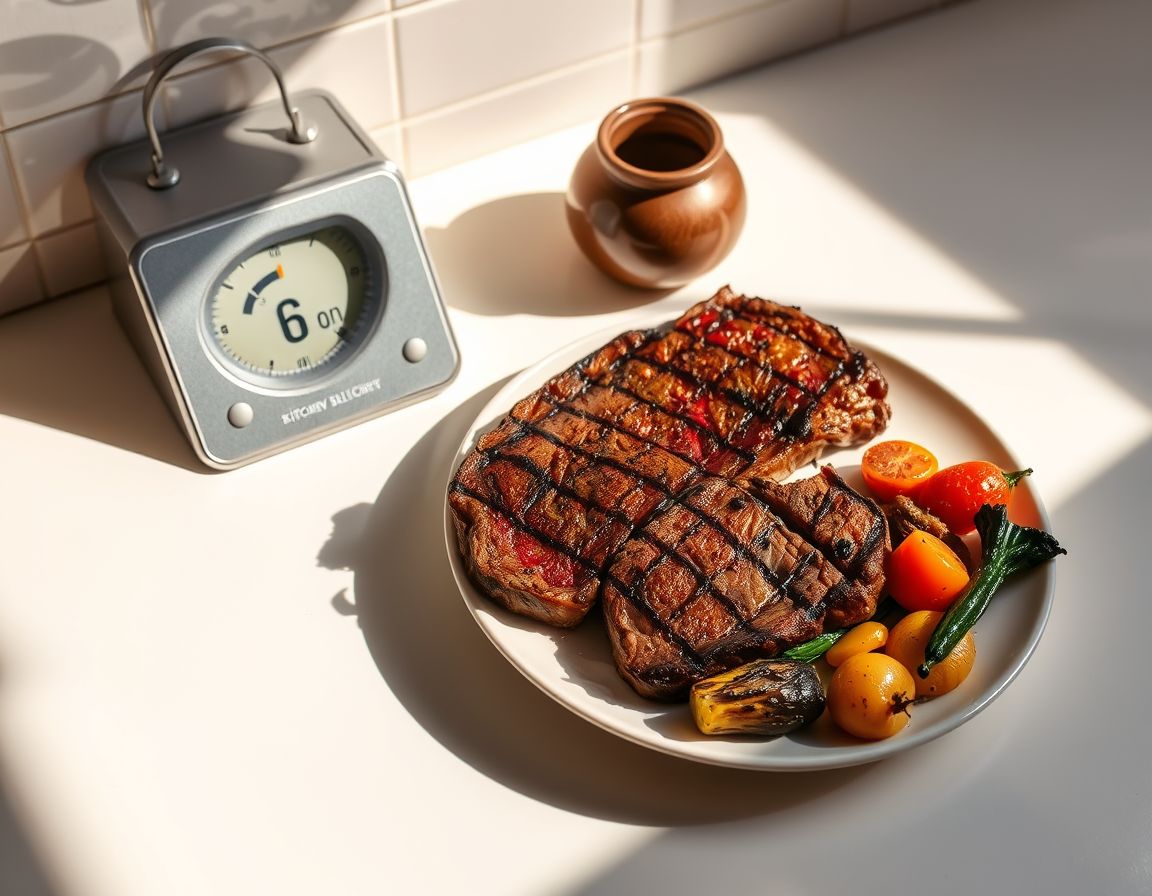
What the Plate Actually Looks Like
Nobody wants a scale at dinner. Use these instead:
- Your palm, not counting fingers, is roughly 4 to 5 oz cooked for a woman, 5 to 6 oz for a man. A palm and a half is a meal.
- Half a pound of raw ground beef makes one 6 oz cooked patty.
- A 12 oz ribeye is about 9 oz on the plate once cooked.
- Three large eggs add about 19 g of protein, an easy way to round a small portion up.
Weigh things for three or four days to calibrate your eye, then put the scale away.
Fatty Cuts Aren't the Problem. Added Fat Is.
The calorie density fear is understandable and mostly misdirected. Fat does carry more calories per gram, but a fatty cut also shuts your appetite off, which is the whole point. A half pound of raw 80/20 ground beef is about 570 calories. An 8 ounce raw ribeye is around 660. Neither is a problem at two or three meals a day.
Now look at what gets added. A tablespoon of butter is about 100 calories. Two tablespoons of tallow in the pan is 220. Heavy cream three times a day adds up quietly. Trim that layer first if the scale won't move, because it's the fat you didn't need to feel full. The keto version of this argument lands in the same place.
You don't have to force fat, either. Eat the fat attached to the meat, add a little if the cut is lean, and stop.
The Volume Thing Is Real, and It Usually Passes
Six ounces of steak looks small if you spent 40 years filling half the plate with rice. That reaction is honest, and it's temporary.
Many people describe the same shift in the first month: they keep serving the old portion and can't finish it. Fullness isn't only about how much space the food takes up. Steadier blood sugar and calmer hunger signals mean the two hour crash doesn't show up, so you stop eating on a schedule set by cravings.
If diving in feels like a lot, treat it as a time limited test. Three or four weeks, no cheating, then decide with real information. In what carnivore weight loss actually looks like we make the same case: judge this at 60 to 90 days, not day 6.
When to Adjust the Ounces
Don't count calories for the first 8 weeks. Hit your protein floor, eat to satiety, let the water weight settle. After the first week's 3 to 7 pound drop, a sustainable pace is half a pound to a pound and a half per week. Over 50, half a pound to a pound is good.
If nothing has moved for 3 to 4 weeks and the tape measure agrees with the scale, it's a real stall. Check sleep, stress, and electrolytes first. Then run a 7 day food audit that counts added fat and dairy honestly, and recalculate at your current weight.
The Protocol
- Set protein at 0.8 to 1.0 g per pound of goal weight.
- Split it across two or three meals, clearing 30 to 40 g each.
- That lands at 5 to 8 oz cooked meat per meal for most people.
- Add about a third for raw weight when you shop.
- Eat the fat on the cut. Trim added fat first if you stall.
- Hungry between meals? Add 2 oz of meat, not another spoon of butter.
- Reassess at 8 weeks, not 8 days.
Medications and diagnosed conditions require professional management. Period. If you take anything for blood pressure, blood sugar, or thyroid, tell your prescriber you're changing how you eat. Doses often need adjusting as weight comes off.
I'm not a doctor. I've coached people and competed myself, so I know what works. But I'm not your doctor. If you have health issues or take meds, check with someone qualified. Everything here is based on what works in practice and what research supports. Your mileage may vary.