
This post may contain affiliate links. For educational purposes only, not medical advice. Details
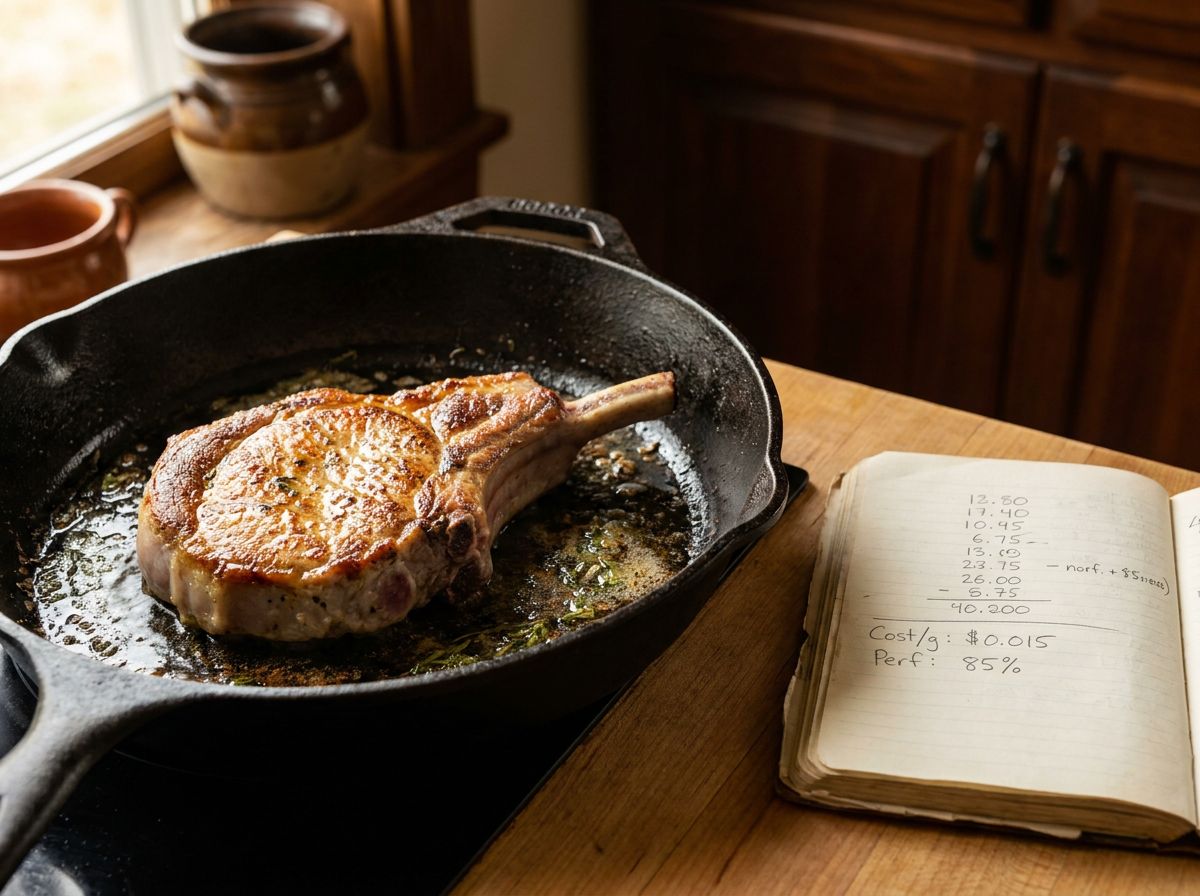
Here's the short answer. Pork chops come out dry for one main reason: they're cooked too long. Buy chops at least 1 inch thick, salt them ahead of time, sear them hot, and take them off the heat when the thickest part reads 145°F (63°C) on a thermometer. Rest them 3 minutes. That's the USDA safe temperature for pork, and it leaves the middle juicy and a little pink.
If you grew up eating pork cooked until it was white and tough all the way through, that wasn't you. The old advice was to cook pork much hotter. The USDA lowered it to 145°F with a rest back in 2011, and most of us never got the memo.
Is Pork Okay on Carnivore?
Yes. Pork is meat, and plenty of people on carnivore eat it every week. It's often one of the cheapest proteins in the store, and it gives you a break from beef. We cover the full question, including chicken and bacon, in carnivore without much beef. This page is about cooking chops so you actually want to eat them.
Why Pork Chops Turn Out Dry
- Cooked too long. A modern pork chop is lean. A few extra minutes takes it from juicy to cardboard.
- Too thin. Thin chops overcook in the time it takes to brown the outside.
- The wrong chop for the method. Lean loin chops need fast, careful cooking. Fattier shoulder chops forgive mistakes.
- No thermometer. Guessing by color or by cutting into it is how most chops get overcooked.
Which Pork Chop to Buy
| Chop | What it's like | Best way to cook |
|---|---|---|
| Bone-in rib chop | Juicy, a little fat, the bone helps protect it | Pan sear, oven finish if thick |
| Boneless loin chop | Very lean, dries out fastest | Fast sear, watch the thermometer closely |
| Shoulder or blade chop | Fattier, more marbling, the most forgiving | Pan sear, or braise low and slow |
| Thick-cut (1.25 to 1.5 inches) | Easiest to keep juicy | Sear, then finish in the oven |
On carnivore, fat is fuel. If you can find shoulder or blade chops, start there. They're usually cheap, and they're hard to ruin. Buying a whole pork loin and slicing your own thick chops is another way to save money.
The Method, Step by Step
Step 1: Salt ahead. Salt both sides well, the way you'd season a steak. Leave the chops uncovered on a plate in the fridge for at least an hour, or up to a day. The salt seasons the meat all the way through and helps it hold on to moisture.
Step 2: Pat dry. Blot every side with paper towels. A wet chop steams. A dry chop browns.
Step 3: Heat the pan. Use cast iron or a heavy pan over medium-high heat for a few minutes. Add a spoonful of tallow, lard or butter. When it shimmers, you're ready.
Step 4: Sear. Lay the chops down and leave them alone. For a 1-inch chop, that's usually 3 to 4 minutes per side. Hold the fatty edge against the pan for a minute with tongs to crisp it.
Step 5: Finish thick chops in the oven. If your chops are thicker than 1 inch, move the pan into a 400°F (200°C) oven after searing. Start checking after about 5 minutes.
Step 6: Check the temperature. Put an instant-read thermometer into the thickest part, away from the bone. Take the chops off the heat at 145°F (63°C).
Step 7: Rest 3 minutes. The juices settle back into the meat instead of running onto the plate.
In the Air Fryer
Pat dry, salt, and cook at 400°F (200°C). A 1-inch chop usually takes 10 to 14 minutes, turned once halfway. Air fryers vary a lot, so check early with the thermometer and pull at 145°F. Our air fryer guide has more on getting a good crust.
Already Overcooked? Here's the Rescue
Slice the chop thin and warm it gently in a pan with butter or the pan drippings and a splash of water or broth. Thin slices with fat and liquid eat a lot better than a dry whole chop. Next time, pull it sooner.
Leftovers
Refrigerate leftovers within 2 hours and eat them within 3 to 4 days. Don't reheat a whole chop on high in the microwave. Slice it and warm it in a pan with a little fat, just until warm.
Why Pork Earns a Spot in the Week
- Cost: pork chops and pork loin are often cheaper per pound than most beef steaks. Check your local prices.
- Variety: eating the same beef every day is one of the reasons people quit. A chop twice a week breaks it up.
- Thiamine: pork is one of the richest food sources of thiamine (vitamin B1), which you don't get much of from beef and eggs alone.
- Easy to chew: a properly cooked chop is tender. If tough steak has become a struggle, a juicy pork chop is a good alternative.
Pork has a bit more omega-6 fat than beef. On a carnivore plate with no seed oils, that's a small difference, and many people mix pork and beef across the week without any issue. If you have a specific health concern, ask your doctor.
The Whole Thing on One Card
- Buy: 1 inch thick or more, shoulder or bone-in if you can
- Salt: both sides, 1 hour to 1 day ahead, uncovered in the fridge
- Dry: paper towels, every side
- Sear: hot pan, 3 to 4 minutes per side for 1 inch
- Thick chops: finish in a 400°F (200°C) oven
- Pull: 145°F (63°C) in the thickest part
- Rest: 3 minutes
I'm not a doctor. I've coached people and cooked a lot of pork chops, so I know what works in a real kitchen. If you have health issues or take meds, check with someone qualified before changing how you eat. Temperatures here follow USDA food safety guidance. Your mileage may vary.