
This post may contain affiliate links. For educational purposes only, not medical advice. Details
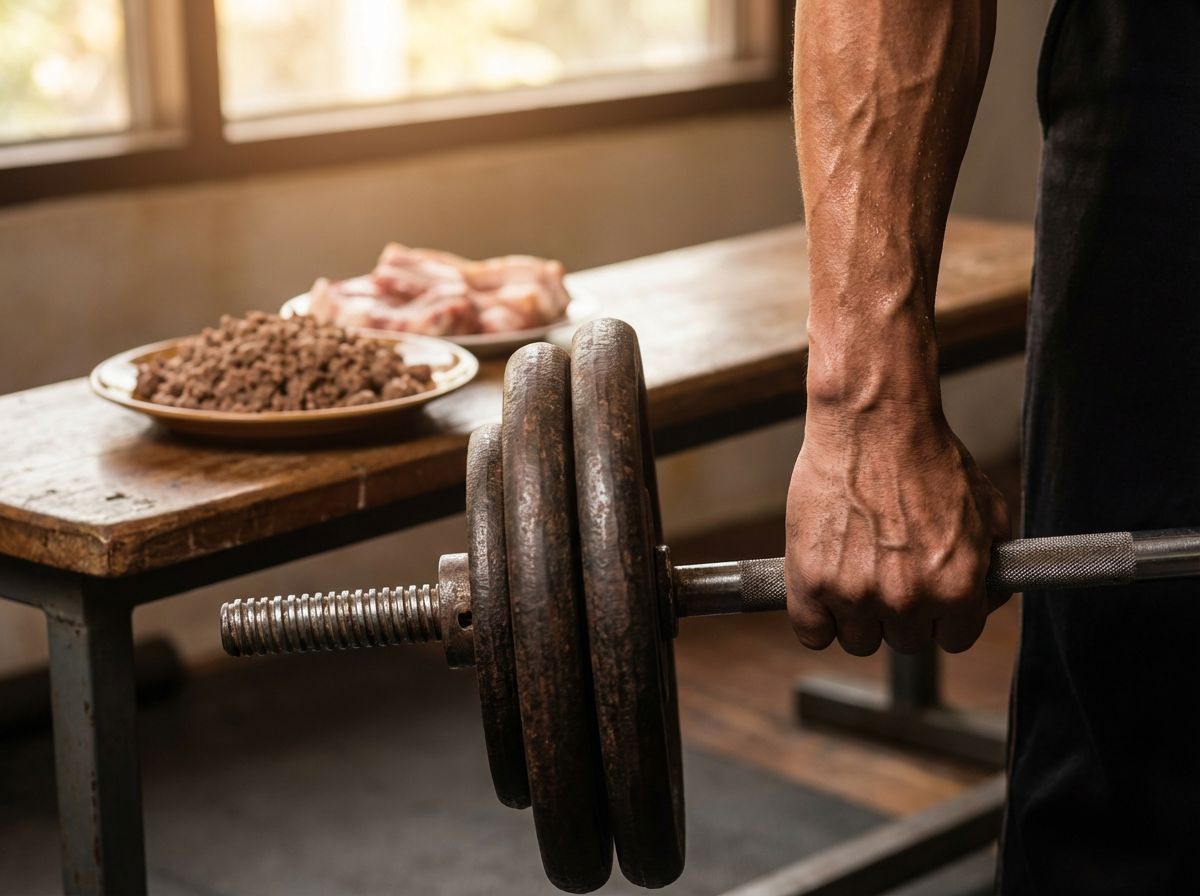
You've been told your whole life: carbs = strength.
No carbs = weak. Flat. Pathetic in the gym.
That's complete nonsense.
I've added 40 pounds to my deadlift and 25 pounds to my bench on zero-carb carnivore. My clients do the same. Here's how protein leverage works and why carbs are optional for strength.
The Carb-Strength Myth
The fitness industry has brainwashed you into thinking muscle glycogen = performance.
Reality: Your muscles store about 400-500g of glycogen. That's enough for 90-120 minutes of intense training.
On carnivore, your muscles adapt to burn fat and ketones. You still have glycogen. You just don't need to constantly refill it with 300g of carbs per day.
Key point: Strength is built with progressive overload + adequate protein, not carbs.
Carbs help with volume and endurance. But raw strength? That's neurological adaptation and muscle protein synthesis. Both happen just fine without carbs.
How Protein Leverage Builds Muscle on Carnivore
When you eat only meat, your protein intake skyrockets. Most carnivores eat 180-250g protein per day without trying.
This is massive for muscle growth because:
1. Protein Turnover IncreasesYour body is constantly breaking down and rebuilding muscle. High protein intake shifts the balance toward synthesis. More building, less breakdown.
2. Leucine Threshold MaximizedLeucine is the amino acid that triggers muscle protein synthesis (MPS). You need about 2.5-3g leucine per meal to maximize MPS.
8 oz of steak = 3.5g leucine. You hit the threshold every meal.
On a standard diet with carbs taking up half your calories, you rarely hit optimal leucine intake.
3. No Insulin ResistanceInsulin is anabolic, but only if you're insulin sensitive. Most lifters eating high-carb diets are mildly insulin resistant from years of sugar and processed food.
Carnivore restores insulin sensitivity. When you do eat (or when your body releases insulin from protein), it actually works.
4. Recovery AcceleratesInflammation from grains, seed oils, and processed foods slows recovery. Carnivore eliminates all inflammatory foods. You recover faster between sessions.
Faster recovery = more volume over time = more gains.
The Adaptation Period (Weeks 1-4)
Full transparency: The first month sucks for performance.
You'll feel weak. Your lifts will drop 10-15%. You'll wonder if you made a massive mistake.
This is normal. Your muscles are learning to burn fat instead of glycogen. It takes 3-4 weeks.
What to do during adaptation:- Reduce training volume by 30% (fewer sets per session)
- Maintain intensity (keep weight heavy, reduce reps if needed)
- Add salt to every meal (electrolytes are critical)
- Sleep 8+ hours
- Be patient
By week 5, strength rebounds. By week 8, you're back to baseline. By week 12, you're setting PRs.
The Carnivore Strength Protocol
Here's the exact approach I use with clients:
1. Protein Target: 1.0-1.2g per pound of GOAL body weightIf your goal weight is 180 lbs, that is 180-215g of protein a day. We use goal weight rather than current weight so the target does not inflate for a body you are trying to change. Split it across meals: 30-40g per meal beats one giant dose.
How to hit this:- 16 oz ribeye = 100g protein
- 8 eggs = 50g protein
- 8 oz ground beef = 50g protein
That's 200g. Easy.
2. Fat for EnergyFat is your fuel source. Don't go lean-only carnivore if you're lifting heavy.
Let fat follow protein. A roughly 1:1 fat-to-protein ratio by grams is the satiety baseline, and you do not need to force fat to 70-80% of calories.
Best fat sources:- Ribeye (highest fat-to-protein ratio)
- Ground beef (80/20 or 73/27)
- Butter, tallow, beef fat trimmings
Eat 2-3 large meals per day. No grazing.
Why? Constant eating blunts growth hormone (GH) and reduces autophagy. Both are critical for recovery and adaptation.
Sample meal timing:- Meal 1: 12 PM (post-workout)
- Meal 2: 6 PM (dinner)
That's it. 18-hour fast between 6 PM and 12 PM the next day.
4. Training: Heavy, Low VolumeCarnivore thrives on strength-focused programming, not bodybuilding splits.
Best approach:- 3-4 days per week
- Full-body or upper/lower split
- Focus on compounds: squat, deadlift, bench, press, rows
- Sets: 3-5 per exercise
- Reps: 3-6 (strength) or 6-10 (hypertrophy)
- Monday: Squat, Bench, Rows (heavy)
- Wednesday: Deadlift, Overhead Press, Pull-Ups (heavy)
- Friday: Squat, Bench, Rows (volume day, lighter weight)
Keep sessions under 60 minutes. Intensity matters more than volume on carnivore.
5. Electrolytes Are Non-NegotiableLow-carb depletes glycogen, which releases water and sodium. If you don't replace electrolytes, you'll feel like death and your lifts will tank.
One check before you add electrolytes. If you take a daily pill for blood pressure or your heart, a water pill, or anything to do with your kidneys, talk to your doctor or pharmacist before you add potassium from a supplement, from a salt substitute like Lite Salt or No Salt, or from a daily electrolyte packet. Some of those medicines already hold potassium in your body, so extra on top is the problem rather than the help. Same conversation if a blood test has ever come back with a note about your potassium, your sodium, or your kidney function.
This section used to carry daily milligram targets. I've taken them down rather than quietly swap in smaller ones, because one number aimed at every reader is wrong for the people it can hurt.
What still holds: salt your food and salt it to taste, heavier on days you sweat through your shirt. Salted water before you train if it sits well. Meat brings potassium and magnesium with it. If you're still cramping after a week of salting like you mean it, that's a blood panel, not a bigger scoop.
The Results: What to Expect
Here's the timeline based on my clients' data:
Month 1:- Strength: Down 10-15% (adaptation)
- Body composition: Losing fat, minimal muscle loss
- Energy: Variable (fatigue during adaptation)
- Strength: Back to baseline
- Body composition: Leaner, muscle definition improving
- Energy: Stabilizing
- Strength: Exceeding baseline, PRs starting
- Body composition: Noticeably leaner, muscle fullness returning
- Energy: High and consistent
- Strength: 5-10% above baseline
- Body composition: Best shape of your life
- Energy: Bulletproof
Key metric to track: Strength-to-bodyweight ratio.
If you weigh 200 lbs and deadlift 400 lbs, your ratio is 2.0.
After 6 months on carnivore, you might weigh 185 lbs and deadlift 420 lbs. New ratio: 2.27.
You're stronger relative to your bodyweight, even if absolute strength stayed the same.
Common Mistakes That Kill Gains
1. Not Eating EnoughCarnivore is satiating. You'll naturally eat less. But if you're training hard, you need calories.
Track your weight weekly. If you're losing more than 1 lb per week and feeling weak, eat more fat.
2. Going Too LeanEating chicken breast and egg whites on carnivore is a disaster. You'll crash testosterone, kill performance, and feel miserable.
Eat fatty cuts. Ribeye, ground beef, pork belly, salmon.
3. OvertrainingWithout carbs to quickly replenish glycogen, recovery takes longer. If you're training 6 days per week with high volume, you'll burn out.
Reduce frequency. Increase intensity.
4. Ignoring ElectrolytesYou cannot perform without sodium. Period. If you're not salting your food heavily, you're sabotaging yourself.
5. Expecting Instant ResultsIt takes 4-8 weeks to adapt. If you quit at week 3 because your bench dropped 10 lbs, you'll never see the benefits.
Commit to 90 days minimum.
Do You Need Carbs for Strength? No.
Here's the data that matters:
Strength is built by:1. Progressive overload (adding weight or reps over time)
2. Adequate protein intake (1g+ per lb bodyweight)
3. Recovery (sleep, low inflammation)
Carbs do not appear on that list.
Carbs can help with training volume (more sets, more reps in a session) because they quickly replenish glycogen. But volume ≠ strength.
You can build just as much strength on 3 heavy sets as you can on 6 moderate sets. Carnivore forces you to train smarter, not just harder.
Research: A 2021 study in the Journal of the International Society of Sports Nutrition found no difference in strength gains between low-carb (< 50g carbs) and high-carb (> 250g carbs) groups when protein was equated at 1.6g/kg bodyweight.
Translation: Protein drives strength. Carbs are optional.
The Bottom Line
Carbs are not required for strength. Protein is.
Carnivore gives you 200+ grams of protein per day effortlessly. That's the real driver of muscle growth.
Yes, the first month is rough. Your lifts will drop. You'll doubt everything.
But by month 3, you'll be leaner, stronger, and more metabolically efficient than you've ever been.
And you'll realize carbs were never the answer. They were just a crutch.
Not a doctor. I've coached people and competed myself, so I know what works in practice. But I'm not your doctor. Protein targets this high aren't right for everyone: reduced kidney function changes the math, and so does liver disease or any diagnosed metabolic condition. Get cleared before you stack a new training program on top of a new way of eating. Your mileage may vary.
---
References:- Paoli A et al. Ketogenic diet does not affect strength performance in elite artistic gymnasts. J Int Soc Sports Nutr. 2012.
- Wilson JM et al. The effects of ketogenic dieting on body composition, strength, power, and hormonal profiles in resistance training males. J Strength Cond Res. 2020.
- Volek JS et al. Metabolic characteristics of keto-adapted ultra-endurance runners. Metabolism. 2016.
- Vargas S et al. Efficacy of ketogenic diet on body composition during resistance training in trained men. J Int Soc Sports Nutr. 2018.