
This post may contain affiliate links. For educational purposes only, not medical advice. Details
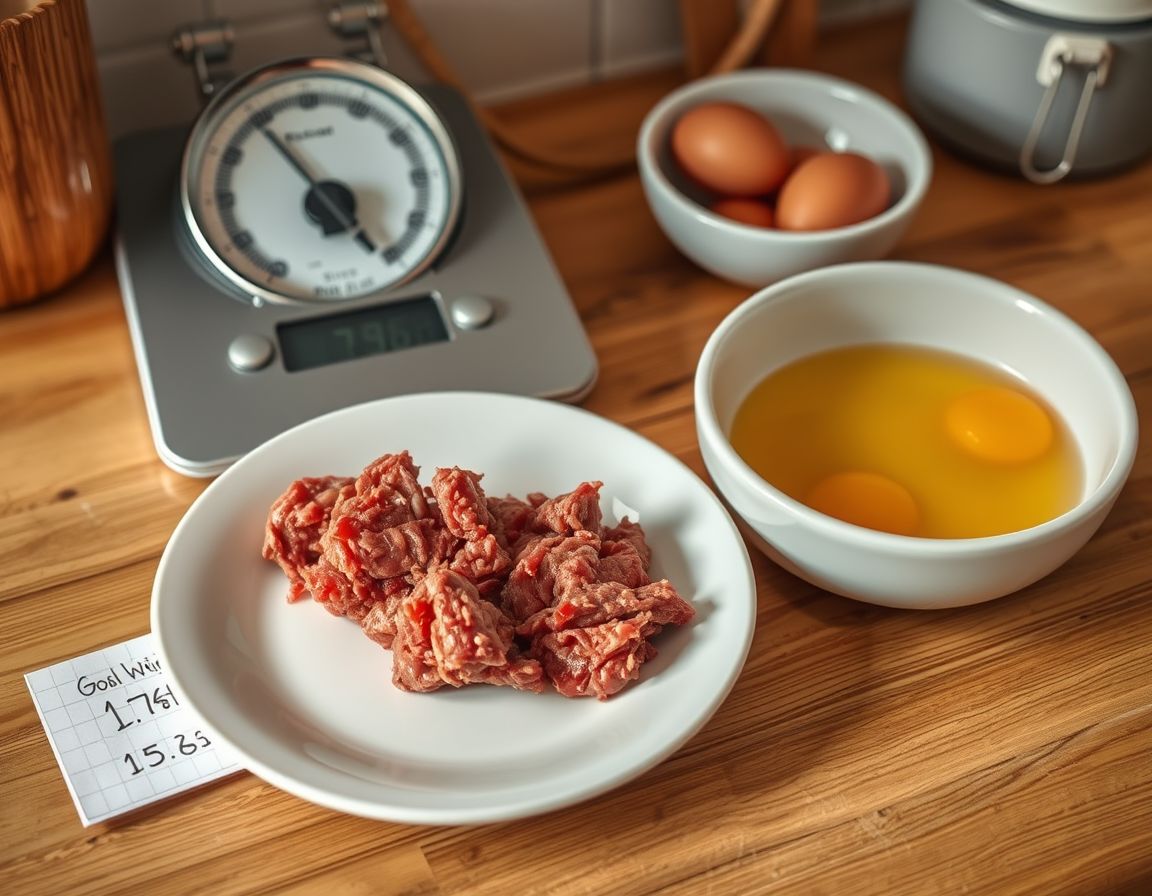
Most women over 50 on carnivore need about 1.25 to 2.25 pounds of raw meat a day, plus a few eggs. Your exact number comes from your goal weight, not your current weight. Eat toward the low end if your appetite is small. Eat toward the high end if you're hungry between meals.
Here's the protocol. Take your goal weight in pounds. Multiply by 0.8 and by 1.0. That's your daily protein range in grams. Then divide by 5 to get ounces of raw meat, because 4 ounces of raw 80/20 ground beef holds roughly 20 grams of protein. A 150 lb goal means 120 to 150 grams of protein, or about 24 to 30 ounces of meat. That's 1.5 to 1.9 pounds.
Want the math done for you? The free macro calculator asks for your goal weight and runs the number off that. Either way, the rest of this post turns the number into a shopping list.
Your daily range by goal weight
Find the row closest to your goal weight. These are raw ounces of meat, using about 5 grams of protein per ounce. Eggs count too, so see the egg swap below.
- Goal 130 lb: 104-130 g protein, about 21-26 oz of meat (1 lb 5 oz to 1 lb 10 oz)
- Goal 150 lb: 120-150 g protein, about 24-30 oz (1 lb 8 oz to 1 lb 14 oz)
- Goal 170 lb: 136-170 g protein, about 27-34 oz (1 lb 11 oz to 2 lb 2 oz)
- Goal 190 lb: 152-190 g protein, about 30-38 oz (1 lb 14 oz to 2 lb 6 oz)
Egg swap: one large egg is about 6 grams of protein. Treat 1 egg as roughly 1 ounce of meat. Two eggs for breakfast means two fewer ounces on your plate later.
Prefer fish, chuck, or pork? Same math. Most raw red meat lands between 4.5 and 5.5 grams of protein per ounce. The range is wide on purpose. You're shopping, not working in a lab.
Where you land inside the range
This is the part nobody explains. The range isn't a target to hit exactly. It's a lane.
- Low appetite or you feel full all day: aim for the bottom of your lane. Start with eggs and softer cuts like ground beef or salmon. Smaller, more frequent meals are fine.
- Hungry two hours after eating: move up toward the top of your lane before you add butter or tallow.
- Losing weight and still hungry: check protein first. Added fat is the first thing to trim when you cut, never the protein.
Aim for 30 to 40 grams of protein at each meal. That works better than one giant dinner, especially after 50. And don't count for your first 8 weeks. Use this range to shop and plate your food, then eat until you're satisfied. If you stall for 3 to 4 weeks with no change on the scale or the tape measure, that's when you track a 7-day audit.
One grocery-ready day (150 lb goal)
Goal range: 120-150 grams of protein. This day lands near 132 grams.
- Breakfast (about 34 g): 4 eggs scrambled with 2 oz of ground beef.
- Lunch (about 40 g): 8 oz raw ground beef, 80/20, made into two patties.
- Afternoon (about 18 g): 3 hard-boiled eggs with salt.
- Dinner (about 40 g): 8 oz raw chuck steak, pan-seared.
Total: 18 oz of raw meat (1 lb 2 oz) and 7 eggs. Fat comes out close to 1:1 with protein by grams, and you never needed to add butter. That's the satiety baseline we use. If you want to cut later, trim added fat before you touch a single ounce of meat.
The shopping list for that day
- 1 lb ground beef, 80/20 (you use 10 oz, the rest is a buffer)
- 8-10 oz chuck steak
- 1 dozen eggs
- Salt
Cost check: ground beef at about $5.50 a pound, chuck at about $7.50 a pound, and eggs at about $4 a dozen. That day runs around $8 to $10. Our budget range for a solo eater is $5 to $10 a day, so it fits. Drop to 90 grams of protein from cheaper ground beef and eggs, and you're near $6.
Buying for a week? Multiply by 7. That's about 7 lb of ground beef, 3.5 lb of chuck, and 4 dozen eggs. Buy family packs, split them, and freeze flat in zip bags. Thaw one day's food in the fridge the night before.
What to do when you can't finish the plate
It happens a lot after 50, and especially in the first few weeks. Stop overthinking it. Here's the order:
- Eat the protein first, then stop when you're comfortable.
- Move the leftover meat to the next meal instead of forcing it.
- Add a pinch more salt and a big glass of water. Appetite often returns.
- If you're under your range for more than a week or two, talk to your doctor about it.
Skipping meals every day isn't the goal. A steady 90 to 100 percent of your lane beats a perfect day followed by three bad ones.
How this connects to our other numbers
This post is the whole-day view. Two other posts cover the details around it:
- Need the per-meal number? Read how many ounces of meat per meal to lose weight.
- Not moving much right now? Read how much to eat on carnivore if you barely move.
Liver is optional. If you add it, cap it at 4 to 8 ounces per week, and count it inside your range.
Check with your doctor if any of this applies
On medications or diagnosed with something? You need medical supervision. Don't make changes alone. That goes double for kidney disease, where protein targets need a clinician, not a formula. And if you take diabetes or blood pressure medicine, a big change in food can change how those medicines work. Your prescriber decides about dosing. Ask before you start.
I'm not a doctor. I've coached people and competed myself, so I know what works. But I'm not your doctor. If you have health issues or take meds, check with someone qualified. Everything here is based on what works in practice and what research supports. Your mileage may vary.