
This post may contain affiliate links. For educational purposes only, not medical advice. Details
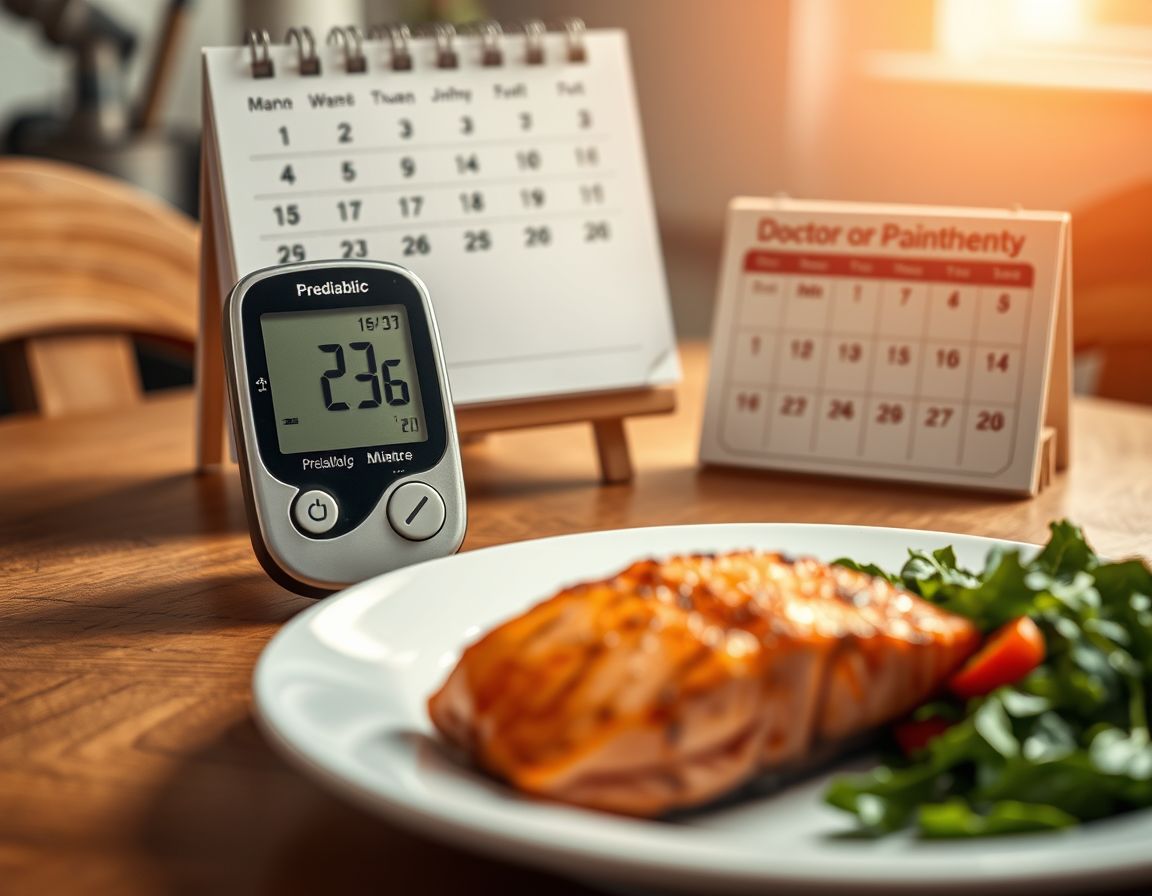
You just got the word "prediabetes" at your checkup, and your doctor said to come back in three or six months. So can a carnivore diet reverse prediabetes? Many people do see their numbers return to the normal range, often within one recheck cycle. The honest word for that is remission, not cure. Your numbers stay normal while you keep eating this way, and the tendency usually comes back if the carbs do.
Prediabetes is the stage where your body asks for help before it needs medicine. This post covers which numbers tend to move first, roughly when, and how to line it all up with your doctor's recheck date. If you want a starting point for your daily protein and fat, the free macro calculator will give you one in a couple of minutes.
Who This Post Is For
This is for you if you've been told you're prediabetic and you're not taking any diabetes medicine yet. If you already have a type 2 diagnosis, I've written about that separately in Type 2 Diabetes on Carnivore: Blood Sugar Results.
This is not for everyone. Talk to your doctor first if you have high blood pressure, kidney or heart problems, diabetes, are pregnant, or take medicine. Cutting carbs can drop blood sugar quickly, and on some medicines it can drop too low. Any change to your dose is your prescriber's call, not mine and not yours alone.
What the Numbers Mean
Two tests usually earn the prediabetes label. In the US, prediabetes is a fasting glucose of 100-125 mg/dL or an A1c of 5.7-6.4%. Here in Canada, the cutoffs are a fasting glucose of 6.1-6.9 mmol/L or an A1c of 6.0-6.4%.
Fasting glucose is a snapshot of one morning. A1c is closer to a three-month average, because it measures sugar stuck to red blood cells, and those cells live about three months. That one detail explains the whole timeline below.
What Usually Moves First
Everyone's body is different, and these are patterns, not promises. Here's the order I see most often.
- Weeks 1-2: post-meal blood sugar and the scale. With almost no carbs coming in, the big after-meal spikes tend to flatten fast. Most people also drop a few pounds of water in week one.
- Weeks 2-6: fasting glucose and triglycerides. Many people see fasting glucose ease down in this window. Triglycerides often fall early too, sometimes dramatically.
- Weeks 4-12: your waist. Belly fat is closely tied to insulin resistance, so a tape measure around your navel is one of the best home tools you have. Over 55, a pace of 0.5-1 lb of fat loss per week is a good result.
- Around 3 months: A1c. Because it reflects roughly three months of blood, A1c is the slow one. A test at six weeks will show partial progress at best.
One Number Can Look Wrong at First
Some people see fasting glucose creep up a little after several weeks on carnivore, even while everything else improves. When carbs are very low, muscles may hold back on using glucose and save it for the tissues that need it. If you're wearing a monitor, my CGM guide explains what to look at.
So don't judge the plan on one morning's reading. Look at the trend, your waist, and your triglycerides together. If your fasting glucose keeps rising over a month, take that to your doctor rather than guessing.
"But the Brain Needs Sugar"
You may hear this from family, even from someone who works in health care. It's half right. Some cells do need glucose, and your liver makes that glucose on its own from protein and fat. Your brain can also run a large share of its energy on ketones once you're adapted.
You don't need to win that argument at dinner. Your lab results will make the case for you.
Working With Your Doctor's Recheck Date
We usually say a fair trial is 60-90 days. That lines up neatly with the A1c clock, which makes your recheck the perfect checkpoint.
- Tell your doctor your plan now. Some doctors shrug because, honestly, most patients don't change how they eat. A plan and a date change that conversation.
- Ask for the recheck at about 12 weeks, not two weeks in. An early A1c can disappoint you for no good reason.
- Ask whether fasting insulin and a lipid panel can be added. Fasting insulin can show insulin resistance improving even before glucose does. A triglyceride to HDL ratio under 2 is a favorable sign.
- Track your waist weekly at home. Same spot, same time, before breakfast.
- Bring a one-page summary. What you eat, your weight and waist, any home glucose readings.
One note from my own life. I was born with beta thalassemia minor, an inherited blood condition. Conditions like mine, plus anemia or recent blood loss, can make A1c read higher or lower than your true average. If any of that applies to you, ask your doctor whether another test should sit alongside it.
Low Numbers Matter Too
Going down is the goal, but lower isn't always better. An A1c in the low 4s isn't a gold star, it's worth a conversation. The same goes for fasting glucose readings below 70 mg/dL (3.9 mmol/L) along with shakiness, sweating, or confusion. Without diabetes medicine that's uncommon, but tell your doctor if it happens.
What to Actually Eat
Keep it simple. Ground beef and eggs make a cheap, easy first week. Aim for 30-40 g of protein at each meal, which matters more as we age. Salt your food well, because the early water loss takes sodium with it. Don't count calories for the first eight weeks.
Many women with PCOS notice their cycles settle on this way of eating, because the common thread is insulin. PCOS was the condition that taught me insulin resistance responds to what's on the plate. If you'd like to go deeper on that, our sister site has a good piece on insulin resistance beyond weight loss.
Remission Is the Honest Goal
People who've managed blood sugar this way for years often say the same thing. Their numbers stay normal as long as they keep eating this way, and they creep back when carbs return. That's not failure. It's useful information about how your body handles sugar.
Give it 90 days, measure what matters, and walk into that recheck with your doctor on your side.
I'm not a doctor. I've researched this deeply and worked with many people, but I'm not your doctor. If you have health conditions, take medications, or need specific guidance, talk to someone who knows your full medical picture. Everything I write is educational based on research and what I've seen work. Your situation might be different.