
This post may contain affiliate links. For educational purposes only, not medical advice. Details
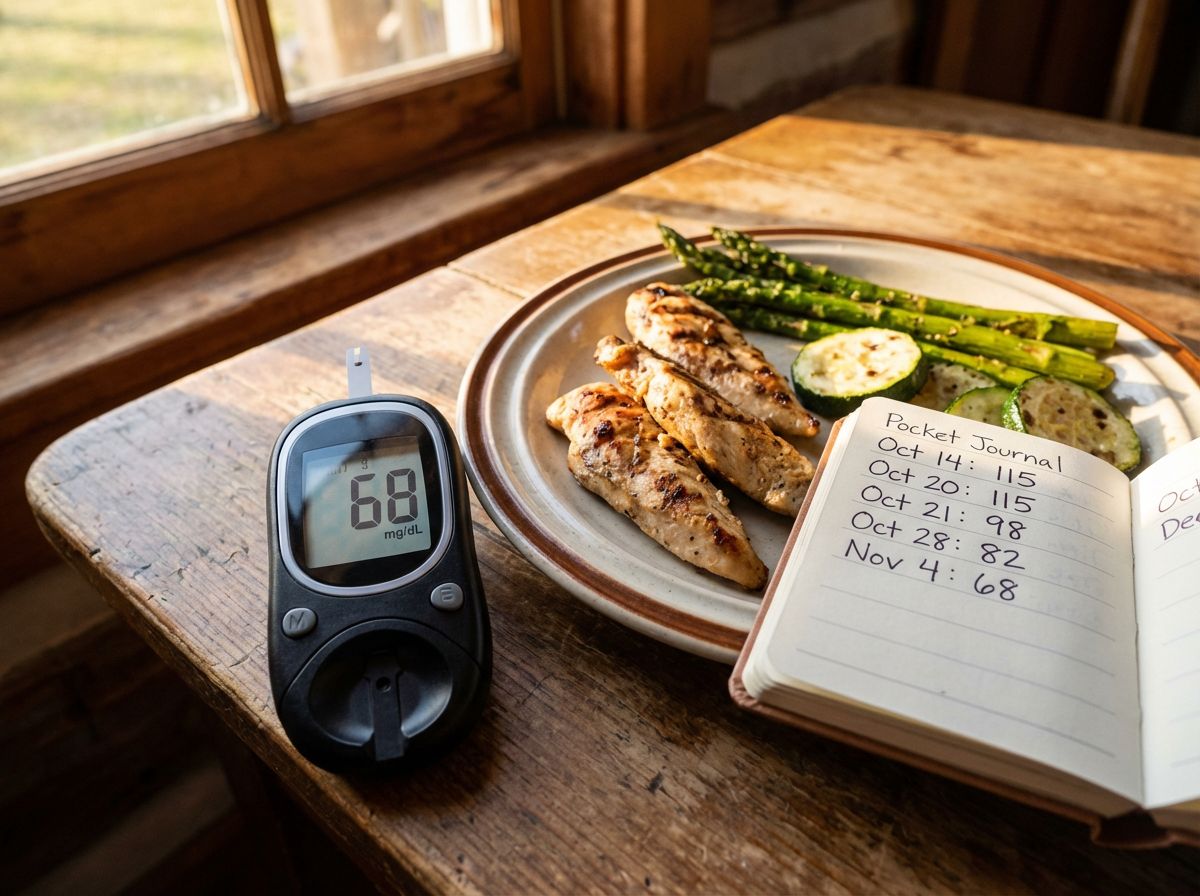
The Numbers Tell the Story
When a type 2 diabetic stops eating carbohydrates, blood sugar drops. That's not controversial. Carbs raise blood sugar. Remove them, and blood sugar falls. It's straightforward biochemistry that any endocrinologist would agree with in principle.
What surprises people is how fast it happens, how dramatic the results can be, and how many diabetics end up reducing or eliminating medication entirely. The clinical data on very low-carb diets for type 2 diabetes is now substantial enough that several major health systems have started incorporating it into treatment protocols.
Planning meals around blood sugar? Take your numbers to your doctor. Get your daily numbers, free, in about two minutes.
What the Clinical Research Shows
The Virta Health trial is the largest and longest study on very low-carb diets for type 2 diabetes, following 349 patients over two years with continuous physician oversight. After one year, 60% of participants reversed their diabetes diagnosis (HbA1c below 6.5% without glucose-lowering medication). After two years, 54% maintained that reversal.
Average HbA1c dropped from 7.6% to 6.3% at one year. That's the difference between "diabetic" and "normal range" for most lab reference values. The control group, following standard diabetes care, saw no significant change in HbA1c over the same period.
Dr. Eric Westman at Duke University has published similar findings across multiple studies. His clinic has treated over 4,000 diabetic patients with very low-carb protocols since 2006. Average HbA1c reductions of 1.0-1.5 points are typical within the first three months. A 2020 review he co-authored in Nutrition documented consistent improvements across every carbohydrate-restricted trial published in the previous decade.
New to carnivore? Start with our complete carnivore food list and our carnivore meal plan guide.
A separate 2019 study published in Diabetes Therapy followed 96 type 2 diabetics on a very low-carb diet for one year. Average HbA1c dropped from 7.7% to 6.3%, and the average participant lost 12% of their body weight. Medication use decreased across the board: 40% of participants on insulin eliminated it completely, and the remaining 60% reduced their dose by an average of 50%.
Carnivore takes this approach to its logical endpoint: zero carbs from any source. No grains, no fruit, no starchy vegetables, no hidden sugars in sauces or dressings. Just meat, fish, eggs, and animal fats.
What Happens in the First Week
Fasting glucose starts dropping within 2-3 days of eliminating carbohydrates. Most people see fasting numbers drop from the 140-180 mg/dL range into the 100-120 mg/dL range within the first week. Some people with less advanced insulin resistance see numbers below 100 within 5 days.
Post-meal glucose spikes essentially disappear. A 12-ounce ribeye steak produces a blood sugar rise of roughly 5-15 mg/dL, which is within normal physiological variation. For comparison, a plate of pasta typically spikes glucose by 80-120 mg/dL. A bowl of rice pushes it even higher. The difference is visible on a continuous glucose monitor within the first day.
This is where the "nobody expected" element comes in. People who've spent years managing blood sugar with medication, careful carb counting, and constant monitoring suddenly see flat glucose lines on their monitors. Where the graph used to look like a mountain range, it looks like a prairie. It feels almost too simple.
The first week also brings electrolyte shifts that need attention. Insulin tells your kidneys to retain sodium, and when insulin levels drop, sodium excretion increases dramatically. Many people experience headaches, fatigue, or dizziness in the first 3-5 days. Salting your food to taste, more generously than before, prevents most of these symptoms. If you have high blood pressure or take blood pressure medication, check with your doctor before adding salt.
HbA1c at 30, 60, and 90 Days
HbA1c reflects average blood sugar over approximately 90 days by measuring glycated hemoglobin, the percentage of red blood cells that have glucose attached to them. It doesn't change overnight. But the trajectory becomes clear early through daily glucose readings.
At 30 days, most carnivore-eating diabetics report fasting glucose consistently under 110-120 mg/dL, and post-meal readings rarely exceeding 130. At 60 days, some people see HbA1c lab tests drop by 0.8-1.0 points, because roughly two-thirds of the measured hemoglobin has turned over during this period. At 90 days, many hit the 5.5-6.5% range, down from starting points of 7, 8, or even 9+.
The speed of improvement depends on several factors: starting HbA1c level, duration of diabetes, remaining beta cell function in the pancreas, current medication regimen, and how insulin resistant the tissues have become. People caught in the pre-diabetic or early diabetic stage (HbA1c 6.0-7.5%) respond fastest. Long-term diabetics with HbA1c above 9% and significant beta cell burnout take longer, but the majority still see meaningful improvement over 3-6 months.
The Medication Question (Read This Carefully)
Do not adjust your diabetes medication on your own. This is not a suggestion. It's a safety warning that deserves emphasis.
When you drop carbs to zero, your blood sugar drops. If you're still taking the same dose of insulin or sulfonylureas (glipizide, glyburide, glimepiride), you can go hypoglycemic. Low blood sugar below 54 mg/dL is immediately dangerous. It can cause confusion, seizures, loss of consciousness, and in severe cases, death. This is not a theoretical risk. It happens when diabetics make large dietary changes without adjusting their medication.
Before starting carnivore, tell your doctor. Bring the Virta Health trial data if they're skeptical. Ask them to create a medication tapering plan that anticipates rapid blood sugar improvement. Most physicians will reduce insulin doses by 30-50% on day one for patients going very low-carb, then adjust further based on glucose readings.
The Virta Health data on medication changes is striking. At one year, 94% of insulin-using participants had reduced their dose, with 40% eliminating insulin completely. Among those on sulfonylureas, 100% either reduced or discontinued the drug. Metformin, which works by a different mechanism (reducing hepatic glucose output), was typically the last medication standing and was continued in many cases as a low-risk baseline therapy.
These reductions happened under physician supervision with regular monitoring. That's the critical piece. The dietary change creates the conditions for medication reduction. Your doctor executes the actual changes based on your individual blood work.
Physiological Insulin Resistance: Don't Panic
Some carnivore dieters notice their fasting glucose stays elevated at 90-105 mg/dL even after months on the diet. This causes anxiety, especially for people who are monitoring daily and expecting to see numbers in the 70-85 range. But this is usually a benign metabolic adaptation called physiological insulin resistance, and it's well-documented in the medical literature.
When you eat very low carb for an extended period, your muscles deliberately reduce their insulin sensitivity. They do this to preserve blood glucose for tissues that require it, primarily your brain, which needs approximately 30-40 grams of glucose per day even in deep ketosis. Your liver supplies this glucose through gluconeogenesis (making glucose from protein). Fasting glucose readings appear slightly elevated because the glucose being produced is not being rapidly absorbed by muscle tissue.
The distinguishing features of physiological insulin resistance versus pathological: HbA1c stays in the normal range (4.8-5.4%), post-meal glucose stays flat (no spike above 120 mg/dL), fasting insulin is low (typically 3-6 mIU/L), and HOMA-IR (a measure of insulin resistance) is normal. If all four markers look good, the fasting glucose of 95-105 is a metabolic adaptation, not a disease process.
Dr. Ted Naiman, who has managed hundreds of low-carb diabetic patients, calls this "appropriate glucose partitioning" and considers it a sign that the metabolic system is working correctly on a very low carbohydrate intake.
Monitoring Protocol for the First 90 Days
If you're diabetic and going carnivore, here's what to track and when. Fasting glucose: daily for the first 30 days, then 3 times per week after that. HbA1c: at baseline before starting, then at 90 days to confirm the trajectory. Fasting insulin: if your doctor will order it, at baseline and at 90 days. A continuous glucose monitor (CGM) is the single most useful tool during transition, as it shows real-time responses to individual meals and catches any hypoglycemic episodes immediately.
Request a comprehensive metabolic panel and lipid panel at baseline and at 3 months. Total cholesterol often rises in the first 2-3 months on a high-fat diet, which can alarm doctors unfamiliar with this dietary pattern. Triglycerides typically drop significantly (a positive marker), and HDL usually increases. LDL changes are more variable and should be interpreted in context of the full lipid panel, not in isolation.
Keep a simple daily log: fasting glucose, any medications taken, what you ate, and how you felt. This log becomes invaluable for your doctor visits and gives you objective data to track progress rather than relying on how you feel day to day.
The Realistic Expectation
Carnivore won't reverse every case of type 2 diabetes. Some people have significant beta cell damage from years of uncontrolled blood sugar, and the insulin-producing cells of the pancreas have limited capacity for regeneration. For these individuals, some level of medication support may always be necessary, even on a zero-carb diet.
But for the majority of type 2 diabetics, especially those diagnosed within the last 5-10 years who still have meaningful beta cell function, carnivore produces blood sugar improvements that medications alone often struggle to match. The combination of zero dietary glucose, reduced insulin demand, weight loss (most people lose 10-15% of body weight in the first six months), and reduced systemic inflammation creates conditions where the pancreas can recover function that seemed permanently lost.
Talk to your doctor. Get your baseline numbers on paper. Start with a 90-day commitment and medical supervision. Let the blood work speak for itself, because the numbers in the lab reports will be more convincing than any argument.
I'm not a doctor. I've researched this deeply and worked with a lot of people, but I'm not your doctor. This one carries real risk if you do it alone. Cutting carbs while staying on the same dose of insulin or a sulfonylurea can drop your blood sugar dangerously low within days. Tell your prescriber before you start, test more often than usual through the first two weeks, and have your hypo plan ready. Everything here is educational, based on research and what I've seen work. Your situation might be different.