
This post may contain affiliate links. For educational purposes only, not medical advice. Details
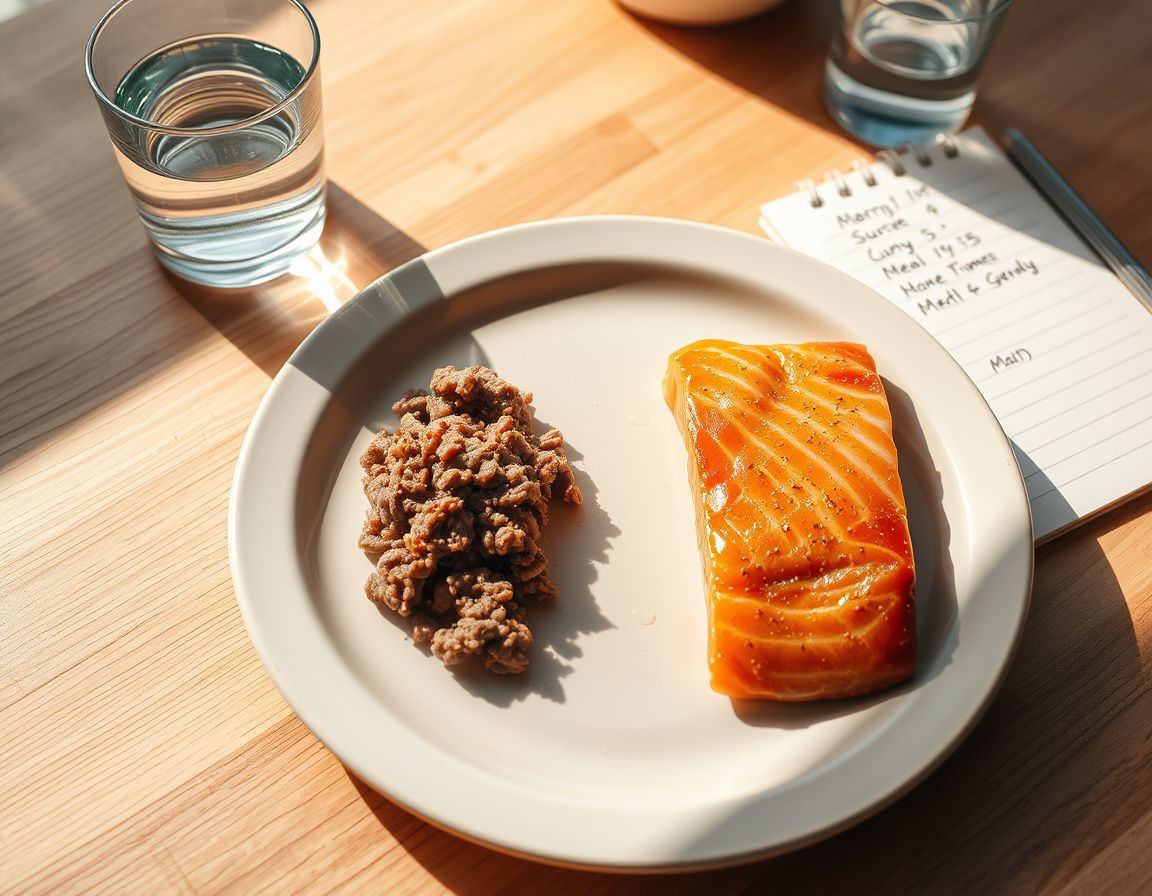
Intermittent fasting on carnivore can work for women over 50, but the long fasts that get so much attention often backfire for us. What tends to work better is a gentle eating window, around 8 to 10 hours, built around two or three solid protein meals. You eat when you're hungry, you stop when you're full, and you don't stretch the fast so far that protein gets squeezed out of your day.
Here's why that matters. After menopause, your muscles respond less to protein than they did at 30, so missing meals costs you more. If your window is so short that you can't eat enough meat, you lose muscle, sleep worse, and often stall.
The stall that looks like discipline
A pattern I see often goes something like this. A woman eats in a tidy 8 to 4 window, takes in about 1,100 calories, goes to the gym three or four times a week, and the scale hasn't moved in three or four months. She's hungry most of the day. She's afraid that eating more fat will stop her body from burning its own fat. So she holds the line and waits.
That isn't a willpower problem. It's often an under-eating problem. When food intake stays very low for months, many people find that energy, mood, and sleep slip, and the body gets stingier with what it burns.
If you want a starting point for your numbers, our free macro calculator will give you a protein target based on your goal weight.
Why long fasts can backfire after 50
Missed protein. Our usual guidance is 0.8 to 1.0 grams of protein per pound of goal body weight. For a woman with a goal of 140 lbs, that's roughly 110 to 140 grams a day. Research on older adults suggests muscle responds best to about 30 to 40 grams per meal. Fitting 120 grams into one meal is hard, and most women simply can't eat that much at once. So the protein never arrives.
Muscle loss. From our 40s on, we lose muscle faster unless we give it a reason to stay. Lifting is one reason. Steady protein is the other. Long fasts give your body fewer chances to repair.
Poorer sleep. Many women in menopause already wake at 3 a.m. A long fast raises stress hormones for some people, and an empty stomach at bedtime can make those wake-ups worse.
Under-eating. Fasting makes it easy to eat far less than you need without noticing. Over months, that often shows up as fatigue, feeling cold, hair shedding, and a stubborn plateau.
My colleague Marcus covers longer protocols in fasting protocols that work on carnivore. Those have their place, but this post is about something gentler for a different reader.
A gentle, protein-first eating window
Here's what I've seen work for women over 50.
- Window: about 8 to 10 hours, for example 9 a.m. to 6 p.m. Shift it to fit your life.
- Meals: two or three, each with 30 to 40 grams of protein. That's roughly 5 to 6 oz of cooked ground beef, a steak about the size of your palm and a bit more, or three eggs plus a small beef patty.
- First meal: protein first, within an hour or two of waking if you're hungry. If you're truly not hungry, it's fine to wait.
- Last meal: two to three hours before bed, so you're not going to sleep hungry or overly full.
- Fat: enough to feel satisfied. Fat is the lever and protein is the anchor. If you're cutting, trim added fat like butter or tallow before you ever cut protein.
- Salt: salt your food to taste. Many people need more sodium on carnivore than they expect, and a pinch in water can help with headaches in the first weeks.
For the first 8 weeks, don't count calories. Eat to satiety inside your window. Some women find they drift into a shorter window naturally because they're just not hungry, and that's fine, as long as protein still gets in.
If you want more detail on hitting your number, our guide to how much protein you need on carnivore walks through it.
About the fear of eating more fat
I understand this one. If you've been told fat stops fat burning, adding butter feels like moving backward. But your body doesn't switch off fat burning because you ate a satisfying meal. What usually happens is the opposite: a proper meal calms hunger, steadies energy, and helps you stay consistent.
If you're stuck anyway
Work through these in order.
- Confirm it's a real stall. Three to four weeks with no change on the scale and the tape measure. Lifting can shift inches before pounds.
- Check sleep, stress, and electrolytes. These quietly stall a lot of women.
- Do a 7-day food audit. Write down everything, including added fat and dairy.
- Recalculate your targets at your current weight.
- Then try one change: two weeks without dairy, or a deliberate maintenance break.
And please be kind about your pace. Women often lose more slowly than men. Over 50, losing 0.5 to 1 lb a week is a good result, and a fair trial runs 60 to 90 days.
A word on medications
If you take any medicine for diabetes or blood pressure, talk to your prescriber before you start fasting or shorten your eating window. Fasting can drop blood sugar quickly on some diabetes medicines, and that can be dangerous. Your doctor may want to adjust doses, and that's their call, not yours or mine.
For a broader look at hormones and this way of eating, you might also like women's carnivore health and hormones.
The short version: eat in a window that's comfortable, put protein first at every meal, and let fasting be something that fits around your hunger, not something you fight it with.
I'm not a doctor. I've researched this deeply and worked with many people, but I'm not your doctor. If you have health conditions, take medications, or need specific guidance, talk to someone who knows your full medical picture. Everything I write is educational based on research and what I've seen work. Your situation might be different.