This post may contain affiliate links. For educational purposes only, not medical advice. Details
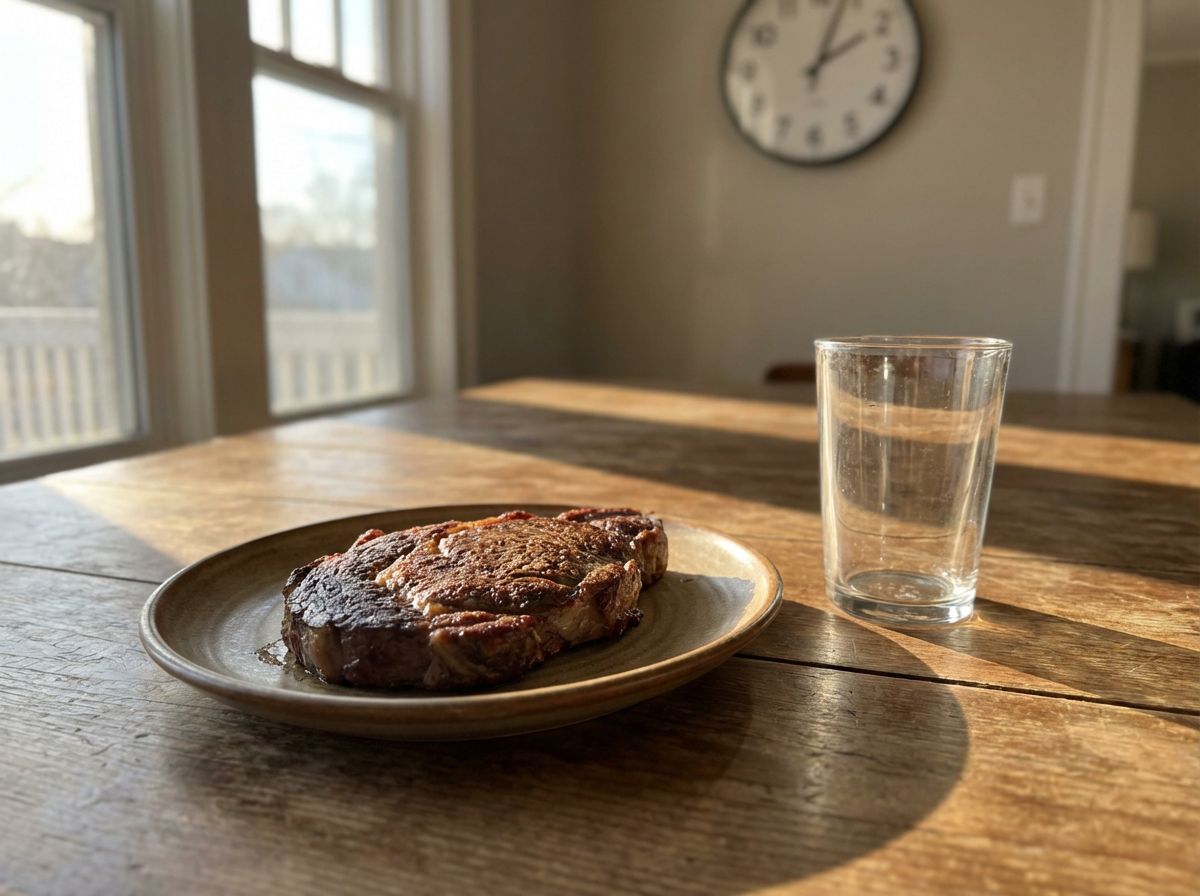
Fasting on carnivore is different.
You're already in ketosis. Your insulin is already low. Your hunger hormones are already regulated.
So the standard 16/8 intermittent fasting advice? Irrelevant.
Here are the fasting protocols that actually work on carnivore, with specific use cases for fat loss, autophagy, and performance.
Before the protocols, the part that matters more than the protocols.
Fasting is a stressor. Most people handle it well on carnivore. Some people should not add it at all. Skip these protocols entirely if you're pregnant or nursing, under 18, underweight, or you have any history of disordered eating. Fasting has a way of turning restriction into a habit for people who have been there before, and no amount of autophagy is worth that trade.
And if you take insulin, a sulfonylurea, blood pressure medication, or thyroid medication, your doses were calibrated to the way you eat right now. Change the eating pattern without your prescriber adjusting the dose and you can end up hypoglycemic or lightheaded on the kitchen floor. That's a conversation to have before day one, not after.
Why Fasting on Carnivore is Easier
On a standard diet, fasting is a fight against hunger. Your blood sugar crashes, ghrelin spikes, and you're white-knuckling it until your eating window.
On carnivore, none of that happens.
Why fasting is effortless on carnivore: 1. Stable Blood SugarNo carbs = no blood sugar roller coaster. Your glucose stays flat at 70-90 mg/dL all day. No crashes, no hunger surges.
2. Low InsulinInsulin blocks fat oxidation. When insulin is chronically elevated (from carbs), your body can't access stored fat for energy. You feel starved even though you have 50,000+ calories of fat on your body.
Carnivore keeps insulin low. Your body burns fat effortlessly during a fast.
3. High SatietyProtein and fat are the most satiating macros. After a carnivore meal, you're full for 6-8 hours. Hunger between meals? Rare.
4. Ghrelin RegulationGhrelin is your "hunger hormone." It spikes when your stomach empties. On carnivore, meals digest slowly (protein and fat take longer than carbs), so ghrelin stays low.
Bottom line: Fasting on carnivore feels like a choice, not a struggle.
The Protocols That Work
There's no one-size-fits-all fasting protocol. Your goal determines the approach.
Here are the 5 protocols I use with clients, ranked by intensity.
---
Protocol 1: 2 Meals Per Day (OMAD-Adjacent)
Best for: Fat loss, simplicity, busy schedules
Structure:- Meal 1: 12 PM
- Meal 2: 6 PM
- Fasting window: 18 hours (6 PM to 12 PM)
You wake up, skip breakfast, and eat your first meal at noon. Second meal at 6 PM. Done.
18-hour fasts maintain ketosis, keep insulin low, and give your digestive system a break. You're fasted during sleep + morning, which maximizes fat oxidation.
Calories: Eat to satiety. Don't restrict. If you're hungry, eat more fat.
Who this works for:- People who aren't hungry in the morning
- Busy professionals who want fewer meals to prep
- Anyone targeting slow, steady fat loss (0.5-1 lb/week)
- Undereating because you're only eating twice
- Training fasted without electrolytes (sodium crash)
---
Protocol 2: OMAD (One Meal A Day)
Best for: Aggressive fat loss, autophagy, mental clarity
Structure:- One meal per day, eaten in a 1-hour window
- Typical timing: 6 PM
- Fasting window: 23 hours
You fast all day, then eat one massive meal at night. No breakfast, no lunch. Just dinner.
This maximizes fasting benefits: autophagy (cellular cleanup), fat oxidation, and insulin sensitivity.
Calories: Eat a lot. You're condensing your entire daily intake into one meal. Aim for 2000-2500 calories in one sitting, and check the arithmetic on your own plate rather than assuming a big meal gets there.
Sample OMAD meal:- 12 oz ribeye
- 4 eggs
- 2 oz butter
- 8 oz ground beef (if still hungry)
- People with zero morning hunger
- Those targeting fat loss at a sustainable 0.5 to 1.5 lbs a week
- Anyone who wants maximum autophagy benefits
- Undereating (most common mistake on OMAD)
- Training hard while OMAD (recovery suffers without enough protein)
- Eating too fast (slow down, chew thoroughly)
Performance note: OMAD works for maintenance training, but not for heavy lifting or high-intensity work. If you're training hard, eat 2 meals.
---
Protocol 3: 48-Hour Fast (Weekly Reset)
Best for: Breaking plateaus, deep autophagy, metabolic reset
Structure:- Eat normally 5 days per week
- Fast for 48 hours once per week
- Example: Last meal Sunday 6 PM, next meal Tuesday 6 PM
Once a week, you skip two full days of eating. This triggers deep autophagy, resets hunger hormones, and breaks fat loss plateaus.
During the 48-hour fast:- Drink water, black coffee, tea
- Salt your water to taste. We don't publish sodium, potassium or magnesium amounts. All three are worth asking your doctor or pharmacist about before a two-day fast, especially on blood pressure, heart or diuretic medication, or a salt restriction
- Stay busy (don't sit around thinking about food)
- Light activity is fine (walking, stretching)
- No heavy lifting
- Advanced fasters (don't start here if you're new to carnivore)
- People stuck at a fat loss plateau
- Those seeking autophagy benefits for longevity
- Trying this in your first month of carnivore (adapt first)
- Overcompensating with a massive feast after the fast (eat normally)
- Training hard during the fast (you'll crash)
Refeeding: Break the fast with a normal carnivore meal. Don't binge. Your stomach has shrunk; start with 8-12 oz of meat and see how you feel.
---
Protocol 4: Alternate Day Fasting (ADF)
Best for: Extreme fat loss, metabolic flexibility, longevity research nerds
Structure:- Feast day: Eat normally (2-3 meals)
- Fast day: No food, only water/electrolytes
- Repeat on alternating days
- Monday: Eat normally
- Tuesday: Fast (zero calories)
- Wednesday: Eat normally
- Thursday: Fast
- Friday: Eat normally
- Weekends: Your choice
You're fasting 50% of the time, which creates a massive caloric deficit over the week. Fat loss is aggressive.
Who this works for:- People who want faster fat loss, inside a sustainable 0.5 to 1.5 lbs a week
- Those who thrive on structure and routine
- Longevity enthusiasts (ADF mimics caloric restriction studies in animals)
- Undereating on feast days (you need to eat enough to maintain muscle)
- Running it for more than a short block. If you use it at all, keep it to 1 or 2 weeks with someone watching. We do not publish 4-8 week runs of this
- Heavy training on fast days (impossible to recover)
Not for everyone: ADF is intense. Most people don't need this level of restriction. It's a tool for specific situations, not a permanent lifestyle.
---
Protocol 5: Extended Fast (3-7 Days)
Best for: Metabolic reset, breaking severe plateaus, autophagy maximization
Structure:- No food for 3-7 consecutive days
- Water, electrolytes, black coffee only
- Break the fast with a small carnivore meal
Extended fasts (72+ hours) trigger maximum autophagy, growth hormone surges, and metabolic adaptation. Your body shifts into deep ketosis and fat-burning mode.
Electrolytes during extended fasts:Three days without food changes what's safe, most of all for anyone on a sodium restriction, with high blood pressure, heart failure or kidney disease, or taking a diuretic or blood pressure medication. If that's you, the electrolyte plan comes from the doctor supervising the fast.
- Sodium: we don't publish a sodium dose for extended fasting. Losses are real, and under-replacing sodium is why an extended fast turns miserable, but the right amount is individual, and for some people it's less rather than more. Salted water across the day is the usual vehicle, and a headache or lightheadedness is the signal to drink some. The amount is a question for the doctor supervising the fast
- Potassium: we do not publish a potassium dose for extended fasting. There is no way to do it safely by feel, and a fast past 72 hours is a doctor-supervised protocol anyway. If you're going that long, that doctor can run a metabolic panel and tell you your number. Do not free-pour potassium chloride
- Magnesium: we do not publish a magnesium dose for extended fasting either. Your kidneys clear magnesium, so reduced kidney function, a diuretic or blood pressure medication all change what's safe, and three days without food is the wrong time to find that out. Glycinate in the evening is the form and the timing most people use. The amount is a question for the doctor supervising the fast
- People who have hit a severe fat loss plateau (months of no progress)
- Those seeking autophagy benefits for health/longevity
- Advanced fasters who have done 48-hour fasts comfortably
- Doing this if you're underweight or low body fat (dangerous)
- Not supplementing electrolytes (you'll crash hard)
- Training during the fast (light walking only)
- Overcompensating with a massive feast after (break gently)
- Hour 1: 4-6 oz bone broth or salted water
- Hour 2: 8 oz cooked meat (ground beef, chicken)
- Hour 4: Normal meal if feeling good
Don't go from 7 days fasted to a 24 oz ribeye. Ease back in.
Warning: Extended fasts are not for beginners. Don't attempt this in your first 6 months of carnivore. Build up to it with 24-hour and 48-hour fasts first.
Stop the fast, don't push through, if: your heart is pounding while you're sitting still, you're dizzy standing up, you're confused or slurring words, you have chest pain, or you're vomiting and can't keep water down. Break it with broth and salt. If it doesn't clear quickly, get seen the same day. Nobody has ever wrecked their results by ending a fast twelve hours early.
Anything past 72 hours is a protocol I'd want a doctor watching, especially if you're on any medication at all. Run it past someone qualified first.
---
Fasting for Fat Loss: The Math
Fasting accelerates fat loss, but you still need a caloric deficit over time.
Here's the reality check:
Example: You're maintaining weight at 2500 calories/day.
Protocol 1 (18-hour fast, 2 meals):- You eat 2500 calories across 2 meals
- No deficit = maintenance weight
- You eat 2000 calories in one meal (harder to eat 2500 in one sitting)
- 500-calorie deficit = 1 lb fat loss per week
- You skip 2 days of eating (5000-calorie deficit)
- 5000 ÷ 7 = ~700-calorie daily deficit = 1.5 lbs fat loss per week
- You eat every other day
- 3.5 days fasted per week = ~9000-calorie weekly deficit = 2.5 lbs fat loss per week
The key: Fasting creates a deficit effortlessly because you're not fighting hunger. You're just...not hungry.
---
Fasting for Autophagy
Autophagy is the process where your body cleans out damaged cells and recycles cellular components. It's associated with longevity, disease prevention, and cellular repair.
When does autophagy kick in?- Light autophagy: 12-16 hours fasted
- Moderate autophagy: 24-48 hours fasted
- Deep autophagy: 72+ hours fasted
Even without fasting, carnivore promotes autophagy because you're in ketosis and insulin is low. Add fasting, and you amplify the effect.
Who should prioritize autophagy?- People with autoimmune conditions
- Anyone with a family history of Alzheimer's or cancer
- Longevity enthusiasts
- Those recovering from chronic illness
Best protocol for autophagy: Weekly 48-hour fast or quarterly 5-7 day fasts.
---
Fasting for Performance
Fasting improves mental clarity and focus. It's horrible for physical performance.
If you're lifting heavy, sprinting, or doing high-intensity work, don't train fasted. Your performance will tank.
Best approach:- Train in the afternoon or evening
- Eat your first meal 1-2 hours before training
- Break your fast with protein + fat post-workout
Exception: Low-intensity cardio (walking, easy cycling) is fine fasted. Your body burns fat effortlessly at low intensities.
---
Common Mistakes
1. Fasting Too SoonIf you're in your first 4-6 weeks of carnivore, your body is still adapting. Don't add fasting stress on top. Eat when hungry.
Start fasting after month 2.
2. Not Eating Enough on Feast DaysIf you're OMAD and only eating 1200 calories, you'll crash your metabolism and lose muscle. Eat to satiety. Carnivore is self-regulating.
3. Overtraining While FastedYou cannot lift heavy, train hard, and fast aggressively. Pick two: fast hard, train hard, or recover hard.
4. Ignoring ElectrolytesFasting depletes sodium. Under-replace it and you'll feel weak, dizzy, and fatigued, though how much you need is individual. Add salt to water. Drink it throughout the day.
5. Using Fasting to "Earn" a MealFasting is not punishment. It's a tool. Don't fast because you "ate too much yesterday." Fast because it serves a goal: fat loss, autophagy, or metabolic reset.
---
The Bottom Line
Fasting on carnivore is optional, but powerful.
If your goal is fat loss: OMAD or 48-hour fasts weekly.
If your goal is autophagy: 48-hour fasts weekly or extended fasts quarterly.
If your goal is performance: Don't fast aggressively. Stick to 2 meals per day.
Start simple. 18-hour fasts (2 meals per day) for most people. Add intensity only if needed.
And remember: Fasting is easy on carnivore because your body is already fat-adapted. You're not fighting biology. You're working with it.
Not a doctor. I've coached people and competed myself, so I know what works in practice. But I'm not your doctor, and fasting is the one tool on this site that can genuinely hurt you if you stack it on top of medication or a diagnosed condition. If you're on meds, pregnant, nursing, or managing anything diagnosed, get cleared before you start and stay in touch with your prescriber while you're doing it. Everything here is educational, based on research and what I've seen work. Your mileage may vary.
---
References:- Longo VD, Mattson MP. Fasting: molecular mechanisms and clinical applications. Cell Metab. 2014.
- Anton SD et al. Flipping the Metabolic Switch: Understanding and Applying the Health Benefits of Fasting. Obesity. 2018.
- de Cabo R, Mattson MP. Effects of Intermittent Fasting on Health, Aging, and Disease. N Engl J Med. 2019.
- Alirezaei M et al. Short-term fasting induces profound neuronal autophagy. Autophagy. 2010.