
This post may contain affiliate links. For educational purposes only, not medical advice. Details
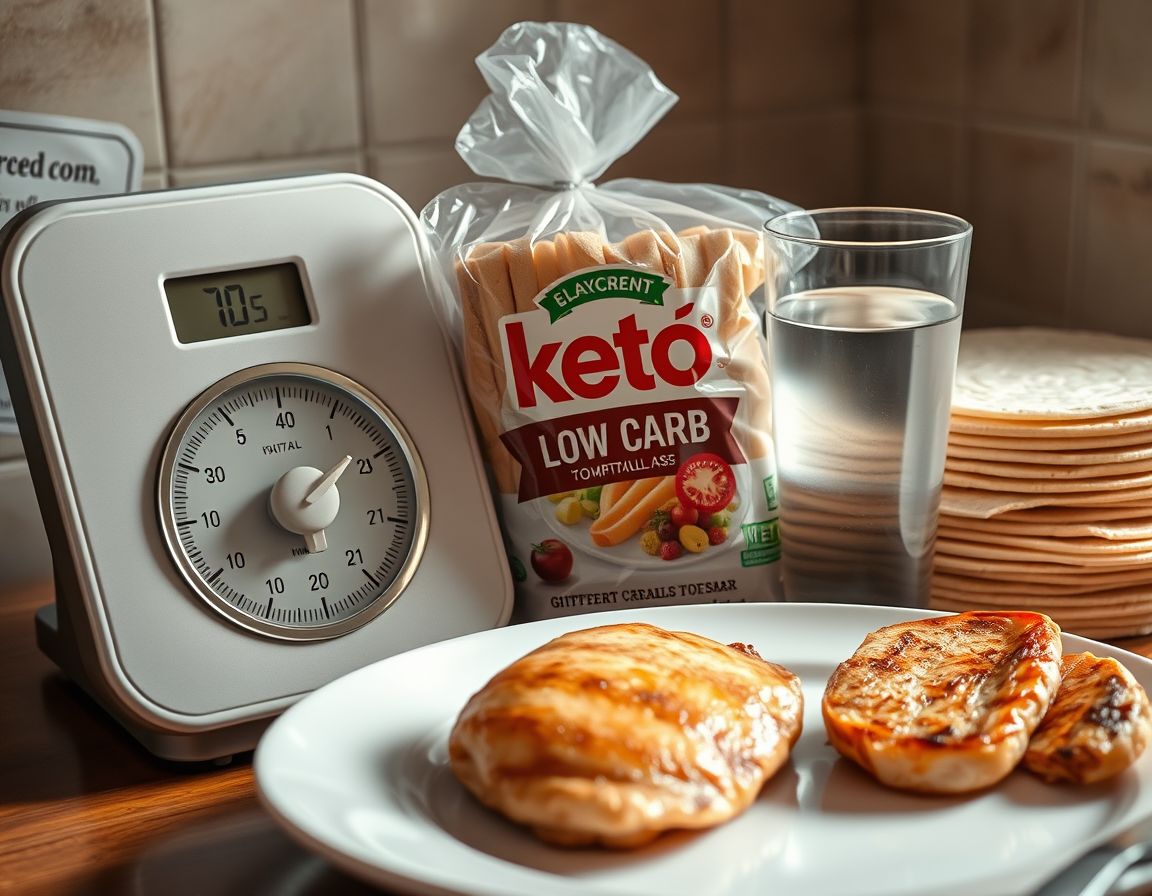
It's one of the most common stories I hear. A woman has been eating low-carb for months, the scale has barely moved, and she finally drops the keto bread and the tortilla wraps. A week later she's down three or four pounds. So, does keto bread stall weight loss? It can for some people, though it isn't guaranteed. Many people find that packaged low-carb bread and wraps bring on water retention, bloating and extra eating, and all three can hide or slow real progress.
The good news is that those first few pounds you lose after cutting them usually aren't a mystery. Most of that is water and gut contents, not fat. It's still a real signal, though. It tells you your body was reacting to something, and that's worth paying attention to.
Why That Quick Drop Happens
Here's what's likely going on. When your body stores carbohydrate as glycogen, it holds water along with it. If a "low-carb" product is giving you more usable carbs than the label suggests, you can end up carrying extra water without knowing why.
Then there's what's physically sitting in your gut. Many of these products are packed with added fibers that ferment and create gas. Take them away and your belly often flattens within days. That shows up on the scale and on the tape measure, even though no fat has gone anywhere yet.
What's Actually in Keto Bread and Wraps
Turn over a package of low-carb wraps and read the ingredients. It's often a long list. Common ones include:
- Modified wheat starch or resistant starch. These are counted as fiber on many labels, but people respond to them differently. Some readers who test their blood sugar with a CGM see more of a rise than the "net carbs" number would predict.
- Vital wheat gluten. This gives the bread its chewy texture. It also bothers some people's digestion.
- Added fibers like inulin, chicory root or oat fiber. These are what bring the net carb count down. They're also a frequent source of gas and bloating.
I want to be careful here. No single ingredient on that list has been proven to stall anyone's weight loss. What I've seen, over and over, is that the whole package adds up for a lot of women: a bit of hidden carb, a bit of bloating, and a bit of water.
The Appetite Problem Nobody Talks About
There's a quieter issue too. Bread makes it easy to eat more. A burger on a keto bun often turns into two burgers, plus extra cheese and sauce. A wrap turns a salad-sized lunch into a big one.
These products also tend to be calorie-dense for how little they fill you up. They take up room on your plate that protein could have used. Protein is what keeps most of us satisfied, especially after 50, and that matters for keeping muscle as you lose weight.
If you came to carnivore from keto, you're in good company. Keto bread probably helped you make the switch from a standard diet, and that counts for something. It's just a tool that tends to stop being useful once you want steady progress.
Why Plain Meat and Eggs Are the Cleaner Fix
What works better, in my experience, is simpler. Instead of hunting for a better bread, take the bread out of the meal and let the meal stand on its own. A burger patty with a fried egg on top. Scrambled eggs with sausage. A pile of ground beef with salt and a little butter. Leftover steak sliced cold for lunch.
These meals have one ingredient, or maybe two. There's nothing hiding in them. If something isn't working, you can actually figure out why, because the list of suspects is short.
Ground beef and eggs are also our default starting point for a reason. They're cheap, easy to find and filling. For more on how the two approaches compare, see my post on what's different between carnivore and keto.
If You're Still Stuck After Cutting the Bread
Sometimes the bread goes, the water drops, and then things slow down again. That's normal. Fat loss after the first water drop is slower, often 0.5 to 1 pound a week once you're over 50. Here's the order I'd work through, and it's the same order I use for any stall:
- Confirm it's a real stall. Give it 3 to 4 weeks, and use a tape measure, not just the scale. Your waist can shrink while the scale sits still.
- Check sleep, stress and electrolytes. Poor sleep and low sodium can both make you hold water. Most adults do well with 3 to 5 grams of sodium a day (1 teaspoon of salt is about 2.3 grams of sodium).
- Do a 7-day food audit. Write down everything, including added fat like butter and tallow, and dairy like cheese and cream. These add up faster than most of us think.
- Recalculate at your current weight. What you needed 20 pounds ago isn't what you need now. The free macro calculator can run the numbers from your goal weight if you'd like a fresh starting point.
- Then try a 2-week dairy break or a planned maintenance break. Dairy isn't the first thing to blame, but it's worth testing once the basics are covered.
If you're trimming, trim the added fat first. Keep your protein where it is. Real stories from readers who've worked through this are in our carnivore weight loss results roundup.
A Word If You Take Medication
Some of you are on medications for blood sugar, blood pressure or thyroid. Cutting processed carbs can change how your body responds, sometimes quickly. If you're taking medications or have been diagnosed with any medical condition, you need individualized medical oversight. Don't make changes without consulting your doctor, and let them know you're changing how you eat so they can watch your numbers with you.
The Bottom Line
Keto bread and wraps don't stall everyone. But if your progress has slowed and you're eating them most days, they're one of the easiest things to test. Take them out for two or three weeks, eat plain meat and eggs, and watch your tape measure.
I'm not a doctor. I've researched this deeply and worked with many people, but I'm not your doctor. If you have health conditions, take medications, or need specific guidance, talk to someone who knows your full medical picture. Everything I write is educational, based on research and what I've seen work. Your situation might be different.