
This post may contain affiliate links. For educational purposes only, not medical advice. Details
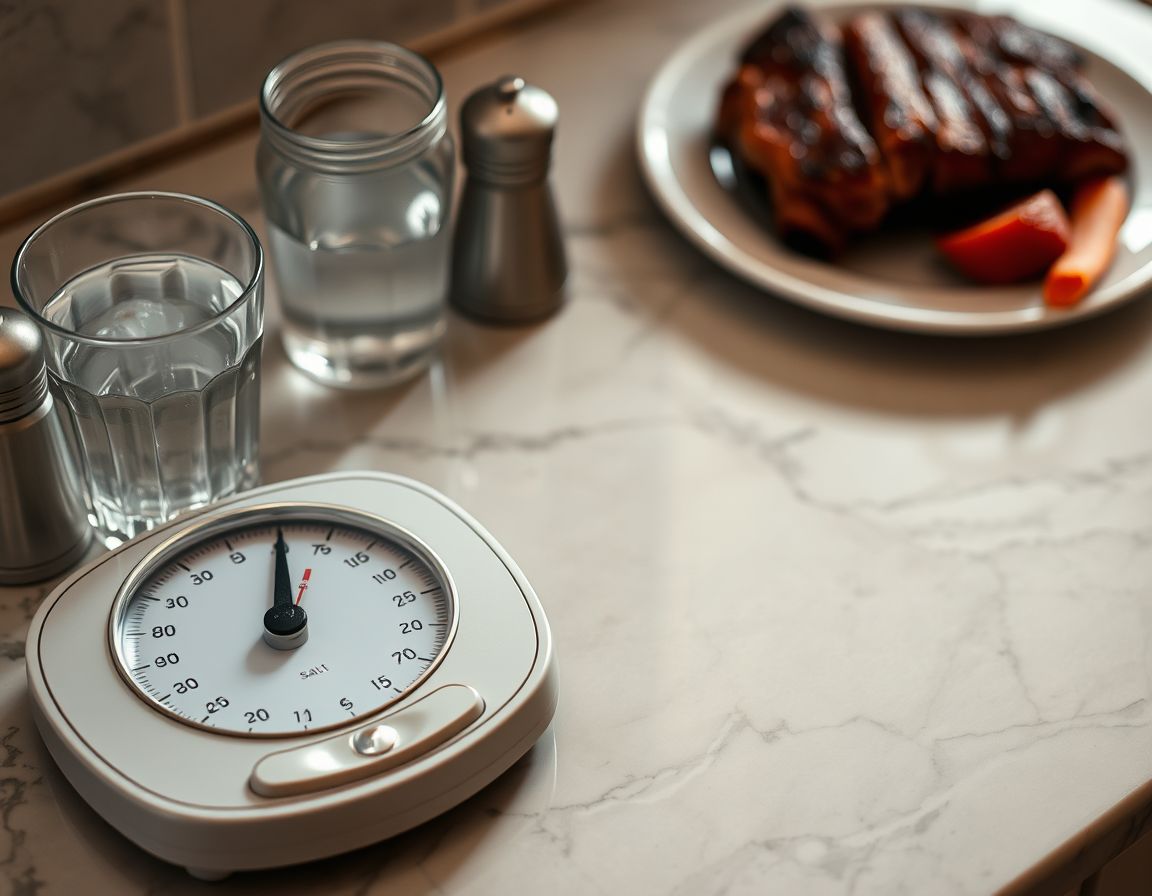
You started carnivore to lose weight, you're in menopause, and two weeks in the scale says you're up three pounds. Here's the short answer: in the first weeks, a rising scale is almost always water, stool, or inflammation from new activity, not fat.
So before you decide this way of eating "doesn't work for women our age," let's sort out what's actually moving the number, how to tell water from fat at home, and what to adjust, in order. If you want a starting point for your protein and fat numbers, the free macro calculator does the math from your goal weight.
Why the scale can climb in the first weeks
More salt, and your body is rebalancing. When insulin drops, your kidneys let go of sodium and water. That's why most people need more salt on carnivore than they're used to. Most people on carnivore land around 3-5 g of sodium a day, which is about 1.5-2 teaspoons of salt, spread through the day. This is not for everyone. Talk to your doctor first if you have high blood pressure, kidney or heart problems, diabetes, are pregnant, or take medicine.
Here's the catch. If you jump from barely salting to salting everything in a few days, your body can hang onto extra water while it finds its new balance. Coming from keto, you may also miss the usual week-one water drop. Either way, a two or three pound bump in water is common and it settles.
Extra added fat. A lot of us were told "eat the fat" and took it to heart. Protein is the anchor and fat is the lever. Around 1:1 fat to protein by grams is where most people feel full. Piling added fat on top of fatty cuts is the one food habit that can genuinely push you into a surplus.
Sleep loss from hot flashes and night sweats. Waking soaked at 2 am, three nights a week, adds up. Short sleep nudges up cortisol and hunger, and some women notice they hold more water after a run of bad nights. Sleep disruption in weeks 2-3 of carnivore is common too, so the two can stack. I wrote about what helps with hot flashes on carnivore if that's part of your picture.
Constipation. A slower gut in the first weeks is common, and a backed-up gut weighs something. A pound or two on the scale can be sitting in your colon, not on your hips. Here's how to get things moving on carnivore.
New strength work. If feeling better got you lifting weights or doing stairs again, good. Sore muscles hold extra water while they repair, often for a week or two.
How to tell water from fat
The scale can't tell you which pound is which. Two simple habits can.
- Use a weekly average. Weigh every morning, after the bathroom, before coffee. Add up the seven days and divide by seven. Compare this week's average to last week's, not Tuesday to Wednesday.
- Use a tape measure. Once a week, same morning, measure your waist at the belly button, your hips at the widest point, and one thigh. Write it down.
- Read the speed. Up three pounds overnight is water. Fat can't arrive that fast. A slow, steady climb in the weekly average plus a growing waist over 3-4 weeks is the pattern that deserves a closer look.
- Check the signs. Tight rings and sock marks at the ankle point to water.
Many women find the waist moves before the scale does.
What to adjust before you give up
We use the same order every time, because it saves you from fixing the wrong thing.
- 1. Confirm it's real. Give it 3-4 weeks of weekly averages and tape measurements. A week of water doesn't count.
- 2. Sleep, stress and electrolytes. Spread your salt through the day instead of one big dose. Food-first potassium comes from meat and broth, and beef carries about 300-400 mg per 4 oz. For magnesium, many people do well with glycinate in the evening and skip oxide, which absorbs poorly. Ask your pharmacist about the amount, since your kidneys clear it and some medicines change what's safe.
- 3. A 7-day food audit. Write down everything, including the butter, the cream, the cheese and the bites while cooking. Skip calorie counting for the first 8 weeks, but once you're truly stalled, an honest week on paper finds the problem fast.
- 4. Recalculate at your current weight. Protein usually sits at 0.8-1.0 g per pound of goal body weight, with 30-40 g per meal, which matters more after 50. Trim added fat first, never protein.
- 5. Then try a 2-week dairy break or a planned maintenance break.
And give it time. Judge carnivore at 60-90 days, not at two weeks. Over 50, losing 0.5-1 lb a week is a good pace, and some weeks will show nothing at all. See a realistic weight loss timeline after 50 for what to expect.
A word on HRT, thyroid and other medicines
If you take HRT, thyroid medicine or anything else, any change to your medicine is your prescriber's decision, so don't adjust anything because of the scale. If the weekly average keeps climbing past the fair-trial window, and especially if you're also cold, tired, losing hair or very dry, it's worth raising your thyroid labs with your doctor.
See your doctor if
Some gain isn't diet water. Get checked promptly if you notice:
- Rapid gain, several pounds in a day or two, with swelling in your legs, ankles or feet
- Swelling that leaves a dent when you press it
- Shortness of breath, especially lying flat or with light effort
- One leg swollen, warm or painful
- Chest pain, a racing heart, or swelling in your belly or face
Call 911 or go to emergency for chest pain or trouble breathing.
What I'd tell a friend
When I started, I worried about every wobble on the scale. What finally settled my nerves was the tape measure. My waist kept coming in during weeks when the scale sat still or even crept up.
Weigh daily, average weekly, measure weekly, and work the list in order. Most early gains on carnivore in menopause are water that leaves on its own. Give your body the 60-90 days it needs to show you.
Not a doctor: I'm not a doctor. I've spent years reading the research and watching what works for people I love, but I'm not your doctor. Everything I write is education based on research and what I've seen. Your situation might be different.