
This post may contain affiliate links. For educational purposes only, not medical advice. Details
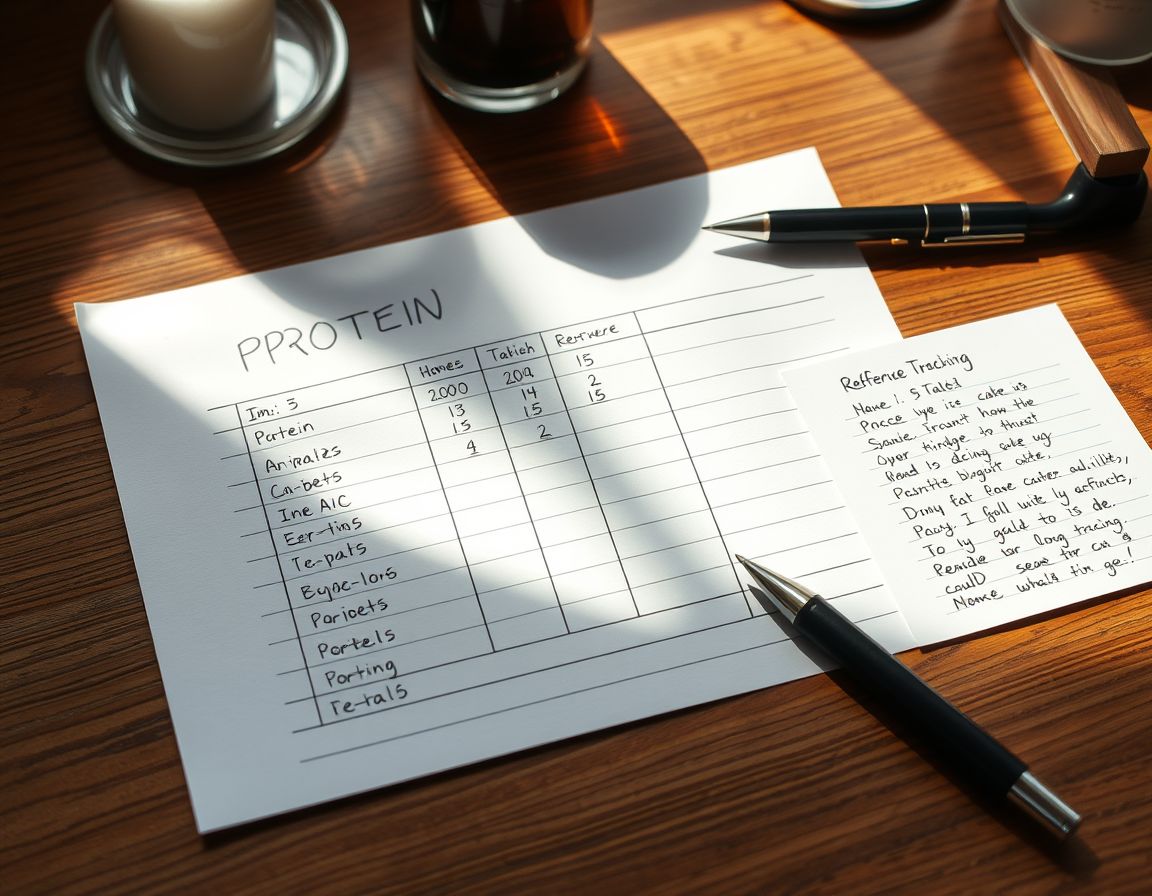
Looking for the best app to track carnivore? Here's the short answer. For your first 8 weeks, you don't need one. A single sheet of paper and a protein cheat sheet will do the job. When you do need an app later, the best one is whichever you'll actually open every day.
A lot of people quit tracking because the apps are fiddly. Too many buttons, too many screens, a barcode scanner that can't find your ribeye. Carnivore makes this easier than any other way of eating. Your food list is short, so your tracking can be short too. Here's the protocol.
Track one number: protein
You're not counting calories right now. Our position is simple: eat to satiety for the first 8 weeks, and don't count. If you're still deciding whether counting belongs in your plan at all, read should you count calories on carnivore. This post is about the how.
The one number worth watching early is protein. Protein is the anchor. It protects muscle, and muscle matters more every year after 45.
Your daily target: 0.8-1.0 g of protein per pound of goal body weight. Goal weight, not current weight.
- Goal weight 140 lb: 112-140 g a day
- Goal weight 160 lb: 128-160 g a day
- Goal weight 180 lb: 144-180 g a day
Split it into meals of 30-40 g. Three meals of 40 g gets you to 120 g. That covers the low end for most goal weights. If you want a starting point for your own numbers, the free macro calculator runs protein off your goal weight.
The portion-to-protein cheat sheet
All weights are cooked. Meat loses about a quarter of its weight in the pan, so 4 oz raw ground beef ends up closer to 3 oz cooked. Numbers are rounded from USDA data.
- Ground beef 80/20, 4 oz cooked: about 28-30 g
- Steak, 4 oz cooked: about 30-35 g for leaner cuts like sirloin, closer to 28 g for ribeye
- Chicken thigh, 4 oz cooked, skin off: about 28 g
- Pork chop, 4 oz cooked: about 30 g
- Canned salmon, 3 oz drained: about 20 g
- Canned tuna, 3 oz drained: about 20 g
- Shrimp, 4 oz cooked: about 27 g
- 1 large egg: about 6 g
- Cheddar, 1 oz: about 7 g
- Bacon, 1 cooked slice: about 3 g
No scale? Use your hand. A cooked portion the size and thickness of your palm is roughly 3-4 oz, or about 20-30 g of protein. A thumb-size piece of cheese is about 1 oz. Eggs you just count.
Stop overthinking the decimals. A 10% error on a palm of beef doesn't matter. What matters is noticing you ate 60 g on a day you needed 120.
The one-page daily tally
Here's the format. Write it on an index card or print it and stick it on the fridge.
- Date: ______ Target: ______ g
- Meal 1: what you ate, then grams. Example: 3 eggs + 2 slices bacon = 24 g
- Meal 2: Example: 6 oz ground beef + 1 oz cheddar = 49 g
- Meal 3: Example: 5 oz steak = 40 g
- Total: 113 g
- Hunger (1-5), energy (1-5): one number each
That's it. One line per meal, one total, two quick scores. It takes under a minute a day.
Look at the example. Breakfast came in at 24 g, under the 30 g floor. The fix is one more egg or an extra slice of bacon. That's the whole point of the tally: it shows you which meal is short.
Carnivore people tend to repeat the same 5-6 meals. After a week, you'll know your usual meals by heart. "Beef and eggs breakfast, 40 g." At that point you're not tracking anymore. You're just checking.
For more on why 30-40 g per meal matters after 50, see protein after 50: how to keep your muscle.
What you don't track
- Calories. Not for the first 8 weeks.
- Fat grams. Eat enough fat to feel full. Fat is the lever you adjust later if you stall, not now.
- Carbs. On meat, eggs and a little cheese, they're close to zero.
- Every micronutrient. Useful in an audit. Exhausting as a daily habit.
Tracking less is why this works. You keep doing it because it's easy.
When a free app is actually worth it
There's one time I'd tell you to download an app: a real stall. That means 3-4 weeks with no movement on the scale and the tape measure.
Here's the stall protocol, in order:
- Step 1: Confirm it's real. 3-4 weeks, tape measure included.
- Step 2: Check sleep, stress and salt.
- Step 3: Run a 7-day food audit. Log everything, including butter, tallow, cream and cheese.
- Step 4: Recalculate your targets at your current weight.
Step 3 is where an app earns its keep. For seven days you want added fat, dairy and total calories, and an app does that math faster than a pencil. The usual finding is added fat creeping up. When you're cutting, trim added fat first, never the protein. Our carnivore macros guide for women over 45 walks through the adjustment.
Which app? Two free options come up again and again:
- Cronometer (free version): detailed and accurate, with strong micronutrient data. Some people love it. Others find the screens busy and give up.
- Carb Manager (free version): a simpler layout. Many people say that's exactly why they keep using it.
Some people also like apps that let you log with a photo of your plate, especially after years of typing entries into another tracker. The right app is the one you'll open for all seven days. Accuracy you abandon on day 3 is worth less than a rough log you finish.
After the audit, go back to the paper tally. The app was a diagnostic tool, not a life sentence. Keto readers can find the same idea, built around carbs instead of protein, in KetoDial's keto without the app.
Your protocol this week
- Work out your protein target from your goal weight.
- Copy the cheat sheet onto a card. Keep it in the kitchen.
- Fill in the one-page tally for 7 days.
- Fix whichever meal keeps coming in under 30 g.
- Skip the app until you hit a real 3-4 week stall.
Protocol beats willpower. A short list, one number, one page. That's a system you'll still be running in six months.