This post may contain affiliate links. For educational purposes only, not medical advice. Details
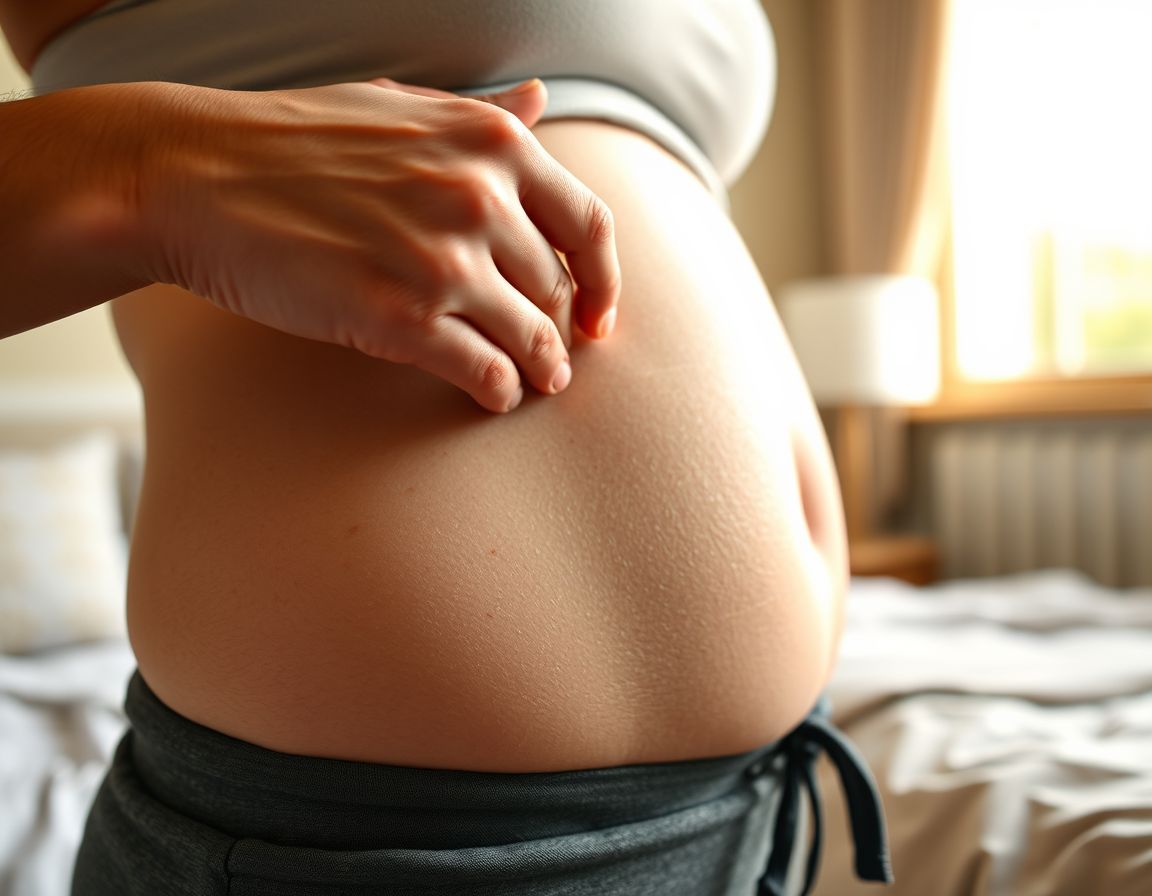
Okay, so this question shows up before anybody has lost a single pound. "But what about loose skin?" It's the picture that pops into your head when you imagine dropping 60 pounds, and for some of you it's quietly the reason you haven't started yet.
Here's the honest answer, and it's neither the comforting one nor the scary one. If you're over 50 and you lose a lot of weight, some loose skin is likely. How much is genuinely unpredictable. Nobody, including a doctor, can look at you today and tell you what your skin will do. Some people end up with far less than they braced for. Others end up with more. There's no formula, and anyone selling you one is selling you something.
What actually affects how your skin responds
Skin has elastic tissue in it, and that tissue changes with age. It's less springy at 60 than it was at 30. That's not something you neglected, it's just what happens, and it's the biggest reason this conversation is different for our age group.
Other things matter too, and most of them are already decided:
- How long you carried the weight. Skin that's been stretched for 25 years behaves differently than skin stretched for three.
- How much you lose. Sixty pounds is a different situation than 15. A hundred is different again.
- Genetics. The big unfair one. Two women the same age losing the same amount can get completely different results, and nobody can explain why.
- Sun history and smoking history. Both affect skin quality over decades. Past tense, mostly.
- How fast the weight comes off. This one you still control.
Most of that list is already written, and I won't pretend otherwise. But the unpredictability cuts both ways. "Likely" isn't "certain," and the amount is usually not the horror show you picture at 2 a.m.
What plausibly helps
None of this is a guarantee. All of it is worth doing anyway, because every item on the list is good for you regardless.
Keep protein high. Aim for 0.8 to 1.0 grams per pound of your goal body weight, not your current weight. Heading for 150? That's roughly 120 to 150 grams a day. Spread it out, because 30 to 40 grams per meal beats one giant steak at dinner, especially past 50. If you want the math done for you, the free macro calculator takes about a minute.
Build and keep muscle. This is the closest thing to a real lever you have. Muscle takes up space under the skin. Lose fat and lose muscle with it, you get more slack. Hold onto the muscle, or add a bit, and the space gets filled. Some people who've been through this say exactly that, that lifting is what changed how things looked at the end. More on the protein side of that in how much protein you need after 50 to keep your muscle.
Go slow. After the first week or two of water weight, sustainable fat loss runs about 0.5 to 1.5 pounds a week. Over 50, half a pound to a pound is a good pace. Slower gives your skin time to keep up and protects your muscle. Crash dieting does the opposite of both.
Give it time. Skin retracts over months and sometimes a couple of years, not weeks. Whatever you see at the finish line isn't the final version. Plenty of people panic early over something that's still changing.
Drink water. Modest effect, no downside, do it.
What doesn't do what it says
Creams don't tighten loose skin. Wraps don't either. Neither do the brushes and toning gels advertised straight at women our age, usually with a before-and-after shot taken in different lighting.
I'm not being snobby about it. If a nice lotion makes you feel better in your own skin, use the lotion. Just don't spend real money expecting structural change from something you rub on, because that isn't how skin works.
Surgery is a real option
Some people lose the weight, wait out the retraction, and decide they want surgery. That's a legitimate choice, not a failure of gratitude. It's also a real operation with real recovery and real risk, and the only person who can tell you if you're a candidate is a qualified surgeon looking at you in person. Either way it's a conversation for after the weight is off and stable, not before.
The part nobody says out loud
Here's the thing, said as kindly as I know how. Staying at your current weight to avoid loose skin means keeping every health risk that comes with the weight, to avoid a cosmetic outcome that might not even happen to you.
That's the whole trade. Certain risk now, possible looseness later. People who've been through it tend to frame it that way too. Worth it, and not a close call.
And also. If you get to the other side and feel grief about how your body looks, that feeling is real and you don't owe anyone a cheerful face about it. "Just be grateful you're healthy" is a rotten thing to say to a woman looking at a body she doesn't recognize. You can be proud of what you did and sad about how it looks. Both fit in the same day.
The alarm you feel while your body changes is normal too. Same category as the hair shedding that hits around month three. Unfamiliar reads as wrong long before it actually is wrong.
The in-between stage, and your closet
Real talk: the middle is awkward. Nothing fits, you don't want to buy clothes you'll shrink out of, and the mirror keeps changing on you.
Buy a few cheap things that fit the body you have this month. Not the old one, not the future one. High-waisted anything, a little structure through the middle, layers you can leave on. Secondhand shops are perfect, since you're passing through sizes fast. Feeling decent in your clothes while you're still losing is worth more than it sounds. If your pace has flattened out and that's part of the frustration, this piece on month-three stalls is a good next read.
One last thing. Fear of loose skin is a fear of a problem you'd only have because you succeeded. That's a better problem than the one you've got.
I'm not a doctor. I'm just someone who's deep in this community and reads everything. Take the health stuff with a grain of salt, pun intended. If you're on medication or managing a diagnosed condition, loop in your doctor before you change how you eat. That's a partnership, not a permission slip.