
This post may contain affiliate links. For educational purposes only, not medical advice. Details
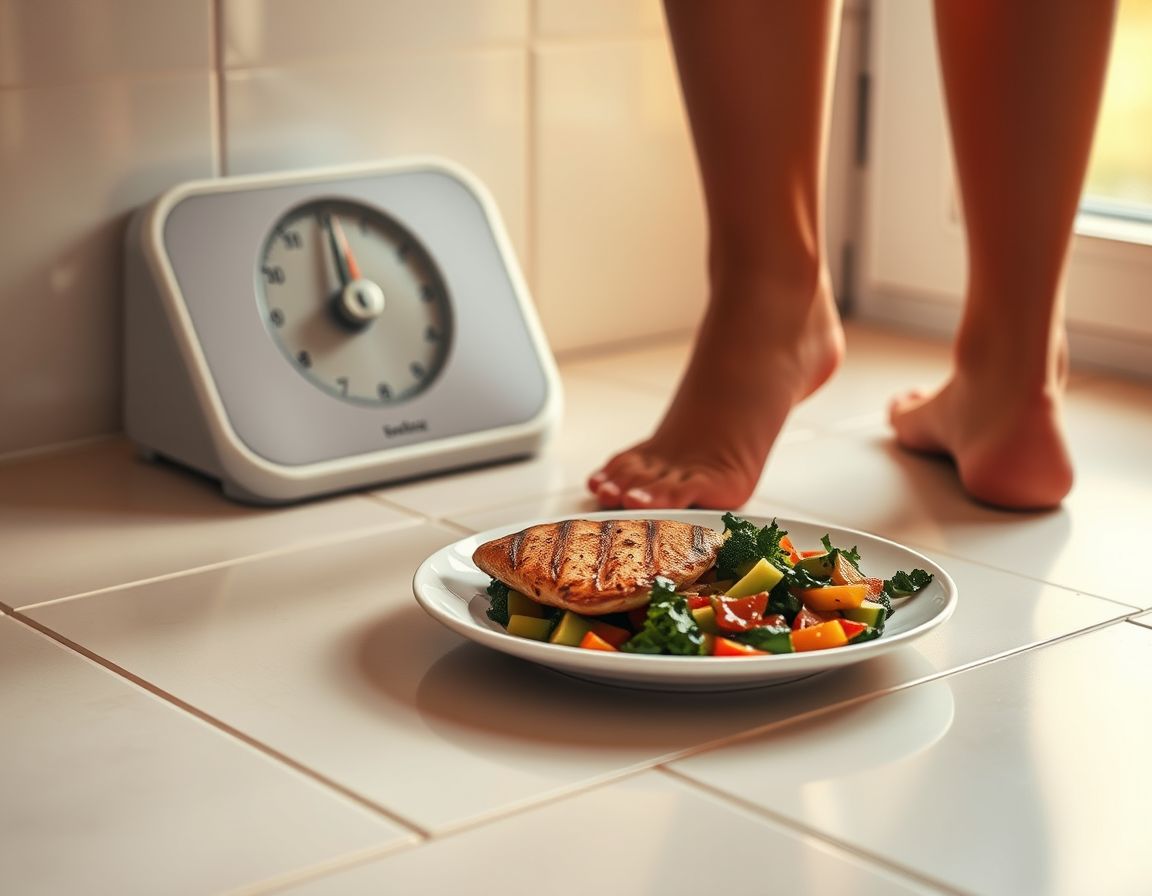
Okay, so you've both been eating steak and eggs for three weeks. You haven't touched a slice of bread. He had pizza crust at his brother's birthday. And he's down 10 pounds while you're down 5. If you've ever wanted to throw the bathroom scale out the window, you're in very good company.
Here's the short answer to why your husband loses weight faster than you: on average, men start bigger, carry more muscle, and burn more calories just by existing. That means the same way of eating often creates a bigger calorie gap for him, so the scale moves faster. Add in the hormone shifts of your 40s, 50s and 60s, and a slower pace for you is normal. It isn't a sign you're doing it wrong.
(Quick note: not everyone's partner is a husband. Swap in wife, boyfriend, sister or best friend as needed. The science still applies whenever one of you is bigger, younger or more muscular.)
The real reasons he's "winning"
He often has more to lose. A bigger body holds more water and more stored carbs. That first-week drop is mostly water and glycogen, and it's typically 3 to 7 pounds, with smaller and older bodies landing on the lower end. So he may walk away from week one with a 7 while you get a 3. Neither of you burned much fat yet. His tank was just bigger.
He usually has more muscle. Muscle burns energy even while you're asleep on the couch. On average, men carry more of it, so their daily burn runs higher.
The same deficit isn't the same deficit. Say he burns 2,600 calories a day and you burn 1,800. You both cut back by the same amount of food. For him that's a smaller slice of his total, and for you it's a bigger bite out of a smaller budget. Your body often responds by protecting itself a little more. Same plate, different math.
Hormones and menopause. As estrogen drops through perimenopause and menopause, many women notice fat settles around the middle, sleep gets choppier, and muscle gets harder to keep. Poor sleep alone can make weight loss slower. Sarah covered this well in her honest breakdown of hormones on carnivore, and it's worth a read if the midsection thing feels personal.
Medications can play a part. Some common prescriptions can affect weight, appetite or water retention. That's not a reason to change anything on your own. It's a good question to bring to your prescriber: "Could anything I take be slowing this down?"
Why comparing scales is unfair to you
Real talk: you're running a different race on a different track. Comparing your number to his is like comparing your grocery bill to your neighbor's who has four teenage boys.
After the water week, a steady 0.5 to 1.5 pounds a week is a solid pace for most people. If you're over 50, 0.5 to 1 pound a week is a good pace. That might sound slow next to his early numbers, but it adds up, and it tends to stick.
Also, give it time before you decide anything. A fair trial is 60 to 90 days, not three weeks. Plenty of women in our community say the first month felt like nothing happened, and then the tape measure told a different story.
Better ways to track your progress
The scale is one tool. It's not the judge. Here's what many women find tells the truth better:
- Tape measure. Waist, hips and upper arm, once every two weeks, same time of day. Inches often move when the scale sulks.
- Your clothes. Pick one pair of snug jeans as your "test pants." Try them on every couple of weeks.
- Energy and sleep. Are you less wiped out at 3pm? Sleeping through the night more often? Write it down. You'll forget otherwise.
- Photos. Front and side, same spot, same lighting, once a month. Not for social media. Just for you.
- Labs with your doctor. Ask about getting a baseline and a follow-up, things like A1c, triglycerides, HDL and blood pressure. Your doctor is your partner here, and those numbers can tell you a lot that the scale can't.
If you truly haven't seen movement on the scale or the tape for 3 to 4 weeks, that's when it's worth looking closer. Check sleep, stress and electrolytes first, then do an honest 7-day food log, including the butter and cheese. Our 2-week results roundup shows how wildly different early numbers look from person to person, too.
Run your own numbers, not his
Here's the thing: if you're both eating off the same plan, you may be eating the same portions. He probably needs more food than you do. You probably need less, but not so little that you skimp on protein. Protein is the anchor. If you're trimming, trim added fat like extra butter first, never the meat.
If you want a starting point, each of you can run your own numbers in our free macro calculator. It's a quick way to see that "the same diet" doesn't mean "the same amount."
Keeping it a partnership, not a competition
This is the part that matters most. Doing carnivore together is a huge advantage. You have someone who won't bring a pizza home, who'll grill with you, who gets why you're ordering a burger without the bun. Don't let the scale ruin that.
- Stop sharing daily weigh-ins. Share wins instead: better sleep, fewer knee aches, a belt notch.
- Tell him what helps. "Please don't announce your number at breakfast" is a totally fair ask. Most partners have no idea it stings.
- Set shared goals. Walk after dinner three nights a week. Cook together on Sundays. Those are wins you both get credit for.
- Celebrate each other. His fast start is good news for your household. Your slower, steadier progress is good news too.
If family meals or social stuff is where things get tricky, our family integration guide has some practical ideas.
You're not losing. You're just running your own race, and it's one you can keep running for years.
If you're on meds or diagnosed with anything, you need actual medical supervision. Don't make changes based on internet articles, including this one.
I'm not a doctor. I'm just someone who's deep in the community and reads everything. Take all health stuff with a grain of salt (pun intended). I can tell you what people are trying and what's trending, but you gotta make your own calls. I'm here to give you the real tea, not medical advice.