
This post may contain affiliate links. For educational purposes only, not medical advice. Details
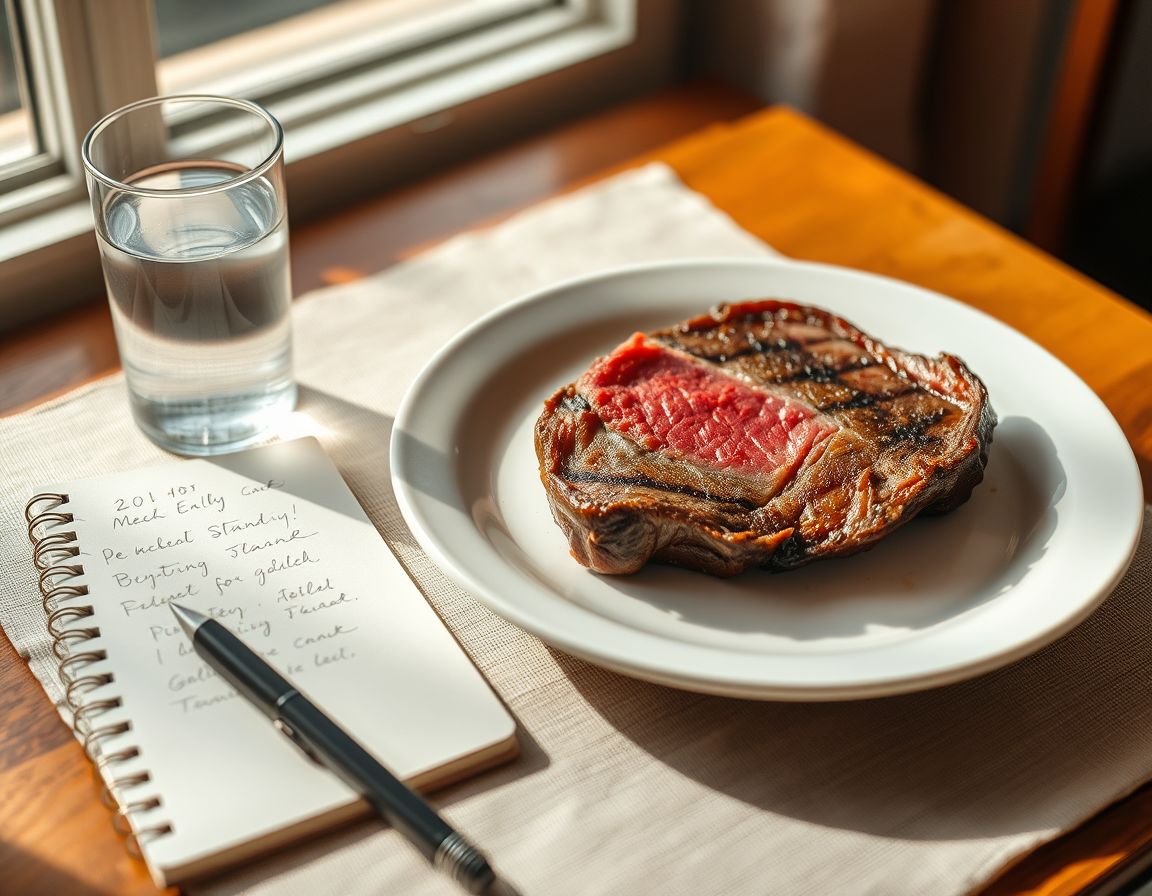
If meat suddenly makes you feel sick after months of doing fine, the reasons usually aren't exotic. Past 45, the common ones are sluggish bile, low stomach acid, a histamine load from aged or reheated meat, and real stress that slowed digestion down. Each leaves a different fingerprint, and each has a way to check it at home.
What throws people is the timing. Nothing changed. Same steaks, same butter, same routine, and then one week the smell of beef cooking turns your stomach. That's typical. Bile output, stomach acid, and stress tolerance drift slowly, and you only notice the day they cross a line. The question isn't what you did wrong last Tuesday. It's which system finally ran out of room.
First, the one that isn't digestive
The first guess online is almost always alpha-gal syndrome, a tick-related allergy to mammal meat. It's real and there's a blood test for it, but it usually brings hives, swelling, or intense itching hours after eating rather than plain queasiness, and many people asking this have no history of a tick bite. If your symptoms feel allergic, or you feel unwell all over and not just in your gut, read When Carnivore Makes You Sick and Doctors Shrug for the full workup. The rest of this is about the digestive causes, which get skipped.
Sluggish bile and the gallbladder
I'd look here first, especially if you're a woman over 45 who's been running fat high for months. Bile emulsifies fat so you can absorb it, and your gallbladder stores and releases it. When demand goes up and stays up, a gallbladder that was quietly struggling starts to complain.
The fingerprint is specific. Pressure or pain under your right ribs. Pain radiating to the right shoulder blade. Nausea one to three hours after a fatty meal rather than right away. Stools that look pale, greasy, or float. Dread about rich food, which is your body doing its job.
The home test is a fat trial, and the direction matters. Trim added fat first: butter, tallow, ghee, cream, whatever you pour over an already fatty cut. Leave your protein alone. Protein is the anchor and fat is the lever, so cutting protein to feel better just trades one problem for another. Give it seven to ten days. If you're not sure what your intake looks like, the free macro calculator gives you a baseline.
Here's the part I want to be direct about. A fat trial is a test, not a treatment. Gallstones and gallbladder inflammation are diagnosed by imaging, and no amount of butter reduction rules them out. If that fingerprint fits you, ask your doctor for an abdominal ultrasound. Most will order it once you describe the pattern clearly.
If your gallbladder is already out, fat handling changed permanently. You don't store bile anymore, you just drip it, so large fatty meals land differently. I covered that in Carnivore Without a Gallbladder: The Fat Fix.
Low stomach acid
Acid production tends to fall with age, and further with acid-reducing medication. Meat needs acid. Without enough, protein sits in your stomach longer than it should, and that feels like nausea even when nothing's wrong with the meat.
The fingerprint here is heaviness rather than pain. Food still sitting there an hour later. Getting full after four ounces when you used to handle twelve. Burping within half an hour. Sometimes reflux, which confuses people, because too little acid can cause the symptoms most of us assume mean too much. To test it, shrink the meals and slow them down. If the heaviness eases inside a week, that's your lead.
If you take a proton pump inhibitor or another acid reducer, don't stop it on your own. Those are prescribed for a reason, and stopping abruptly can cause a rebound worse than what you started with. Bring the pattern to your prescriber and ask whether the dose still fits your situation. That's their call, not the internet's. If reflux is your main complaint, Acid Reflux on Carnivore explains why the early weeks can be rough.
Histamine from aged and reheated meat
This one's underrated and easy to check. Histamine builds up in meat as it ages, cures, sits in the fridge, or slow-cooks for hours. Fresh meat is low in it. Leftovers, dry-aged steak, bacon, deli meat, and long-simmered broth carry a lot more.
Most people raise their load slowly without noticing, because they get efficient. You batch-cook Sunday and eat it Wednesday. You keep broth going. Then come the symptoms: flushing, headache, itchy skin, a stuffy nose after meals, loose stools, sometimes a racing heart. The test is simple. For a week or two, eat only freshly cooked meat, and freeze portions right after cooking instead of parking them in the fridge.
Stress and life events
I want to name this properly, because it gets used as a brush-off and it shouldn't be. Sustained stress genuinely slows digestion. Blood shifts away from your gut, stomach emptying slows, and bile and enzyme release drop. That's measurable physiology, not a mood.
A bereavement, a diagnosis in the family, a job loss, a hard stretch of caregiving. Any of these can show up as nausea at the table, and food you loved a year ago can suddenly feel repulsive. If your symptoms started within a few weeks of something hard, that's real information.
A sensible order to work through
- Week 1: Only freshly cooked meat. No leftovers, no aged or cured cuts, no long-simmered broth. That clears the histamine question fastest.
- Week 2: If nothing changed, cut added fat by roughly half. Keep protein exactly where it is.
- Throughout: Smaller meals, and note when the nausea hits. Right away points toward the stomach. Hours later points toward bile.
- Write it down. Two weeks of notes turns a vague complaint into something a doctor can act on in a short appointment.
When it stops being a diet question
Book the appointment instead of running more experiments if you have right upper abdominal pain in waves, pain into the right shoulder blade, pale or clay-colored stools, dark urine, yellowing skin or eyes, fever with the pain, vomiting you can't stop, or unintended weight loss. Those point toward the gallbladder or the bile ducts, and imaging answers them. Food trials don't.
Most of the time this turns out to be fixable. Testing in order tells you which one it is, and it tells you fast when it's time to hand this to someone who can look inside.
I'm not a doctor. I've researched this deeply and worked with a lot of people, but I'm not your doctor. If you have health conditions, take medications, or need specific guidance, talk to someone who knows your full medical picture. Everything here is educational, based on research and on what I've seen work. Your situation might be different.