
This post may contain affiliate links. For educational purposes only, not medical advice. Details
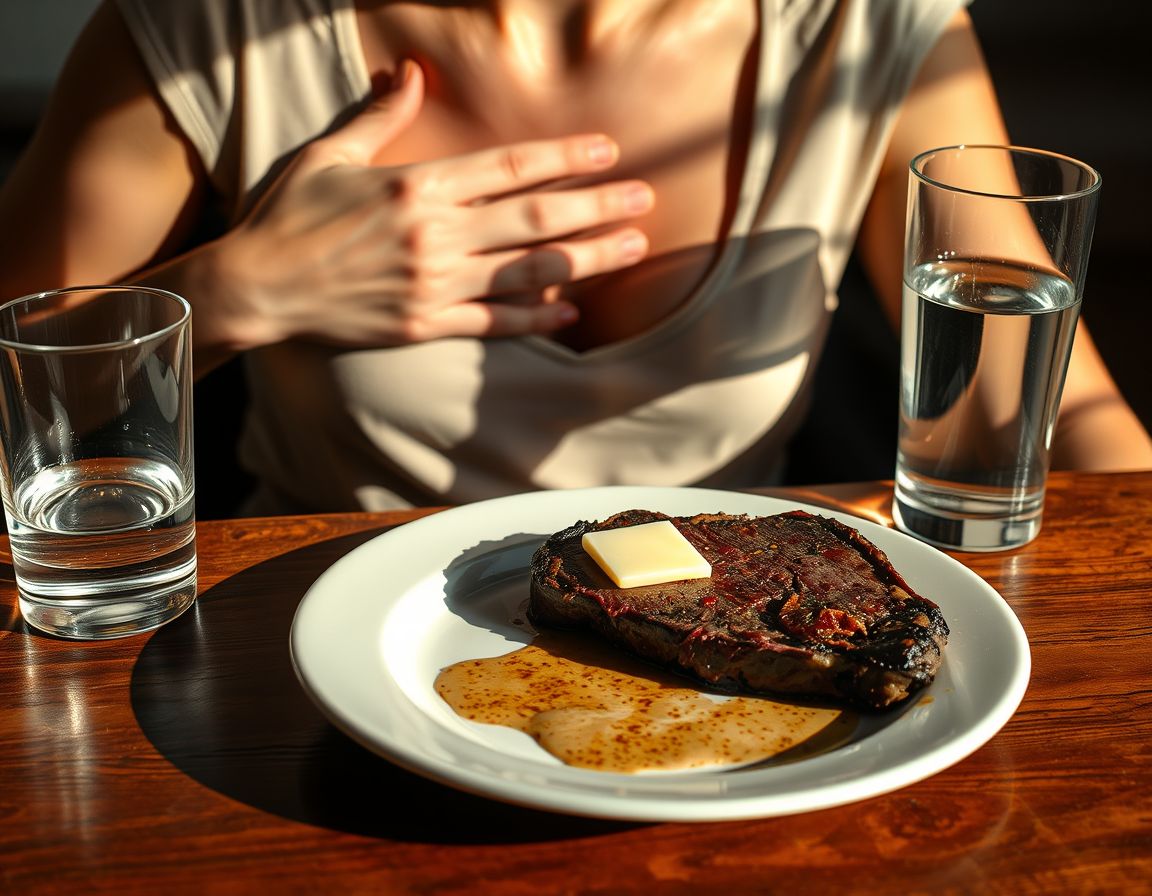
You're two weeks into carnivore, you've just finished a ribeye with butter, and there's a dull ache under your right ribs. Not sharp. More like fullness that doesn't want to leave. You've started wondering whether the diet is doing something to your gallbladder.
Here's the honest answer. A mild ache or heavy feeling under the right ribs after a fatty meal in the first few weeks is common, and for most people it's an adjustment, not an injury. But gallstones are also common, especially in women over 40, and a real attack feels different. Let me walk you through both.
If you want a starting point for your numbers, the free calculator at /calculator.html gives you a protein and fat target. For the first month, treat that fat figure as where you're heading, not where you start.
Why the ache shows up in week two
Your gallbladder is a small storage bag for bile. Your liver makes bile all day, the gallbladder holds and concentrates it, and when fat reaches your small intestine, a hormone called CCK tells the gallbladder to squeeze and release what it's stored. That's how you absorb fat.
Think about what most of us ate before carnivore. Years of chicken breast and low-fat everything. Your gallbladder wasn't asked to do much, so it got out of practice, and bile got thicker and sat longer.
Then you switch to 80/20 beef and eggs fried in butter, all in one week. Suddenly it's being asked to contract hard, three times a day, for the first time in a decade. That squeeze against thick, sluggish bile is what many people feel as a dull ache or fullness under the right ribs, usually 30 to 90 minutes after eating. It fades within an hour or two. There's no fever.
Some people find it peaks in week two or three and is gone by week four or five, once the gallbladder is emptying regularly again and bile has thinned out.
Get care now if...
A gallstone attack or an inflamed gallbladder is not something to wait out with a smaller breakfast. Go to urgent care or the emergency room if you have:
- Severe, steady pain in the upper right or middle belly that lasts more than an hour or two and doesn't ease when you change position
- Pain that spreads into your back or up under your right shoulder blade
- Fever or chills along with the pain
- Yellowing of your skin or the whites of your eyes, dark urine, or pale stools
- Vomiting that won't settle, or you can't keep fluids down
- Pain that wakes you from sleep or gets worse week over week rather than better
In plain words: adjustment is a dull, forgettable ache that improves over the weeks. An attack is pain you can't ignore that holds steady for hours. If you're unsure which you're having, that's reason enough to be seen.
How women over 45 ease fat up instead of all at once
The fix for the adjustment ache is not to go low fat again. It's to raise fat gradually over three to four weeks so the gallbladder gets back into rhythm without being shocked. Protein stays the anchor the whole time. Fat is the lever you move slowly.
Most people on carnivore land around 30 to 40 g of protein per meal, and after 50 that spread across three meals works far better than one huge dinner. This is not for everyone. Talk to your doctor first if you have high blood pressure, kidney or heart problems, diabetes, are pregnant, or take medicine. With protein set, here's how the fat ramp usually looks:
- Week one: leaner cuts, no added fat. 90/10 ground beef, sirloin, chicken thighs with skin, eggs, white fish.
- Week two: step up the cut. 85/15 beef, pork shoulder, a little butter on your eggs. No tallow by the spoonful yet.
- Week three: fattier cuts in rotation. 80/20 beef, a ribeye once or twice, chuck roast. Added butter is fine if you want it.
- Week four onward: eat to satiety. Many people settle near a 1:1 fat to protein ratio by grams. Some sit a bit under that and feel great. Let hunger tell you where.
Two habits help. Smaller, more frequent meals ask for a moderate squeeze several times a day instead of one enormous one, so don't skip meals while you're adjusting. A gallbladder that sits full for 16 hours and then meets a pound of ribeye is the setup for the ache. And eat slowly.
If the fat jump is also showing up as loose stools, that's the same mechanism from the other end, and this guide on how long carnivore diarrhea lasts covers it, so I won't repeat it here.
If you have surgery scheduled
A few of you have written in with the same situation: your gallbladder is coming out in a few weeks, your surgeon has said to keep fat and protein low before and after, and you want to know how to keep eating this way through it.
Your surgeon's instructions stand. Full stop. An irritated gallbladder with stones in it can flare badly when asked to squeeze, and a flare right before surgery can turn a planned procedure into an emergency one. The fat levels this diet eventually uses are a conversation for after you've healed, not before.
What you can do now is ask good questions. Ask what "low fat" means in practical terms for you, which foods on your list fit inside it, and when they'd expect you to bring fat back. Eggs, white fish and lean poultry are often still on the table, but your surgeon decides, because your surgeon has seen your scan.
Once you're recovered, your body will still make bile. It just won't have a storage bag to concentrate it, so how you spread fat through the day matters more. We have a separate guide for that stage: Carnivore Without a Gallbladder: The Fat Fix. Bookmark it. Right now your job is to heal.
What I've seen work
The people who do best treat the first month as a ramp rather than a cliff. They let protein carry them while fat catches up, eat three moderate meals instead of two heroic ones, and take a dull ache as information rather than proof the diet is wrong for them. If it's getting worse instead of better by week four, or any red flag above shows up even once, that's a doctor visit, not a diet tweak.
I'm not a doctor. I've researched this deeply and spent years beside people working through it, but I'm not your doctor. Everything I write is educational, based on research and what I've seen work. Your situation might be different.