
This post may contain affiliate links. For educational purposes only, not medical advice. Details
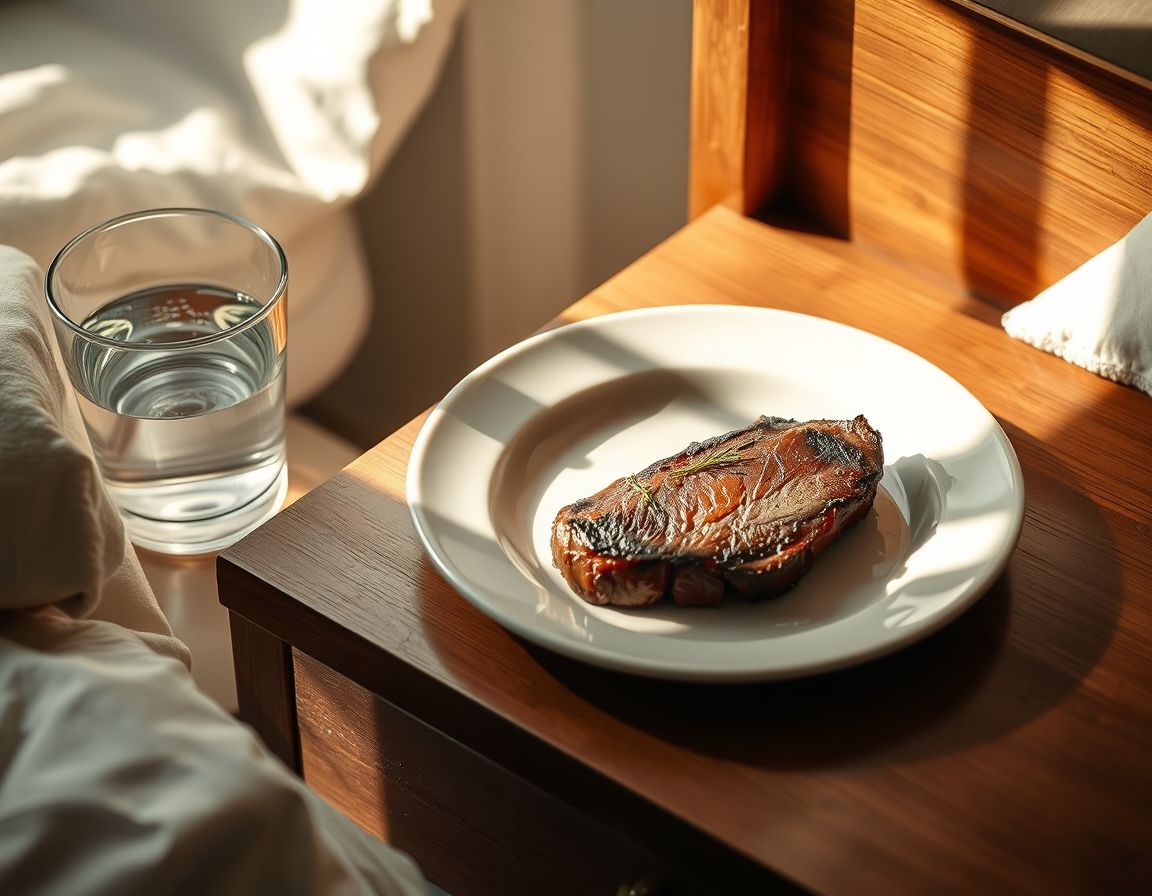
You cooked a ribeye, the smell hit you, and your stomach turned. Three days ago you were excited about this. Now the sight of a beef patty makes you want to lie down. That's one of the most common week-one experiences nobody warns you about, and it's usually not a sign meat is wrong for you.
Here's the short answer. Nausea in the first 7 to 10 days is mostly a timing problem, not a food problem. Your digestion is set up for whatever you ate for the last thirty years, and retooling takes a little while. Bile and fat-splitting enzymes lag behind the jump in fat. Stomach acid may be low, especially over 50 or on acid-reducing medication. Fat volume climbs fast. And sodium drops as insulin falls, which makes you queasy on its own. Days 3 to 10 are the roughest patch for almost everyone, and most people feel adapted by weeks 4 to 6.
What's actually making you queasy
Bile and enzyme lag. Bile is what lets you handle fat. Your gallbladder releases it when fat shows up, and the amount is still sized for your old meals. Give it a 12-ounce ribeye with butter on top and the math doesn't work yet. Undigested fat sitting in your gut is exactly what nausea and loose stools feel like. It's the reason I hear most often when someone says they can't look at meat in week one.
Low stomach acid. Protein needs acid to break down. Plenty of women in their fifties and sixties are already low, and if you take a proton pump inhibitor or an H2 blocker, you're low by design. Steak sits like a rock and the next meal sounds awful. Don't stop an acid medication to fix this. That's a conversation with whoever prescribed it.
Fat volume all at once. Beginners often pick up the idea that carnivore means as much fat as possible. It doesn't. Protein is the anchor and fat is the lever you adjust. Roughly equal fat and protein by grams is a fine satiety baseline, and in week one you can sit under it without harm. Some people find the queasiness stops the day they quit adding butter to meat that already has fat in it.
The electrolyte dip. When carbs go, insulin falls, and your kidneys flush sodium and water. That's the 3 to 7 pound whoosh on the scale, and it's also the headache, the lightheadedness, and yes, the nausea. Most adults need 3 to 5 grams of sodium a day here, which is more than it sounds. One teaspoon of salt is about 2.3 grams of sodium. Spread it out instead of taking it in one hit. We covered this in why almost everyone starts out low on electrolytes, and week one is the exact window where it matters most. It's the same dip the keto world calls keto flu, and it answers to the same fix.
The low-nausea way to keep eating
The goal this week isn't a perfect meal. It's enough protein, kept down, without a fight.
- Go leaner for a few days. 85/15 ground beef, chicken thighs, or shrimp instead of ribeye and cream. Bring fat back up once things settle. Temporary, not the plan.
- Smaller portions, more often. Aim for 30 to 40 grams of protein per sitting instead of one enormous plate. Over 50, spread-out doses work better anyway.
- Try a salty drink. A quarter teaspoon of salt in warm water or broth, sipped slowly, settles a lot of week-one stomachs.
- Cook plain and let it cool. Hot fat and strong smells drive the aversion. Cold sliced roast beef, a hard-boiled egg, or room-temperature chicken often goes down when a sizzling pan won't.
- Vary the animal. Some people find beef-only week one is the exact thing making them gag. Pork, fish, eggs, and lamb all count. Ground beef and eggs is our default on-ramp because it's cheap and easy, not because it's the only way in, and the ground beef strategy covers that version properly.
- Magnesium in the evening. Glycinate, at an amount your pharmacist clears for you: magnesium is kidney-cleared, and blood pressure or diuretic medication changes what's safe. Avoid oxide, which absorbs poorly and can make the gut worse.
If your appetite has just left the building
Readers write in worried that they're barely eating, and their instinct is to force food down. Some of that is real satiety showing up for the first time in years. If you've spent decades eating food designed to be easy to overeat, real fullness feels strange, almost like something's wrong.
You don't need to hit a number in week one. Don't count calories for the first eight weeks. Eat when you're hungry, keep protein the priority, and let appetite come back on its own, which it usually does inside a couple of weeks. If you want a starting point for your numbers later, the free macro calculator is there when you're ready.
You'll also see people suggest fasting until you're hungry enough to want a steak. It works for some. But fasting changes how medications absorb and how blood sugar behaves, so if you take anything, run that past your doctor first.
About the "additives leaving your body" theory
You'll run into the idea that week-one nausea is old seed oils, corn syrup, or additives working their way out over months. I understand why that story spreads, but there isn't good evidence for it, and the numbers people quote for how long these things linger aren't real. The explanations above are less dramatic and far better supported. Your gut really is changing in this window, which we covered in the carnivore gut health paradox.
When it isn't adaptation
Adaptation nausea is background queasiness that eases between meals and improves week over week. Get seen if you're vomiting repeatedly, can't keep fluids down, have pain under your right ribs after fatty meals, notice yellowing eyes or pale stools, or you're getting worse instead of better past day 10. Gallbladder trouble and reflux are both real, and both look like this at the start.
Give it the full window. Days 3 to 10 are the worst of it, most people are steady by weeks 4 to 6, and a fair trial is 60 to 90 days. Nearly everyone who tells me they couldn't stand meat in week one has forgotten they ever felt that way by month three.
I'm not a doctor. I've researched this deeply and worked with many people, but I'm not your doctor. If you have health conditions, take medications, or need specific guidance, talk to someone who knows your full medical picture. Everything I write is educational based on research and what I've seen work. Your situation might be different.