This post may contain affiliate links. For educational purposes only, not medical advice. Details
If you want to lose menopause belly fat on carnivore, the honest answer is that you lose it the same way you lose the rest of it, but slower, and the order isn't up to you. Eat enough protein, keep your carbs low enough that insulin stays quiet, sleep like it's part of the protocol, and stop weighing yourself daily. The belly is usually the last place to let go, and that's not a sign the diet isn't working.
Here's the part nobody tells you. Your face gets thinner. Your rings get loose. Your arms lose that softness under the sleeve. And your waistband stays exactly where it was. That's not failure. That's fat mobilization happening in the order your hormones decided, and midsection fat in a post-menopausal body is metabolically stubborn on purpose. Give it months, not weeks.
What actually changed at menopause
Before menopause, estrogen pushed a lot of your fat storage toward your hips, thighs, and the back of your arms. That's subcutaneous fat. It sits under the skin, it's relatively easy to access, and it's the fat that made most women pear-shaped through their thirties.
When estrogen drops, that signal weakens. Fat starts going to the abdomen instead, and a bigger share of it goes deeper, around the organs. That's visceral fat. It's a different tissue with different behavior. It's more inflammatory, more insulin-sensitive in the bad direction, and it responds to cortisol in a way that hip fat doesn't.
So the woman who never had a belly in her life suddenly has one, and it appeared without a single change to how she eats. That's the part that makes people feel crazy. You didn't do anything differently. The storage instructions changed.
Research on body composition through the menopause transition consistently shows this shift toward central fat, and it shows it happening somewhat independently of total weight. Some women gain nothing on the scale and still go up two inches at the waist. Research shows general patterns. Your body may respond differently based on your own health history and where you are in the transition. If you're earlier in that transition rather than through it, our keto site walked through what actually changes in perimenopause, and much of it applies here too.
Why the belly holds on longest
A few things stack up here, and it helps to know them so you stop reading the mirror as a verdict.
- Blood flow and receptor density. Abdominal fat in a low-estrogen body has more of the receptors that block fat release and fewer of the ones that let it out. It's not sealed shut, it's just slower to open.
- Cortisol has a favorite parking spot. Chronically elevated stress hormones preferentially drive fat to the midsection. If you're in the sandwich years with aging parents and adult kids and a job, this matters more than your macros do.
- Sleep gets worse right when you need it most. Poor sleep raises evening cortisol, drops insulin sensitivity the next day, and increases appetite for the exact foods you're trying to leave behind.
- Bloating is masquerading as fat. Weeks two through six on carnivore, a lot of what's still in your waistband is water, digestive adjustment, and inflammation, not adipose tissue.
That last one is worth sitting with. I've talked to women who were ready to quit at week five because their stomach still looked distended, and by week ten the distension was gone without any change to what they were eating. The gut takes a while to settle.
What actually moves it
Set a protein floor and don't go under it. This is the single biggest lever for women in this age group, and it's the one most commonly missed. Underneath the fat loss question is a muscle loss question, and after 50 you lose muscle fast when protein runs low. Muscle is what keeps your resting metabolism from sagging. If you're not sure where to start, I wrote about how much protein you actually need on carnivore, and there's a version of that math specifically for women over 45 where the numbers land differently than the standard advice.
If you want a starting point for your own numbers instead of a general rule, there's a free macro calculator at /calculator.html that'll give you a range to work from. Treat it as a first draft, not a prescription.
Protect sleep like it's a supplement. Cool room, dark, consistent bedtime, and no screens in the last hour. Night sweats make this genuinely hard, and I'm not going to pretend a dark room fixes vasomotor symptoms. But most women on carnivore notice their sleep shifts by around week three, and it's often for the better once electrolytes are dialed in.
Lower the stress load where you actually can. Not "manage stress," which is useless advice. Pick one recurring thing that spikes you and remove it. Walking outside after dinner does more for midsection fat than another hour in the gym.
Lift something heavy twice a week. Nothing complicated. Bodyweight or a couple of dumbbells is fine. You're protecting muscle, not chasing a burn.
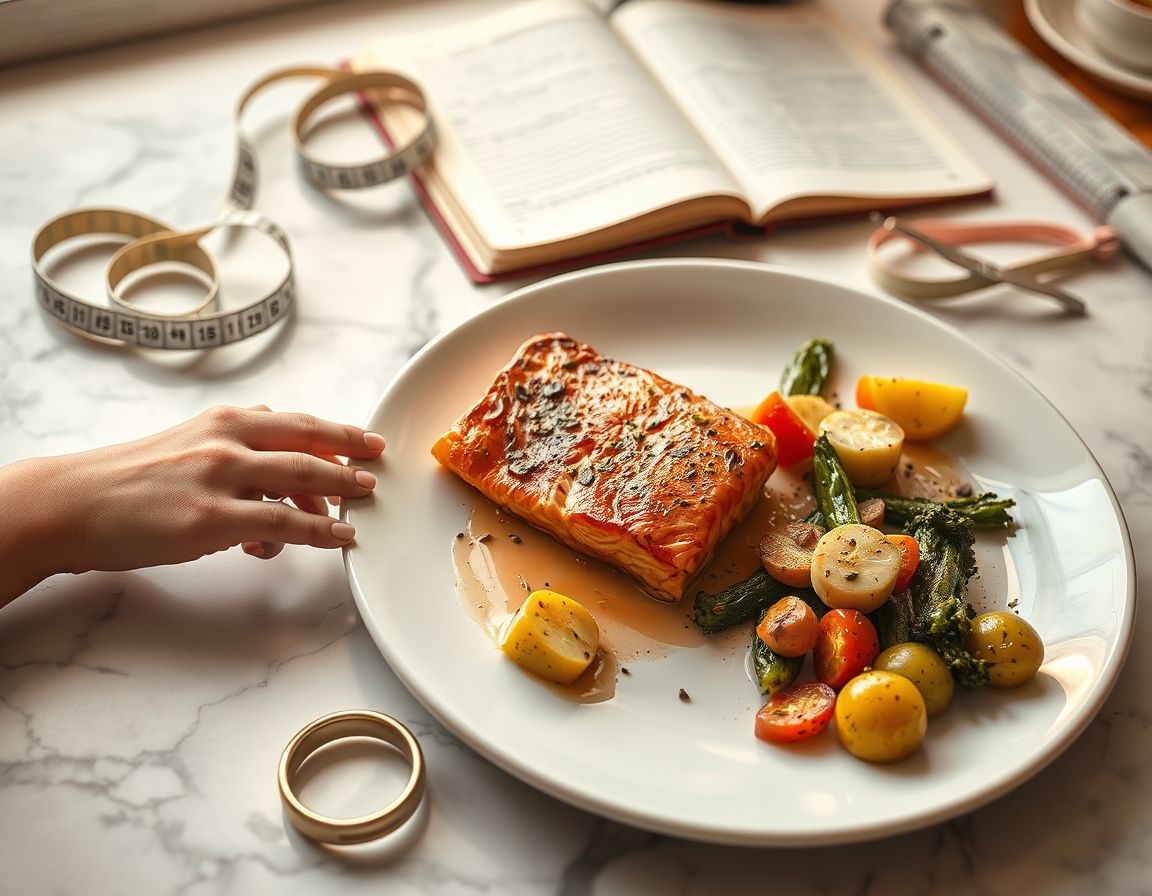
Measure your waist, not your weight. Once every two weeks, same time of day, tape measure at the belly button. The scale during menopause is noisy in a way that will make you quit for no reason. If the number stops moving entirely for more than a month, that's a different conversation, and I've written about what a real stall looks like versus a normal pause.
How long is this supposed to take
Longer than the before-and-after photos suggest. Most women I've talked with see their face, hands, and collarbones change first, in the first six to ten weeks. Hips and thighs come next. The belly is frequently a four to six month project, and for some women it's a year.
That sounds discouraging. It isn't, if you flip it around. It means the belly not moving at month three tells you nothing about whether this is working. It's the wrong place to look for early evidence. Look at your energy, your joint pain, your afternoon crash, your rings.
Two things that belong with your doctor, not with me
Hormone replacement therapy is one of them. There's real research suggesting HRT influences where fat gets stored during the transition, and the risk and benefit picture has changed over the last twenty years. It's genuinely individual and it depends on your history, your timing, and your family risk. That's a conversation with someone who knows your full chart.
Thyroid is the other. Hypothyroidism is common in this age group, it's frequently missed, and it produces exactly the symptoms you'd otherwise blame on menopause or on your diet. Fatigue, cold hands, stubborn weight, thinning hair. If you've been doing the work and nothing is moving anywhere, get your thyroid panel run before you assume you're doing carnivore wrong.
And if you take medications, especially anything for blood pressure, blood sugar, or thyroid, changing how you eat can change how those drugs behave in your body. Medication use and diagnosed conditions require professional medical management. Don't alter your treatment plan based on general information, including mine.
Not a Doctor: I'm not a doctor. I've researched this deeply and worked with many people, but I'm not your doctor. If you have health conditions, take medications, or need specific guidance, talk to someone who knows your full medical picture. HRT and thyroid questions in particular belong with your physician, not with a blog post. Everything I write is educational, based on research and what I've seen work. Your situation might be different.