This post may contain affiliate links. For educational purposes only, not medical advice. Details
The "Impossible" Thing That Keeps Happening
Every fitness forum will tell you the same thing: you can't lose fat and build muscle at the same time. You have to bulk first, then cut. It's thermodynamics. It's science. It's settled.
Except it keeps happening on carnivore. Over and over.
Guy starts at 220 lbs, soft around the middle. Three months later he's 215 but looks completely different. Shoulders are broader. Waist is smaller. Lifts are up across the board. The scale barely moved but the mirror tells a different story.
This isn't magic. It's what happens when you give your body the right raw materials, remove the things working against it, and train with intent. Let me break down why recomposition works on carnivore and how to set yourself up for it.
Why Carnivore Creates the Perfect Recomp Environment
Protein intake is naturally high. When your entire diet is animal foods, you're eating 1g+ of protein per pound of body weight without even trying. A pound of ribeye has about 90g of protein. Add eggs and ground beef and you're clearing 150-180g daily without counting a single macro. That protein is the building block for new muscle tissue. And it's the most thermic macronutrient, meaning your body burns 20-30% of protein calories just digesting it.
Hormones optimize themselves. Saturated fat from red meat supports testosterone production. Studies show men eating higher saturated fat diets have 10-15% higher total testosterone compared to low-fat dieters. Growth hormone pulses increase when insulin stays low between meals. And cortisol drops when you remove inflammatory seed oils and processed foods. This hormonal environment is exactly what you need for simultaneous muscle growth and fat loss.
Inflammation drops fast. Within the first 2-3 weeks of strict carnivore, most people report significantly less joint pain and faster recovery between sessions. Lower inflammation means you can train harder and more frequently. That increased training volume drives more muscle growth.
Insulin sensitivity improves. When you're not spiking insulin 6 times a day with processed carbs, your cells become more responsive to it. Better insulin sensitivity means nutrients get shuttled into muscle cells more efficiently and less gets stored as fat. This is the metabolic switch that makes recomp possible.
The Recomp Protocol
Here's the protocol. It's not complicated. But you have to follow it consistently for 8-12 weeks before you judge the results.
Nutrition:
- Protein target: 1-1.2g per pound of your goal body weight. If you weigh 200 and want to be a lean 185, eat 185-220g protein daily.
- Eat to satiety. Don't count calories. Don't restrict. Eat whole cuts of meat, eggs, and animal fats until you're satisfied. Not stuffed, not still hungry. Satisfied.
- Prioritize red meat. Ribeye, NY strip, chuck roast, ground beef. Red meat has the highest concentrations of creatine, carnitine, iron, and zinc. All of these support muscle performance and recovery.
- Fat is fuel, not the enemy. Don't trim your steaks. Cook with butter and tallow. If you're trying to lean out on lean chicken breast alone, you'll be hungry, tired, and losing muscle. Fat keeps you full and your hormones running right.
Training:
- Lift heavy, 3-4 times per week. Focus on compound movements: squat, deadlift, bench press, overhead press, rows, pull-ups. These recruit the most muscle fibers and create the strongest growth stimulus.
- Progressive overload. Add weight or reps every week. Even small jumps matter. Going from 185 to 190 on bench is progress. Going from 8 reps to 9 at the same weight is progress. Track everything.
- Keep sessions under 60 minutes. After 60 minutes, cortisol rises and diminishes the anabolic response. Get in, work hard, get out.
- Walk daily. 20-30 minutes. This isn't exercise, it's recovery and low-level fat burning. It also improves digestion and sleep quality.
How to Track Progress (Throw Away the Scale)
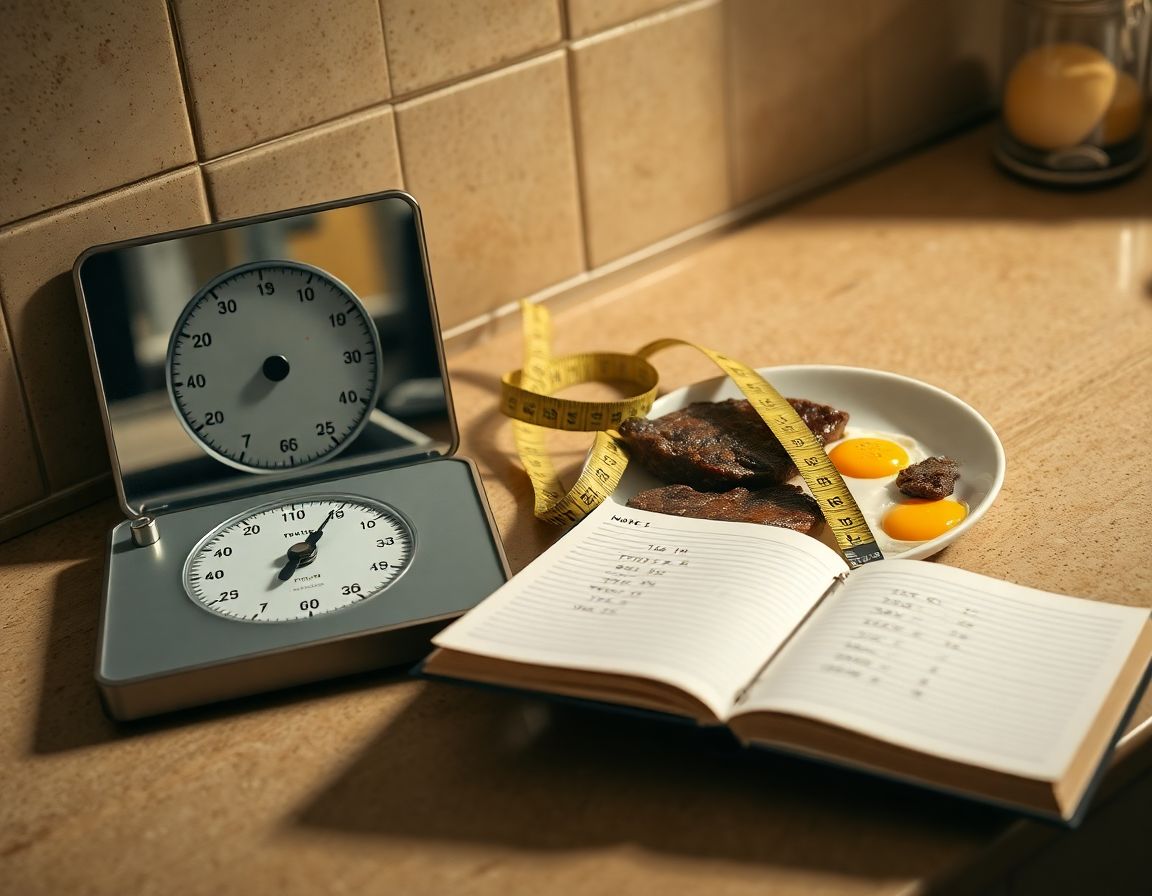
The scale is the worst tool for measuring recomposition. You're adding muscle (which is dense) and losing fat (which is bulky). Your weight might not change at all while your body transforms completely.
Here's what to track instead:
- Waist measurement. Measure at the navel, same time every week. If this number is going down, you're losing visceral fat. That's the metric that matters most for health.
- Progress photos. Same lighting, same angle, same time of day. Take them every 2 weeks. You won't see daily changes, but the 4-week and 8-week comparisons will surprise you.
- How your clothes fit. Pants getting looser in the waist but tighter in the thighs? Shirts fitting better in the shoulders? That's recomp happening in real time.
- Strength numbers. If your lifts are going up while your waist is going down, you're in recomp. Period. No further analysis needed.
Weigh yourself if you want. Just don't let it be the only data point. A guy who stays at 200 lbs but drops 3 inches off his waist and adds 30 lbs to his squat has made incredible progress. The scale would tell him nothing happened.
The Timeline: What to Expect
Weeks 1-3: Water weight shifts. You'll likely drop 5-10 lbs of water and inflammation. This isn't fat loss yet, it's your body settling into the new fuel source. Strength might dip slightly as you adapt.
Weeks 4-6: Energy stabilizes. Workouts feel consistent. You start noticing subtle changes. Face looks leaner. Waist measurement starts moving. Strength returns to baseline or slightly above.
Weeks 7-9: This is where it gets good. Strength is climbing. Clothes fit differently. People start asking what you're doing. The protein you've been eating is fueling new tissue while the fat oxidation is stripping away what you don't need.
Weeks 10-12: Visible transformation. Compare your week 1 photos to now. The scale might show a 5 lb loss, a 5 lb gain, or no change at all. But the mirror shows a different person. This is recomposition.
I've watched a 50-year-old guy go through this exact timeline. Started doing pushups and planks after switching to OMAD carnivore. Three months later he had visible muscle definition for the first time in 20 years. No gym membership. No supplements. Just meat and bodyweight training.
Common Mistakes That Kill Recomp
- Undereating protein. If you're eating 80g of protein a day and wondering why you're not building muscle, there's your answer. Hit your target. Every day.
- Restricting calories on purpose. Recomp is not a cut. If you're actively trying to eat less, you'll lose muscle along with fat. Eat to satiety from whole animal foods and let your body regulate.
- Skipping training. Diet alone won't build muscle. You need the stimulus. Three sessions per week minimum. No exceptions.
- Judging results too early. Two weeks is not enough time. Give it 8-12 weeks of consistent execution before you decide if it's working.
- Ignoring sleep. Growth hormone peaks during deep sleep. If you're getting 5 hours a night, you're cutting your recovery capacity in half. Aim for 7-9 hours. This is non-negotiable for recomp.
This Isn't a Bulk-Cut Cycle
Traditional bodybuilding has you bulk for 4 months (get fat), then cut for 4 months (lose muscle trying to get lean). It's inefficient and miserable. You spend half the year feeling sluggish and the other half feeling starved.
Carnivore recomp works differently because the protein stimulates mTOR for muscle building while the absence of processed food lets your body access stored fat freely. You're not cycling between two extreme states. You're in one consistent state where your body builds and burns simultaneously.
Eat meat. Lift heavy. Sleep well. Measure what matters. Give it 12 weeks. The results will speak for themselves.
I'm not a doctor. I've coached people and competed myself, so I know what works. But I'm not your doctor. If you have health issues or take meds, check with someone qualified. Everything here is based on what works in practice and what research supports. Your mileage may vary.