This post may contain affiliate links. For educational purposes only, not medical advice. Details
A Cut Is Not a Recomp
Let's get this straight. A recomp changes your body composition at maintenance calories. It's slow. It works. But if you want to drop 8-12 pounds of fat in 6-8 weeks while keeping your muscle, you need a deliberate cut. Different goal, different protocol.
The carnivore diet makes cutting easier than most approaches. No calorie-dense junk food tempting you. No hidden sugars spiking insulin. Just meat, fat, salt, and water. But "easier" doesn't mean "automatic." You still need a plan. Here's the protocol I use with clients every summer.
The 6-Week Summer Cut Protocol
Follow these steps in order. Don't skip ahead.
Step 1: Set your deficit. Take your bodyweight in pounds and multiply by 13. That's your daily calorie target. For a 200-pound person, that's 2,600 calories. This creates a moderate 15-20% deficit for most people without tanking your energy or hormones. If you're already lean (under 15% body fat), use 14 instead of 13. Never go below bodyweight x 11. That's crash territory.
Step 2: Lock in your protein floor. Minimum 1 gram of protein per pound of bodyweight. Non-negotiable. A 200-pound person eats at least 200g of protein daily. This is the single biggest factor in preserving muscle during a cut. If you're struggling to hit this number, check out this protein source breakdown for ideas beyond chicken breast.
Step 3: Fill remaining calories with fat. After protein is locked, use fat to reach your calorie target. At 200g protein (800 calories), you've got 1,800 calories left for fat. That's about 200g of fat. This is where you adjust week to week. Protein stays fixed. Fat moves up or down based on results.
Step 4: Train heavy, train short. Keep lifting heavy. 3-4 sessions per week, 45-60 minutes. Compound movements. Don't add extra volume or cardio thinking it'll speed things up. It won't. It'll just increase cortisol and make you hungrier. If you want to add conditioning, walk. 20-30 minutes after your last meal. That's it.
Step 5: Time your meals around training. Eat your biggest meal within 2 hours after training. This is when your muscles are most insulin-sensitive and nutrient uptake is highest. On training days, aim for 2 meals. On rest days, you can eat 2-3 meals or even one large meal if appetite is low.
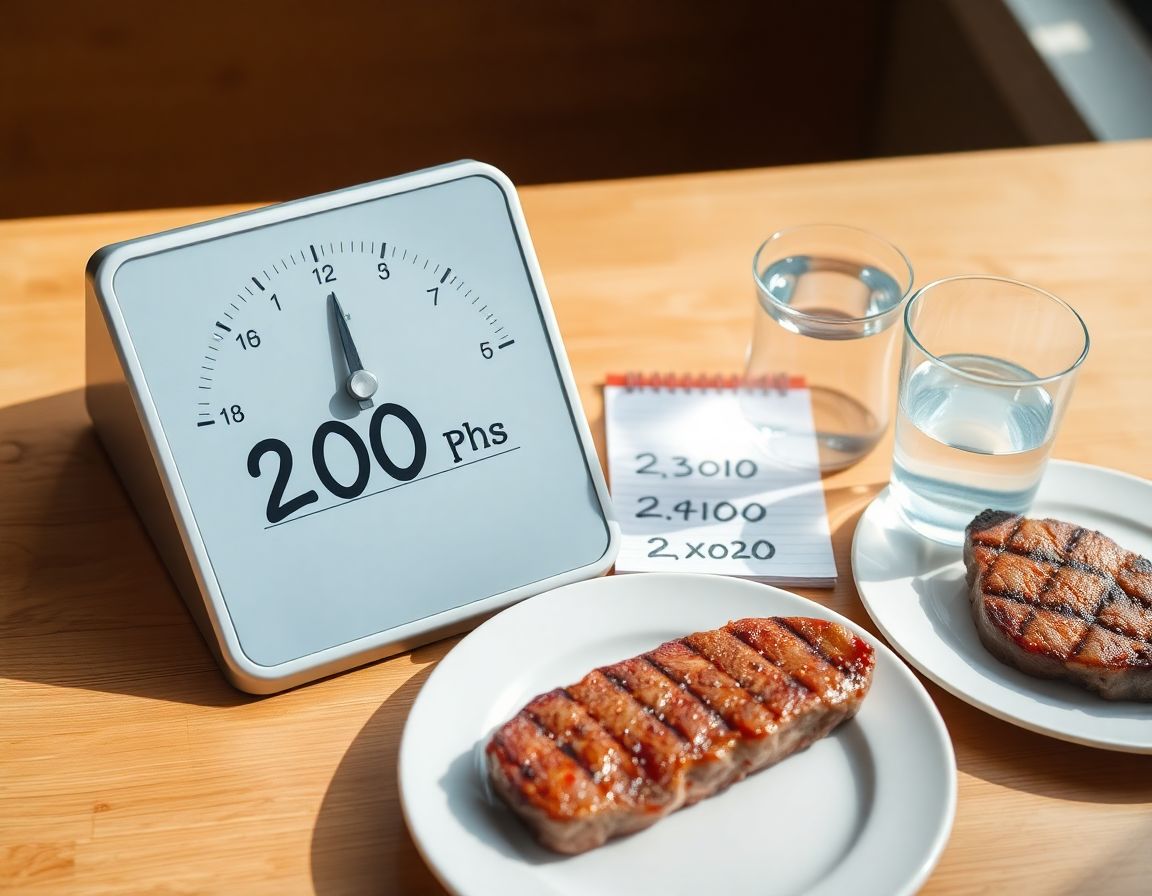
Step 6: Weigh yourself daily, average weekly. Your daily weight will bounce around. That's water, salt, and digestion. What matters is the weekly average. You want to lose 0.5-1% of your bodyweight per week. For a 200-pound person, that's 1-2 pounds per week. Faster than that and you're losing muscle. Slower and you're not in a real deficit. This tracking guide covers exactly how to measure progress without obsessing.
Leaner Cuts vs Fattier Cuts: When to Use Each
This is where most people get confused on a carnivore cut. You don't have to eat chicken breast for 6 weeks. But you do need to be strategic.
Use leaner cuts on rest days. Eye of round, sirloin, chicken thighs, bison. These let you hit your protein target without blowing past your calorie ceiling. A pound of eye of round gives you about 100g of protein and only 20g of fat. That's efficient.
Use fattier cuts on training days. Ribeye, 80/20 ground beef, pork shoulder. You need the extra energy around training. Your muscles earned it. Post-workout is when your body partitions those calories toward recovery instead of storage.
Eggs are your flexible friend. 6 eggs give you 36g protein and 30g fat. Add them to any meal to fine-tune your macros without overthinking it.
Handling Lower Appetite in Summer Heat
Here's something nobody talks about. Your appetite drops in summer. Heat suppresses hunger. Most people panic and force-feed themselves or skip meals entirely. Both are mistakes.
If you're not hungry, don't force it. But do hit your protein minimum. Here's how.
- Cold meat is fine. Leftover steak straight from the fridge. Cold roast beef. You don't need to cook a hot meal when it's 95 degrees out.
- Bone broth counts. A cup of bone broth gives you 10g protein and replaces electrolytes you're sweating out. Keep a batch in the fridge.
- Ground beef is the easiest protein. Brown a pound in the morning. Eat it cold throughout the day if needed. 80/20 gives you roughly 80g protein per pound.
- Electrolytes matter more now. You're sweating more. Add salt liberally. If you're cramping or getting headaches, you need more sodium, not more food.
Signs You're Cutting Too Hard
A good cut feels sustainable. You're a little hungry sometimes, but you're not suffering. Watch for these red flags.
- Strength dropping more than 10%. If your bench press goes from 225 to 200 in two weeks, you're cutting too aggressively. Bump calories up by 200 per day.
- Sleep falling apart. Waking up at 3 AM consistently. Can't fall asleep. This means cortisol is spiking from too large a deficit.
- Losing more than 1.5% bodyweight per week. Anything faster than that and you're burning muscle along with fat. Slow down.
- Constant cold hands and feet. Your body is downregulating metabolism. You've been in a deficit too long or it's too steep.
- Obsessive food thoughts. If you can't think about anything except your next meal, your deficit is unsustainable. Add 150-200 calories of fat and reassess.
If you hit two or more of these, increase calories by 200-300 per day for a week. Then resume at a gentler deficit. There's no prize for suffering.
Fasted Training During a Cut
Can you train fasted while cutting? Yes, with caveats. If your session is under 45 minutes and you're lifting in the morning, fasted training can work well. Your body is already mobilizing fat for fuel. But if sessions are longer or you feel weak, eat first. I covered the full protocol in my fasted training guide. The short version: try it for a week, track your performance, and keep it only if your numbers hold.
The Exit Strategy
Don't cut forever. 6-8 weeks is the sweet spot. After that, spend at least 4 weeks eating at maintenance before considering another round. This lets your hormones normalize, your metabolism stabilize, and your training intensity recover.
When you finish the cut, reverse slowly. Add 100-150 calories of fat per week until you're back at maintenance. Don't celebrate by eating 5,000 calories of ribeye in one sitting. Your body will store a lot of it after weeks of restriction.
The math doesn't lie. A moderate deficit, high protein, heavy training, and patience. That's the entire protocol. Six weeks from now, you'll be leaner, you'll still be strong, and you won't have suffered through some miserable crash diet to get there.
I'm not a doctor. I've coached people and competed myself, so I know what works. But I'm not your doctor. If you have health issues or take meds, check with someone qualified. Everything here is based on what works in practice and what research supports. Your mileage may vary.