
This post may contain affiliate links. For educational purposes only, not medical advice. Details
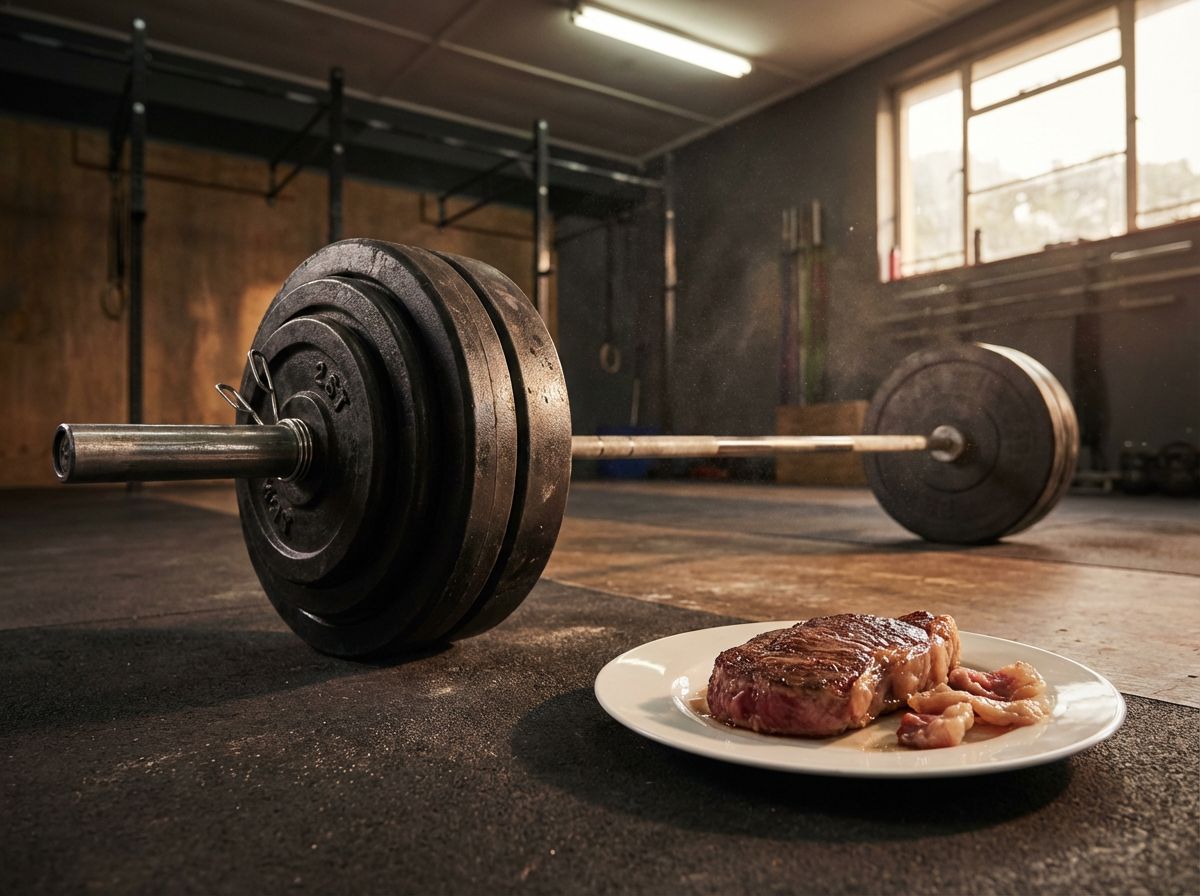
Every CrossFit nutrition seminar preaches the same gospel: carbs fuel intensity. Load up on sweet potatoes and rice if you want to crush WODs.
Here's what actually happens when you do CrossFit on carnivore.
Energy Systems for High-Intensity Work
CrossFit WODs combine three energy systems:
1. Creatine phosphate system (0-10 seconds):
Max effort lifts, short sprints, explosive movements. Fueled by stored ATP and creatine phosphate, not carbs.
2. Lactate system (10-60 seconds):
Repeated heavy lifts, sustained sprints, high-rep barbell work. Recruits glycogen anaerobically. This is where CrossFit lives.
3. Aerobic system (60+ seconds):
Longer WODs, endurance chipper workouts. Can run on fat or glucose.
Carnivore impacts system #2 most. You still have glycogen on carnivore. You're just not constantly replenishing it with carbs.
The question isn't whether you can do CrossFit without carbs. It's how long adaptation takes and what adjustments you need.
The Adaptation Timeline
If you're already doing CrossFit and switch to carnivore, here's the performance curve:
Weeks 1-2: Performance tanks 20-30%. WOD times slow. You gas out faster. Rounds feel harder. This is glycogen depletion and metabolic transition.
Weeks 3-4: The low point. Glycogen stores have adapted to lower baseline, but fat oxidation hasn't fully ramped up yet. This is the valley of adaptation. Don't quit here.
Weeks 5-6: Performance rebounds. WOD times return to within 10-15% of baseline. Recovery between rounds improves.
Weeks 7-10: Full recovery. Performance matches or exceeds pre-carnivore levels. Many athletes report better recovery between training days.
Week 12+: Fully adapted. You're operating on lower glycogen stores but higher fat oxidation efficiency. High-intensity capacity is fully restored.
The critical insight: weeks 3-4 are the hardest. If you push through, performance returns. This adaptation curve mirrors what happens with strength gains without carbs. Temporary dip, then full recovery.
Adjusting Training During Adaptation
You can't train at 100% intensity while adapting to carnivore. Here's the protocol:
Weeks 1-4: Reduce volume and intensity
- Cut WOD frequency from 5-6 days to 3-4 days
- Scale weights by 10-20%
- Extend rest between rounds (90-120 sec instead of 60 sec)
- Skip benchmark WODs (don't test max efforts during adaptation)
This isn't weakness. It's strategic training during metabolic transition.
Weeks 5-8: Return to normal volume
- Resume 5-6 training days per week
- Return to prescribed weights
- Normal rest intervals
- Benchmark WODs are fair game
Week 9+: Train as normal
You're fully adapted. Program normally.
Pre-WOD Fueling Protocol
On carnivore, pre-workout nutrition shifts from carb-loading to strategic protein and electrolyte timing.
60-90 minutes before training:
Moderate protein, moderate fat. Not a full meal, but enough to fuel the session.
Example: 6 oz steak, 2 eggs, salt.
Avoid training fasted during adaptation (weeks 1-6). Once fully adapted (week 8+), fasted WODs become viable if you prefer them.
30 minutes before training:
Fluid, sipped rather than chugged. Options:
- A cup of bone broth
- Water alongside a pre-workout meal you salted the way you normally salt food
- An electrolyte drink, if you've cleared one with your doctor or pharmacist
Two rules that matter more than what's in the cup. Start the session already hydrated, because you can't catch up once the clock starts. And never introduce a new drink, powder or tablet on a day you're testing something. Try it on an easy Tuesday, not on Fran.
During-WOD Strategy
Most WODs last 5-20 minutes. You don't need mid-WOD fueling. You need hydration and electrolytes.
For WODs under 20 minutes: Water. That's the whole plan.
For WODs over 30 minutes (chippers, endurance WODs): Sip fluid between rounds and drink to thirst rather than on a timer. Whether that fluid needs electrolytes in it, and how much, is the part to settle with your doctor rather than from a number in an article.
Never consume carbs mid-WOD on carnivore. You're running on glycogen and fat. Adding glucose mid-session disrupts fat oxidation without providing meaningful performance benefit.
Post-WOD Recovery Nutrition
This is your largest meal. High protein, high fat, food salted to taste.
Ideal post-WOD meal (within 60-90 minutes):
- 12 oz ribeye or ground beef
- 4 eggs
- Butter or tallow for added fat
- Salt to taste
This supports muscle protein synthesis and glycogen replenishment. Yes, you replenish glycogen on carnivore, through gluconeogenesis from protein.
Your liver converts excess amino acids into glucose, which refills muscle glycogen. This happens slowly (12-24 hours), but it happens.
This is why carnivore athletes can sustain high-intensity training 5-6 days per week once adapted.
Electrolytes for CrossFit on Carnivore
CrossFit is sweat-intensive. Combine carnivore's diuretic effect with heavy sweating and electrolytes stop being a footnote. Managing electrolyte balance is what keeps performance consistent week to week.
There's no daily milligram target in this section. The gap between two athletes of the same size is wide enough that a single published number is wrong for a lot of the people who follow it. Here's what you can actually do instead.
1. Build it out of food first. Meat, eggs, bone broth, salt on your food to taste. A pound of ground beef carries real potassium. A mug of broth after a hot session does more for most people than anything sold in a tub.
2. Read the label before you buy any electrolyte product. Turn the tub around and check four things:
- Sodium per serving, and what the brand counts as a serving. Some mean one scoop. Some mean two.
- Potassium per serving. This is the one that matters medically. If there's potassium in it and you take heart or blood pressure medication, that product is a pharmacist conversation, not an impulse buy.
- Sugar and maltodextrin. Plenty of "electrolyte" mixes are sports drinks in a smaller sachet.
- The words "lite salt" or "salt substitute" anywhere on the package. That's potassium chloride wearing a costume, and it belongs in the same category as a potassium pill.
3. Fix the session before you fix the bottle. Program your hardest metcons for the coolest part of the day, get a fan pointed at the rig, open the roll-up door, and start every session already hydrated. Plenty of athletes reach for a product when the actual problem was a 4pm workout in an unventilated box.
4. Track conditions, not milligrams. Four lines in your training log: how hot the gym was, what the WOD was, how you felt in the last two rounds, and whether your shirt dried out with white salt rings on it. Six weeks of that tells you which sessions wreck you personally. That beats an average calculated from people who aren't you.
Two things I'm handing off rather than guessing at. If you want a supplement on top of food, get the dose from your doctor or pharmacist and bring your medication list. It takes them two minutes and it matters most if you take a diuretic, an ACE inhibitor, an ARB or spironolactone, or you have kidney disease, heart failure, blood pressure that's being managed, or you're pregnant. And don't diagnose cramps by feel. Cramping mid-WOD can be sodium, but heat, dehydration, bad sleep, doing too much too soon and the side effects of something you already take all feel identical from the inside.
Stop training and get seen for chest pain, fainting or near-fainting, confusion, a pounding irregular heartbeat, or dark cola-colored urine after a session.
For which supplements are even worth considering, see the only 3 supplements you need.
Benchmark WOD Performance on Carnivore
Once fully adapted (12+ weeks), how does carnivore performance compare to carb-fueled performance?
Benchmark data from adapted carnivore CrossFitters:
- Fran (21-15-9 thrusters/pull-ups): Neutral to slightly slower (~5-10 sec slower for most)
- Murph (1-mile run, 100 pull-ups, 200 push-ups, 300 squats, 1-mile run): Neutral to faster (fat oxidation advantage on endurance component)
- Grace (30 clean & jerks for time): Neutral (creatine phosphate system, glycogen-independent)
- Helen (3 rounds: 400m run, 21 KBS, 12 pull-ups): Neutral to faster (mixed energy systems favor fat adaptation)
The pattern: short, glycolytic WODs (Fran, DT) may be slightly slower. Mixed-modal and endurance WODs (Murph, Helen) often improve.
The difference is small (5-10% at most) and athlete-dependent. For most CrossFitters, the performance difference is negligible once adapted.
Competition Day Considerations
If you're competing in a CrossFit competition on carnivore, here's the protocol:
Week before comp: Maintain normal training volume. Prioritize sleep and hydration. No drastic changes.
Day before: Eat normally. High protein, high fat, salted the way you always salt it. Sleep 8+ hours. Competition week is the worst possible time to start experimenting with electrolytes.
Competition day:
- Breakfast (2-3 hours before): 8 oz steak, 3 eggs, salt
- Between events: fluid, and a small protein snack if there's more than 2 hours between heats. If you use an electrolyte drink, it's the one you've already trained with, never something new off the vendor table.
- Post-comp: Large recovery meal (12+ oz meat, eggs, fat, salt)
Don't carb-load. You're adapted to fat. Adding carbs disrupts your metabolic state without improving performance.
Comparing Carnivore vs Carb-Fueled CrossFit
Carb-fueled CrossFit:
- Immediate performance readiness
- No adaptation period
- Blood sugar swings between WODs
- Requires pre/post-WOD carb timing
- GI distress common from high carb intake
Carnivore CrossFit:
- 12-week adaptation period (temporary performance drop)
- Stable energy, no crashes
- Simplified nutrition (meat, salt, electrolytes)
- Better recovery between training days (anecdotal but common)
- No GI distress from simple diet
The tradeoff: short-term performance dip for long-term simplicity and stable energy.
The Bottom Line
CrossFit on carnivore works because:
- You still have glycogen (produced via gluconeogenesis)
- Creatine phosphate system is glycogen-independent
- Fat oxidation handles aerobic components
- Protein supports muscle recovery and glycogen replenishment
The protocol:
- Weeks 1-4: Reduce volume/intensity, expect performance drop
- Weeks 5-8: Return to normal training, performance rebounds
- Week 12+: Fully adapted, train as normal
- Pre-WOD: Moderate protein/fat 60-90 min out, plus fluid
- Post-WOD: Large protein/fat meal within 90 minutes
- Electrolytes: food first, labels read, and any supplement dose set by your doctor or pharmacist
You don't need carbs to do CrossFit. You need patience through adaptation, electrolytes built out of food, and the discipline to read a label before you swallow it.
The coaches selling carb-loading protocols aren't wrong. Carbs work. But carnivore also works, with the added benefit of eliminating blood sugar swings and dietary complexity.
Not a doctor. I've coached people and competed myself, so I know what works in practice. But I'm not your doctor. There are no mineral doses in this article on purpose: they depend on your kidneys, your blood pressure and your medication list, so they come from your doctor or pharmacist. And chest pain, fainting, or dark cola-colored urine after a hard session is not something to train through. Your mileage may vary.