
This post may contain affiliate links. For educational purposes only, not medical advice. Details
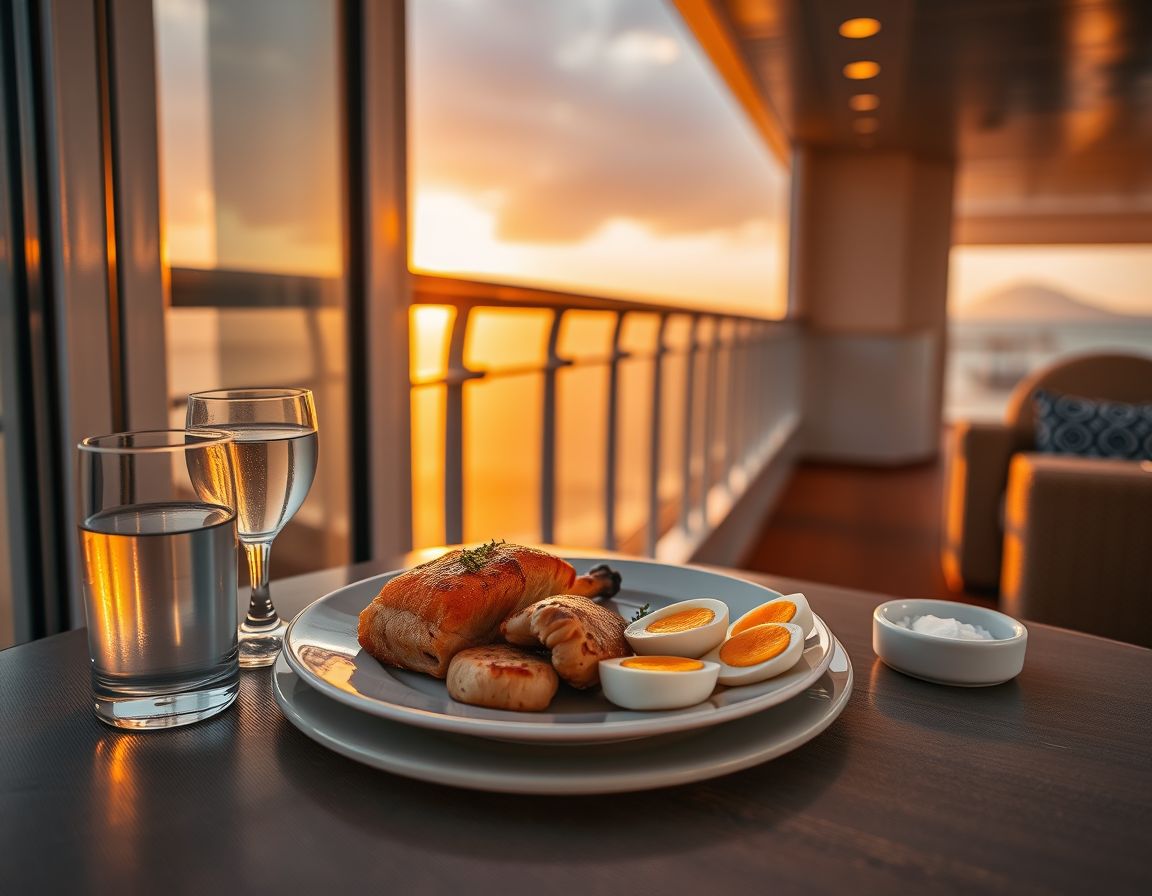
Okay, so you've booked the winter cruise. Sunshine, sea days, a cabin with a little balcony. And somewhere between the deposit and the packing list, a small worry crept in: how do I eat carnivore on a ship that's basically a floating buffet?
Here's the short answer. Eating carnivore on a cruise is easier than most people expect. Big ships carry a lot of meat, eggs, fish and seafood, the kitchen cooks to order, and the staff field special requests every single day. The trick isn't willpower. It's a few quiet habits: talk to your dining room team on day one, build your buffet plate around protein first, use room service for breakfast, keep salt in the picture on hot days, and have a calm plan for the day that slips.
If you want a starting point for your daily protein before you sail, our free macro calculator gives you a number in a couple of minutes.
We already covered airports, hotels and road trips in our carnivore travel playbook, so this one is only about life onboard. Let's go.
Day one: talk to the dining room staff
This is the single habit readers mention most. On the first night, before you even open the menu, introduce yourself to your head waiter or the dining room manager. Keep it short and friendly.
Something like: "I eat mostly meat, eggs and fish. No bread, no potatoes, no sauces with sugar. Could I get double protein instead of the sides?" That's it. You're not explaining a diet. You're placing an order.
Here's the thing. In the main dining room you usually get the same team every night, so by night two a lot of readers find their waiter already knows the drill.
A few things that help:
- Ask for "plain, with butter on the side." Ship kitchens love glazes and marinades. Plain grilled is almost always possible.
- Swap the sides for more protein. Ordering two mains is completely normal onboard.
- Ask about tomorrow's menu. Many dining rooms post it a day ahead, so you can spot the prime rib night early.
Buffet strategy that doesn't feel like a fight
The buffet is where most of us get rattled. Real talk: the buffet is actually one of the easiest places to eat carnivore, if you walk it with a plan.
Do one full lap before you pick up a plate. Find the carving station, the egg station, the grill and the seafood. Then fill your plate with protein first: roast beef, eggs cooked to order, grilled fish, bacon, sausages, shrimp. Aim for that 30-40 g of protein per meal, which is roughly a palm-and-a-half of meat or a few eggs plus some bacon.
Then stop. A lot of readers over 60 say the buffet feels calmer once they decide they're there for the carving station and nothing else.
Room service is your secret weapon
Most big ships offer room service, and on many it's a short menu with eggs, bacon and some kind of steak or burger. Breakfast in your cabin skips the morning buffet entirely. Order the night before if your ship has a door hanger card. A quiet, on-plan first meal sets up the whole day.
Sea days, port days and salt
Sea days are long and lazy, and port days are often hot, sunny and full of walking. Both are when people notice the tired, headachy, crampy feeling creep in. Usually that's salt and water, not the diet failing.
Most people on carnivore land around 3-5 g of sodium a day (about 1.5-2 teaspoons of salt), spread through the day, and a bit more on hot days. The reason is simple: with lower insulin, your kidneys let go of more sodium and water. This is not for everyone. Talk to your doctor first if you have high blood pressure, kidney or heart problems, diabetes, are pregnant, or take medicine.
On port days, carry a small salt shaker or a few salt packets from the dining room, plus a refillable water bottle. Ashore, a plain grilled fish at a beach stand is a pretty great lunch. If you'd like more on ordering anywhere, our guide to ordering carnivore at any restaurant works just as well in a port town.
The after-dinner table with friends
Okay, this is the one people actually worry about. You're traveling with friends or family, dinner wraps up, and everyone heads for the sweets table or orders something chocolate. You don't want to be the person making it weird.
What works for a lot of readers: stay at the table with a coffee, a cheese plate if you eat dairy, or a second small plate of shrimp. You're still part of the moment. You just aren't eating the cake. Not the sugar-free version either, honestly, because swaps tend to keep the craving loop going.
If someone says, "Come on, you're on vacation!", try "I'm so full from that steak," then talk about tomorrow's port. Nobody remembers what you didn't eat.
If a day slips
It happens. A pina colada by the pool, a long day ashore with nothing simple to eat. One day doesn't undo weeks of work, and panicking about it usually does more damage than the food did.
The calm plan is boring on purpose. Next meal, go right back to protein: eggs and bacon, a steak, grilled fish. Add salt, drink water, and take a walk on the promenade deck. Don't skip meals to "make up for it." Expect a few pounds of water on the scale and give it a week at home. We wrote more about this mindset in getting through the holidays on carnivore, and it applies on a ship too.
A simple onboard checklist
- Night one: introduce yourself to your waiter and ask for plain protein, double portions, no starchy sides.
- Breakfast: room service eggs and bacon, ordered the night before.
- Lunch: one buffet lap, then carving station, grill and seafood.
- Port days: salt packets and a water bottle.
- After dinner: stay at the table with coffee or more protein.
- If a day slips: next meal back to protein, salt, water, a walk.
That's really all it takes. You don't need to be the difficult passenger. You just need to be the friendly one who knows what she's ordering.
I'm not a doctor. I'm just someone who's deep in the community and reads everything. I can tell you what people are trying and what's working for them, but you get to make your own calls. I'm here to give you the real tea, not medical advice.