
This post may contain affiliate links. For educational purposes only, not medical advice. Details
Your Kitchen Is Your Comfort Zone. Now Leave It.
Eating carnivore at home is easy. You've got your cast iron, your freezer full of ground beef, your salt collection. It's a system and it works. Then you have to travel, and suddenly you're standing in an airport terminal wondering if a $14 chicken Caesar salad with the croutons picked off counts as carnivore.
I've traveled a lot since going carnivore, and I've talked to hundreds of people in the community about their travel strategies. Some are brilliant. Some are disasters. Here's what actually works.
Airport Strategy: Plan Like You Mean It
Airports are designed to sell you carbs. Cinnamon rolls, pizza slices, trail mix, smoothies. The carnivore options exist, but you have to look for them.
Tier 1: The easy wins. Most airports have a burger place. Order two or three patties with cheese, no bun. It's not gourmet, but it's solid protein and fat. Five Guys, Shake Shack, and Wendy's are all reliably available and will sell you naked patties without attitude.
Tier 2: Sit-down restaurants. If you have a layover, airport steakhouses are your best friend. Yes, they're overpriced. A 12-ounce ribeye at an airport bar costs $45 and it's worth every penny when the alternative is a 4-hour flight fueled by nothing.
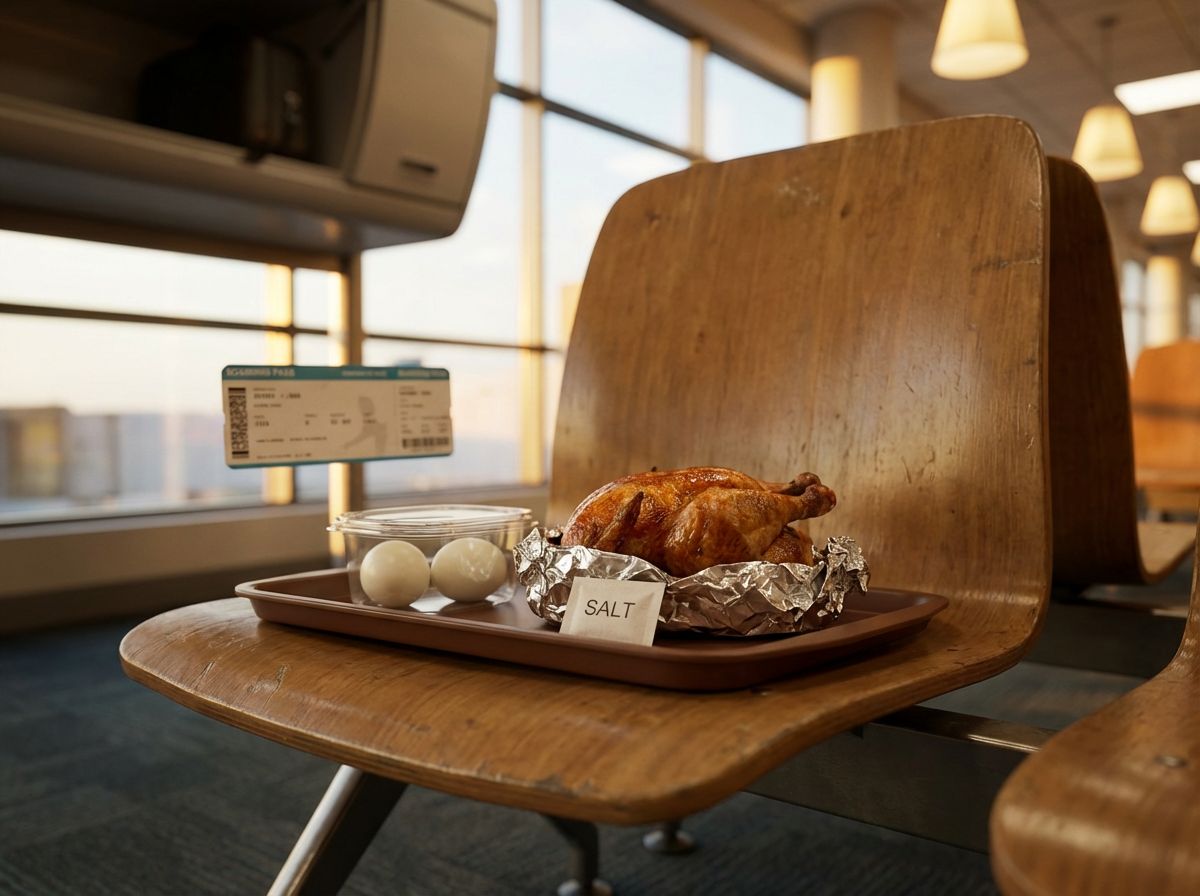
Tier 3: Pack your own. This is the power move. Hard-boiled eggs travel well. Beef jerky (check ingredients, many brands add sugar). Pemmican if you can find it. Canned sardines or tuna with a fork. I've brought cooked ground beef in a container through TSA more than once. They scan it, maybe give you a look, and let you through. Solid food isn't a liquid. It's legal.
The one thing I won't do is fast through a travel day "because it's easier." Some people swear by this. I've tried it. Landing hungry and tired in a new city with no kitchen access at 10 PM is not a good start to any trip.
Road Trip Rules
Road trips are actually the easiest travel scenario for carnivore. You control the stops, you have a cooler, and you can cook at your destination.
The cooler setup: A medium hard cooler with ice packs. Pre-cooked burger patties, hard-boiled eggs, pre-cooked bacon, cheese sticks, and beef sticks. This handles 2-3 days easily. I know people who've done cross-country drives on nothing but cooler food and gas station beef jerky.
Fast food stops: Every major highway exit has a McDonald's, Wendy's, or Burger King. Quarter pounders without the bun are genuinely fine. Bunless Baconators are great. Don't overthink it. You're fueling a drive, not curating a dinner party.
Want the actual words to say at the speaker box? I keep this chain-by-chain fast food carnivore order list open on road trips, and it covers McDonald's, Wendy's, Chipotle, Subway and gas stations.
I covered restaurant ordering strategies before, and everything in that piece applies to road trip stops too. The short version: order meat, skip the sides, don't explain your diet to the server.
Hotel Survival
Hotels range from "easy" to "creative problem-solving required" depending on what you've got to work with.
If your hotel has a kitchenette: You've won. Hit a grocery store on arrival. Buy ground beef, eggs, butter, and salt. You're set for the entire trip. Extended stay hotels and Airbnbs with kitchens are the carnivore traveler's best friend.
If you just have a mini fridge and microwave: Still workable. Pre-cooked burger patties reheat fine in a microwave. Hard-boiled eggs keep in the fridge for days. Some people travel with a small electric skillet. It sounds extra until you realize it means you can cook steak in your hotel room instead of spending $50 on room service.
If you have nothing: Room service or nearby restaurants become your plan. Most hotel restaurants can cook you a plain steak or burger. It costs more but it keeps you on track. Marcus's budget strategies apply here too. Grocery stores sell pre-cooked rotisserie chicken for $7-9. Grab one on arrival and eat it in your room. Done.
International Travel
International trips add a layer of complexity. Language barriers, different food cultures, and customs regulations all come into play.
Customs and food: Most countries allow you to bring cooked meat products for personal consumption but not raw meat or dairy. Check the specific regulations for your destination. Beef jerky and pemmican are usually safe bets. I had a bag of beef sticks confiscated at Australian customs once, so check before you pack.
Country-specific wins: Argentina and Uruguay are carnivore paradise. Asado culture means high-quality meat everywhere. Japan has yakiniku (grilled meat) restaurants on every block. Korea has Korean BBQ. Brazil has churrascarias. Some countries make carnivore travel easier than eating at home.
Country-specific challenges: India and Southeast Asia are harder. Plant-heavy cuisines with less emphasis on plain cooked meat. In these regions, I seek out Western-style restaurants or hotel dining rooms where I can order steak or grilled chicken reliably.
The Mental Game
The hardest part of carnivore travel isn't finding food. It's handling the social pressure. You're at a work conference and everyone's doing the group dinner at an Italian restaurant. You're on vacation with friends who want to "try everything." You're visiting family and grandma made her famous casserole.
My approach: I don't announce what I eat. I order what works for me and don't explain unless someone asks. And when someone asks, I keep it short. "I eat mostly meat. It works for me." That's it. No lectures. No defensiveness. Most people lose interest after thirty seconds if you don't make it a thing.
Travel doesn't have to break your diet. It just requires a little more planning and a lot less caring about what other people think of your plate.
I'm not a doctor. I'm just someone who's deep in the community and reads everything. Take all health stuff with a grain of salt (pun intended). I can tell you what people are trying and what's trending, but you've got to make your own calls. I'm here to give you the real tea, not medical advice.