
This post may contain affiliate links. For educational purposes only, not medical advice. Details
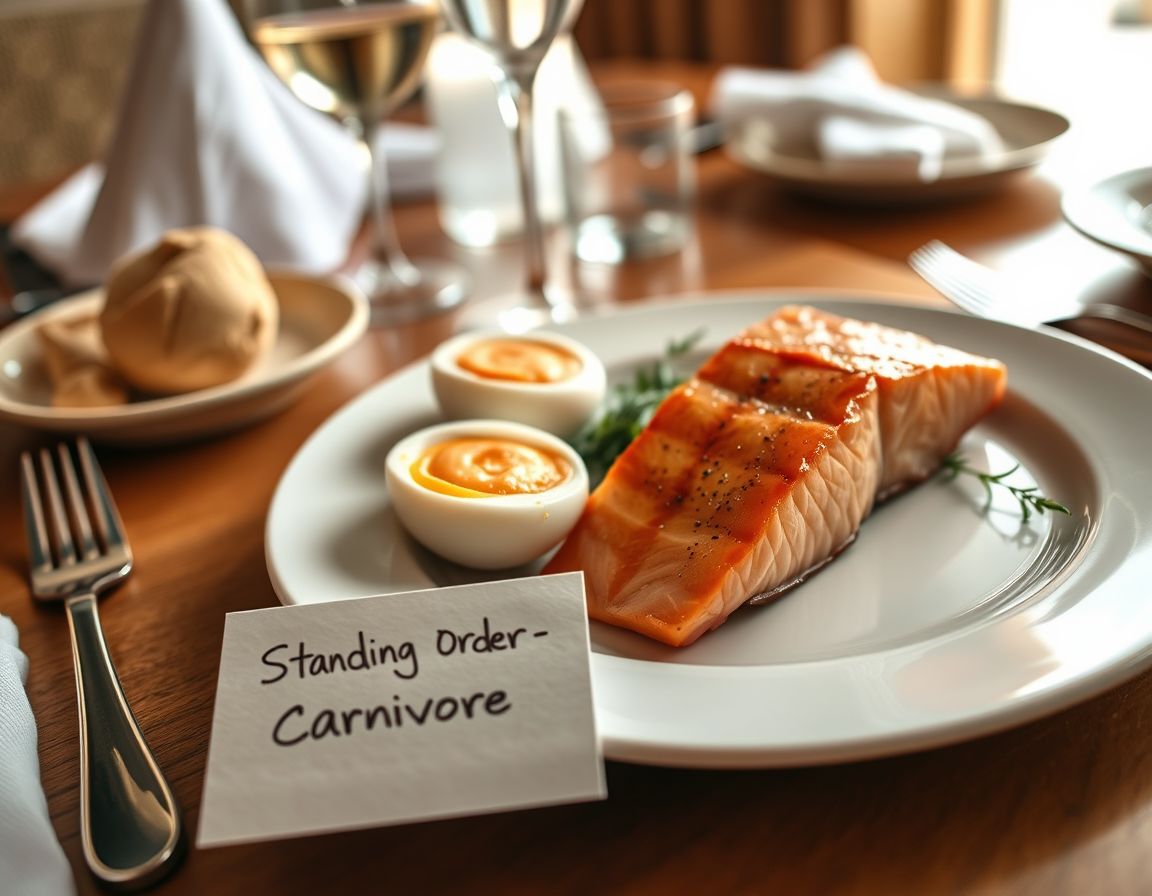
Okay, so here's a question that keeps landing in my inbox: "I live in a retirement community and someone else does the cooking. Can I still eat carnivore?" Sometimes it's the resident herself. Sometimes it's a daughter asking for her mom.
Real talk: yes, carnivore for seniors in independent or assisted living is very doable. Almost every dining room already serves meat, eggs and fish every single day. The work isn't the food. It's asking the kitchen clearly, setting up standing orders so you're not explaining yourself at every meal, and keeping it friendly at a shared table. If you want a starting point for your daily numbers before you talk to anyone, the free macro calculator takes a couple of minutes.
One thing before we get practical. If you're new to this and over 60, Sarah wrote the health side already, so I won't repeat it here. Read her guide to starting the carnivore diet after 60 first. This post is about the dining room.
Start with the dietitian, not the server
In independent living, you're mostly a customer. In assisted living, your meals may be part of a care plan, and there may be a dietitian who signs off on it. That person is your best ally, not an obstacle.
If you're the daughter, this is where you can really help. Ask for a short meeting with the dietitian or dining manager, and bring your mom along so it's her plan in her words. Some people find it helps to bring a one-page note from their own doctor, especially if there are medicines or a diagnosed condition in the picture. Any change to medicine is the prescriber's decision, and the care team will want to know the doctor is in the loop.
A simple way to open that meeting:
"I'd like to eat mostly meat, eggs and fish, with the vegetables and starches left off my plate. I'm not asking for anything special cooked. I'd just like to swap my sides for extra protein. Can we write that into my meal plan so the kitchen knows?"
That script asks for less work, not more. Kitchens hear "special diet" and picture a separate meal. "Swap the sides" is something they already do all day.
What to actually ask the kitchen for
Most people on carnivore aim for about 30-40 g of protein per meal, and that matters even more past 50. This is not for everyone. Talk to your doctor first if you have high blood pressure, kidney or heart problems, diabetes, are pregnant, or take medicine.
In dining room terms, 30-40 g of protein looks roughly like a palm-and-a-half of meat, or a smaller piece of meat plus two or three eggs. Here's what tends to be easy for a senior living kitchen to say yes to:
- Breakfast: eggs any style, with sausage or bacon in place of toast and hash browns.
- Lunch: the burger without the bun, a double patty if they'll do it, or the soup-and-sandwich special turned into "just the meat from the sandwich, please."
- Dinner: the main protein, with a second portion of protein instead of the starch and vegetable.
- Extras worth asking about: butter on the side, a hard-boiled egg or two at lunch, and salt at the table.
Ground beef and eggs are our usual beginner default, and the good news is most kitchens have both on hand every day. If chewing is tricky, soft scrambled eggs, ground meat, braised beef, fish and stews with the vegetables strained out are all fair game. Tell the kitchen about texture right up front.
Standing orders are the whole game
The worst version of this is explaining your plate three times a day to a rotating crew of servers. The best version is a standing order that lives on your file, so the kitchen sends it without being asked.
Ask the dining manager:
"Could you add a standing note to my file? Protein in place of starch and vegetables at every meal, butter on the side, and eggs at breakfast. If the main is something like pasta or a casserole, I'd love a plain protein instead."
That last line is the one people forget. Set menus have casserole nights and pasta nights. Agree on a default backup ahead of time, like a grilled chicken thigh, a hamburger patty or a couple of eggs, so the kitchen isn't scrambling at 5 pm and neither are you.
Handling the set menu without a fuss
Every residence I've heard about posts the week's menu somewhere. Grab it on Sunday and circle the meals that already work. Then you only need to plan around the two or three that don't.
When something on your plate isn't what you asked for, a light touch goes a long way:
"This looks lovely. Would it be okay to skip the potatoes and get a little more of the roast instead?"
And if it just doesn't happen that night? Eat the protein, leave the rest, and mention it kindly to the dining manager later. Being the resident who says thank you is how you become the resident who gets the extra slice of roast.
Keeping it friendly at a shared table
Here's the thing. In a retirement dining room, meals are the social event of the day.
Some people find a one-liner is all they need: "I just feel better eating simply." If someone at the table pushes, a smile and "pass the salt, please" works wonders. It's become a catchphrase in my family for exactly this reason. You don't owe anyone an explanation, and you're not recruiting anyone either.
If appetite is low some days, which a lot of older readers mention, don't force a big plate. Our post on appetite loss on carnivore has ideas for those days. And for outings with family, the tips in how to order carnivore at any restaurant carry right over.
A note for the daughters
If you're helping a parent, your job is to be the steady, polite advocate, not the food police. Go to the first meeting, help get the standing order written down, and then step back. My mom would rather do anything than be managed, and I suspect yours is the same.
Not a Doctor: I'm not a doctor. I'm just someone who's deep in the community and reads everything. I can tell you what people are trying and what's working in real dining rooms, but the calls about your health belong to you, your doctor and your care team.