This post may contain affiliate links. For educational purposes only, not medical advice. Details
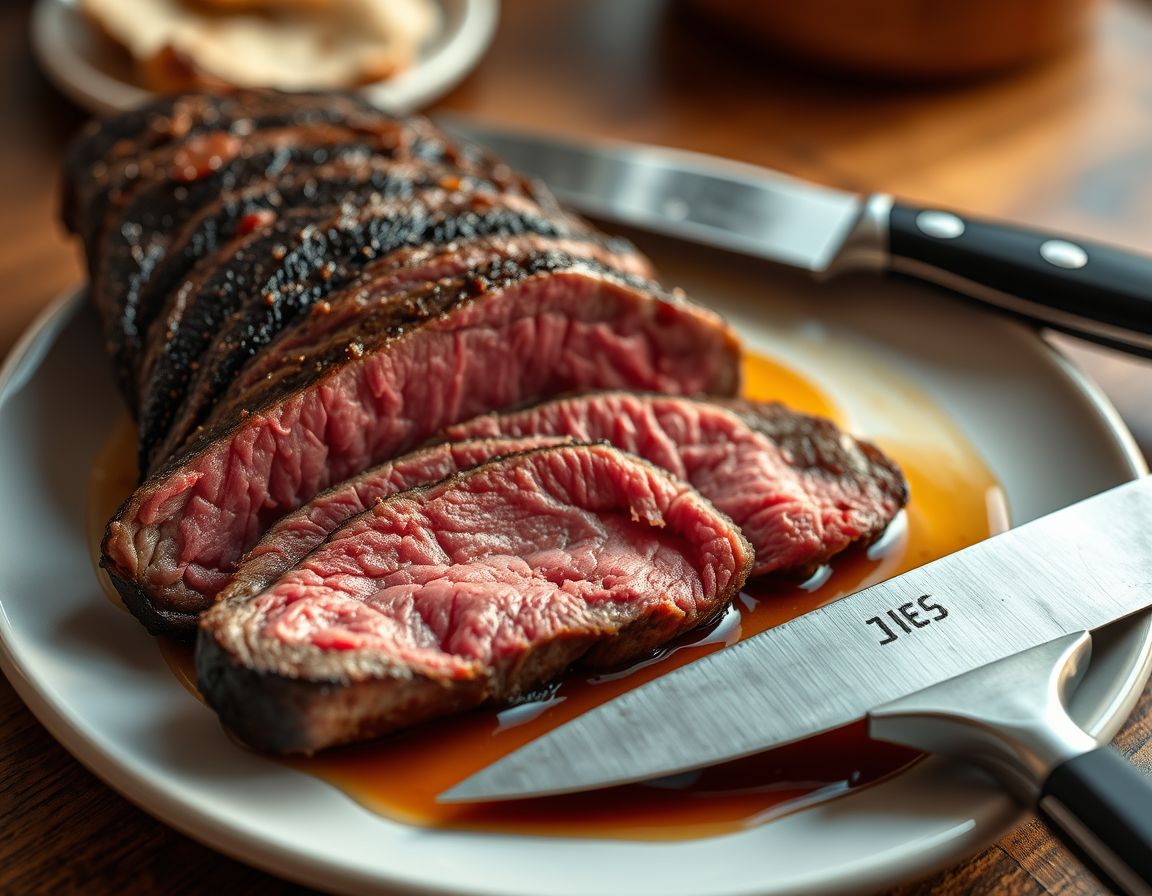
Here's the short answer. To cook a thick flank steak so it isn't tough, salt it well ahead of time, pat it dry, sear it over very high heat, and take it off the heat at 125-130°F (52-54°C). Let it rest 5 to 10 minutes. Then slice it thin, across the grain. That last step does more for tenderness than anything else on this list.
Flank isn't a tender cut. It's a hard-working muscle with long, tight fibers. You can't make the fibers softer, but you can make them shorter. Cook it hot and fast, don't overcook it, and cut those fibers short. Do that and you get a steak that's easy to chew, even if chewing is something you have to think about these days.
Why Flank Is Worth the Trouble
Flank often costs less per pound than ribeye or strip. Prices vary a lot by region and store, so check your own butcher. One 1.5 to 2 pound flank feeds two people for two meals, with leftovers. It's lean and full of beefy flavor. It's also a nice break from a ground beef budget routine without a big jump in cost.
The Method, Step by Step
Step 1: Dry brine. Sprinkle about 3/4 teaspoon of kosher salt per pound over both sides. Use a little less if it's fine table salt. Set the steak on a plate or rack and put it in the fridge, uncovered. One hour helps. Overnight is better. Up to 24 hours is fine. The salt pulls moisture out, dissolves into it, and then soaks back in. You get a steak that's seasoned all the way through and holds on to its juices.
Step 2: Pat it dry. Take it out of the fridge and blot every surface with paper towels. A wet steak steams. A dry steak browns. Browning is flavor.
Step 3: Get the pan very hot. Use a cast iron or heavy steel pan, or a grill turned all the way up. Heat the pan for 4 to 5 minutes. Add a spoonful of tallow or another high-heat fat. When it shimmers and just starts to smoke, you're ready.
Step 4: Sear. Lay the steak down and leave it alone. For a thick flank, about 1 inch, that's usually 4 to 5 minutes per side. If it's longer than your pan, cut it in half first.
Step 5: Check the temperature. Use an instant-read thermometer in the thickest part. The steak keeps cooking a few degrees after it comes off the heat, so pull it a little early.
- Medium-rare: pull at 125-130°F (52-54°C). It'll finish around 130-135°F (54-57°C).
- Medium: pull at 135-140°F (57-60°C). It'll finish around 140-145°F (60-63°C).
- USDA safe minimum: 145°F (63°C) with a 3-minute rest for whole cuts of beef and lamb. If you want the official number, cook to that.
For flank, medium-rare to medium is the sweet spot. Past medium, the fibers squeeze tight and it gets chewy fast.
Step 6: Rest. Move it to a cutting board and wait 5 to 10 minutes. Cut it right away and the juice runs all over the board instead of staying in the meat.
Step 7: Slice thin against the grain. Look at the steak. You'll see long lines running the length of it. Turn the steak so those lines run left to right in front of you. Then cut straight across them, holding the knife at a slight angle. Aim for slices about 1/4 inch thick, or thinner if chewing is hard for you.
If you only change one thing, change how you slice. The same steak cut with the grain is a workout. Cut across it, it's tender.
Same Logic, Different Cut: Boneless Lamb Leg
A boneless leg of lamb follows the same rules, just slower because it's thicker.
- Dry brine it overnight with the same 3/4 teaspoon of kosher salt per pound.
- Pat it dry and sear all sides in a hot pan, about 2 minutes per side.
- Roast at 325°F (165°C). Plan on roughly 20 to 30 minutes per pound, but go by the thermometer, not the clock.
- Pull early. A roast carries over more than a steak, often 5 to 10 degrees. For medium-rare, pull at about 125°F (52°C). For the USDA minimum, make sure it reaches 145°F (63°C) and rests at least 3 minutes.
- Rest 15 to 20 minutes, loosely covered with foil.
- Slice thin against the grain. Lamb leg has a few muscles with grain running different ways, so check each section as you go.
Why It Came Out Tough (and What to Change)
- You sliced with the grain. Find the lines, turn the steak, cut across them. This fixes most tough flank.
- It went past medium. Pull 5 degrees earlier next time and trust your thermometer.
- The slices were too thick. Go thinner. 1/4 inch or less.
- The pan wasn't hot enough. A lukewarm pan cooks the inside before the outside browns. Heat it longer.
- The steak was wet. Pat it dry. Every time.
- You cut it right away. Give it the full 5 to 10 minutes.
- Your thermometer is off. Test it in ice water. It should read 32°F (0°C).
Leftovers
Store sliced leftovers in a sealed container in the fridge. Eat them within 3 to 4 days. Don't blast them in the microwave. That turns a tender slice back into leather. Instead, warm the slices gently in a pan with a spoonful of butter or tallow for a minute, just until warm.
A Note on Fat
Flank and lamb leg are both on the lean side. If you find you're hungry again an hour or two after eating, the fix is simple. Add fat. A pat of butter melted over the sliced steak, or cooking in tallow, makes the meal more filling. For more ideas on what to buy and how to round out a plate, see our carnivore food list.
The Whole Thing on One Card
- Salt: 3/4 tsp kosher per pound, 1 to 24 hours ahead
- Dry: paper towels, every surface
- Heat: very hot pan or grill
- Pull: 125-130°F (52-54°C) for medium-rare, or cook to 145°F (63°C) for the USDA minimum
- Rest: 5 to 10 minutes for steak, 15 to 20 for a roast
- Slice: thin, across the grain
I'm not a doctor. I've coached people and cooked a lot of cheap cuts, so I know what works in a real kitchen. If you have health issues or take meds, check with someone qualified. Everything here is based on what works in practice and standard food safety guidance. Your mileage may vary.