
This post may contain affiliate links. For educational purposes only, not medical advice. Details
You're Probably Using the Wrong Fat
Butter on everything. That's the default carnivore move. And I get it. Butter tastes great, it's easy to find, and it makes everything better. But if butter is the only fat in your kitchen, you're leaving performance on the table.
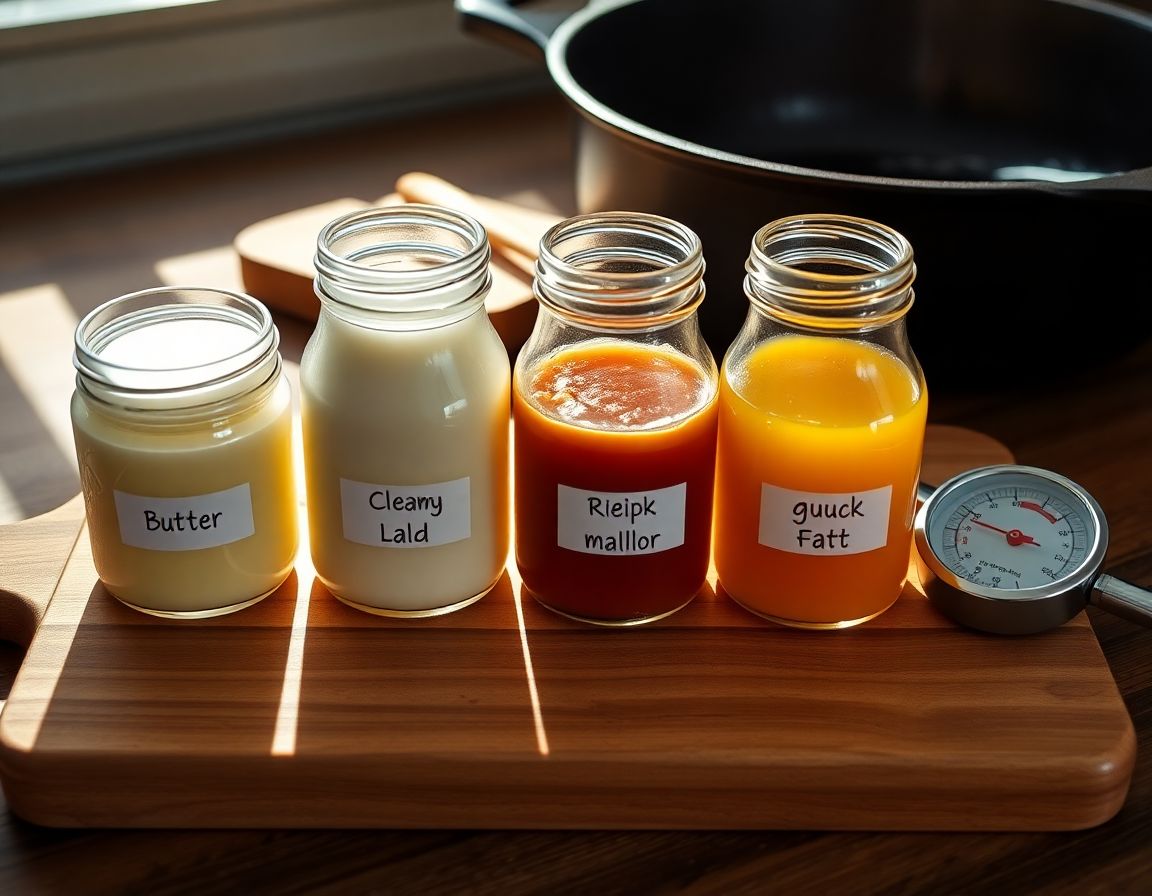
Tallow, lard, and duck fat each have specific strengths that butter can't match. Different smoke points, different flavor profiles, different costs. Knowing when to use each one isn't just about taste. It's about cooking your food properly and getting the most out of every dollar you spend.
Here's the full breakdown.
The Comparison: Four Fats, Four Jobs
Let me lay this out clearly.
Beef Tallow
- Smoke point: 400F
- Flavor: Rich, beefy, slightly savory
- Cost: $1-2/lb if you render it yourself from suet. $8-12/lb store-bought.
- Best for: Searing steaks, high-heat cooking, deep frying
Butter (Grass-Fed)
- Smoke point: 350F
- Flavor: Creamy, slightly sweet, rich
- Cost: $4-6/lb (Kerrygold or equivalent)
- Best for: Finishing steaks, scrambling eggs, low-heat cooking, topping
Lard (Pork Fat)
- Smoke point: 375F
- Flavor: Neutral to slightly savory, cleaner than tallow
- Cost: $2-4/lb rendered. Often free if you buy pork shoulder or belly.
- Best for: Ground beef patties, pan-frying, baking (if you do any)
Duck Fat
- Smoke point: 375F
- Flavor: Rich, slightly gamey, luxurious
- Cost: $8-15/lb
- Best for: Roasting, confit, special occasion cooking
The key takeaway: butter has the lowest smoke point of the group. When you sear a steak at high heat in butter, it burns. Those black bits in the pan? That's not fond. That's burnt milk solids. The smoke you're filling your kitchen with is degraded fat. Tallow handles that same heat without breaking down.
When to Use Each Fat
Searing steaks and burgers: Tallow. Get your cast iron screaming hot. 450-500F surface temperature. Add a tablespoon of tallow. It won't smoke, it won't burn, and it creates a crust that butter physically cannot achieve at those temperatures. Finish with a pat of butter after you pull the steak from heat. Best of both worlds.
Scrambling eggs: Butter. Eggs cook at low to medium heat. Butter's 350F smoke point is fine here. The flavor pairing is perfect. Melt a tablespoon in the pan, keep the heat at medium-low, and you get creamy eggs every time. This is butter's home turf.
Ground beef patties: Lard. Lard has a more neutral flavor that doesn't compete with the beef. It gives you a clean sear at medium-high heat. If your ground beef is lean (90/10 or 85/15), adding a tablespoon of lard to the pan prevents dry, crumbly patties. The pork fat bastes the beef as it cooks.
Roasting anything: Duck fat. If you're roasting bone marrow, chicken thighs (for non-strict carnivore), or even reheating leftover steak in the oven, duck fat adds depth that other fats don't match. It's the most expensive option, so save it for when it counts.
Everyday cooking when you don't want to think about it: Tallow. It works at every temperature, stores at room temperature for months, and costs almost nothing if you render your own. This is your workhorse fat.
How to Render Your Own Tallow (15 Minutes of Actual Work)
This is the best kitchen hack on carnivore. Beef suet costs $1-2 per pound at most butcher counters. Some will give it to you for free because most people don't want it. You turn it into tallow that would cost $10+/lb at the store.
Here's the protocol:
- Step 1: Buy 3-5 lbs of beef suet from your butcher. Ask for kidney fat if they have it. It renders the cleanest.
- Step 2: Chop it into 1-inch cubes. Smaller pieces render faster. Or ask the butcher to grind it for you. Even faster.
- Step 3: Put it in a large pot or slow cooker on low heat. 250F if using the oven. Low setting on the slow cooker.
- Step 4: Let it render for 3-4 hours. Stir occasionally. The fat melts out and the connective tissue (cracklings) sinks to the bottom and crisps up.
- Step 5: Strain through a fine mesh strainer or cheesecloth into mason jars. Let it cool. It solidifies into clean, white tallow.
That's it. 5 lbs of suet yields roughly 4 lbs of tallow. At $1.50/lb for suet, you're paying about $1.90/lb for rendered tallow. Store it at room temperature for up to a year. In the fridge, it lasts indefinitely.
The cracklings that are left over? Salt them. They're basically pork rinds but made from beef. Free snack.
Cost Per Ounce Breakdown
For people who track their food budget closely, here's how the fats compare:
- Homemade tallow: $0.12/oz
- Lard (rendered at home): $0.15/oz
- Butter (Kerrygold): $0.31/oz
- Store-bought tallow: $0.56/oz
- Duck fat: $0.63/oz
Rendering your own tallow is 5x cheaper than buying it at the store and nearly 3x cheaper than butter. If you're eating carnivore on a tight budget, this is one of the highest-impact changes you can make. You're using a product most people throw away and turning it into your primary cooking fat.
Storage and Shelf Life
Tallow: Room temperature in a sealed jar. Lasts 12+ months. No refrigeration needed because it has almost zero moisture content. This is how people preserved fat before refrigerators existed.
Butter: Refrigerate. Lasts 1-2 months. You can freeze it for up to 6 months if you buy in bulk when it's on sale.
Lard: Refrigerate for best quality. Lasts 3-6 months. Room temperature is fine for a few weeks if you use it quickly.
Duck fat: Refrigerate. Lasts 6 months. Freeze for longer storage.
Tallow wins on shelf life by a mile. This matters if you're doing a big render once a month. Make 4-5 lbs, store it in mason jars on the counter, and you're set for weeks.
The Protocol: Stock Your Kitchen Right
Here's what I recommend as your baseline fat setup:
- Primary cooking fat: Homemade beef tallow (render 5 lbs/month)
- Finishing and egg fat: Grass-fed butter (1-2 lbs/week)
- Backup/variety: Lard (render when you buy pork shoulder)
- Special occasions: Duck fat (buy a jar, use sparingly)
Total monthly cost for cooking fats: roughly $15-20 if you render your own tallow and lard. Compare that to $40-50 if you're buying everything retail. That's $300+ saved per year on cooking fat alone.
Stop defaulting to butter for everything. It's a great fat in its lane. But tallow is your workhorse, lard is your utility player, and duck fat is your closer. Use each one where it performs best, and your food will taste better while costing less.
I'm not a doctor. I've coached people and competed myself, so I know what works. But I'm not your doctor. If you have health issues or take meds, check with someone qualified. Everything here is based on what works in practice and what research supports. Your mileage may vary.