
This post may contain affiliate links. For educational purposes only, not medical advice. Details
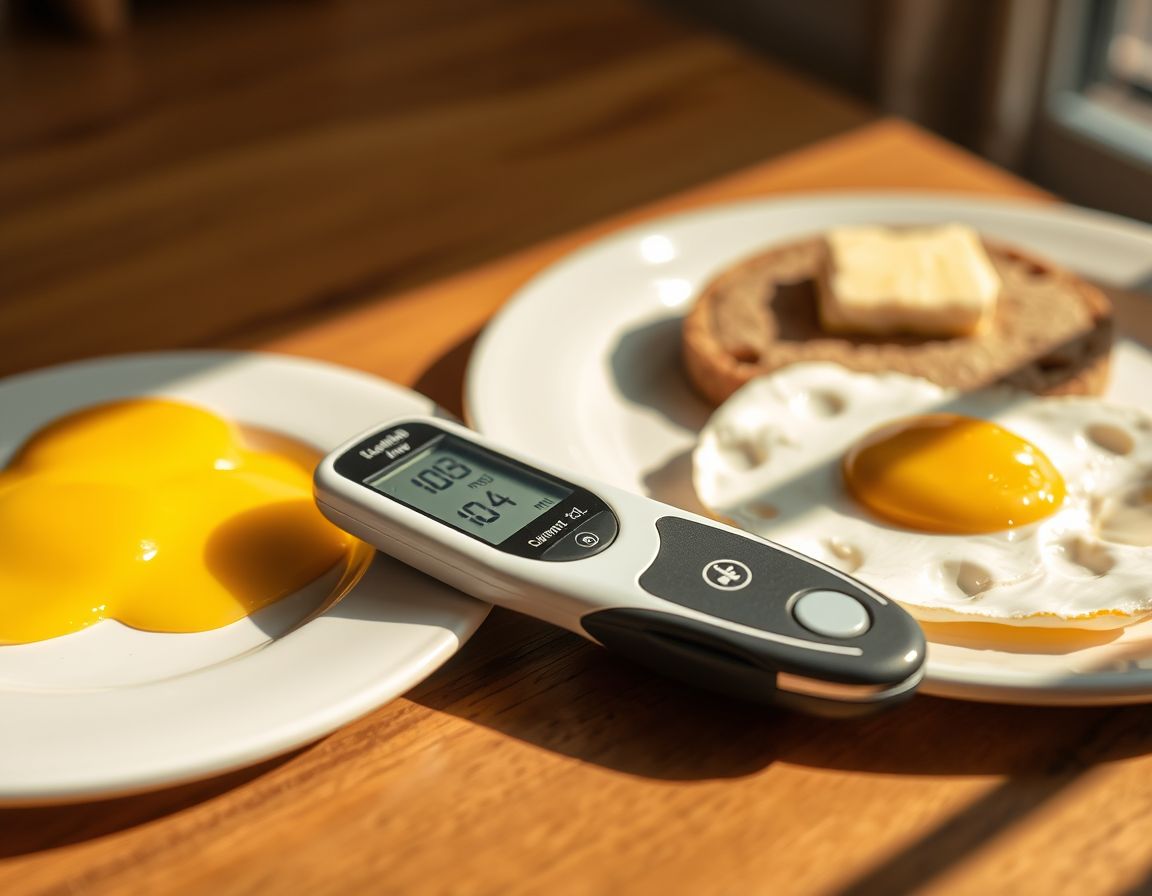
You've been doing this a year. Your weight is down, your A1c came back in remission territory, your doctor was surprised in a good way. Then your fasting glucose reads 104 one morning, 108 the next, and it feels like the thing you fixed is coming undone. Here's what nobody tells you at the one-year mark: on very low carb eating, fasting glucose often drifts up while your actual glucose control stays fine or keeps improving.
It's a real pattern with a boring name, adaptive glucose sparing. After months of running on fat, your muscles get very good at burning fat and stop pulling glucose out of the blood the way they used to. Your liver keeps making a modest, steady amount for the tissues that truly need it, mainly your brain and red blood cells. Nobody's using much of it, so the number in your blood sits higher. That's a fuel-priority change, not a return of type 2 diabetes. The same pattern shows up on keto, where blood sugar does its own odd things early on.
Why the morning number is the worst one to judge yourself by
Fasting glucose is the most misleading reading on a low carb diet, for two reasons.
The first is the dawn effect. Between about 4am and 8am your body releases cortisol and growth hormone to get you moving, and both tell your liver to release glucose. That's supposed to happen. Test at 6:30am after a poor sleep and you're measuring stress hormones, not your metabolism.
The second is that this number drifts with anything that raises cortisol. A bad night, a hard week, or being genuinely underfed after a year of eating less than you think. Women in perimenopause and after tend to see it more, since sleep gets choppier and cortisol patterns shift. Our honest take on carnivore and women's hormones covers that ground.
So test again mid-morning, two hours after you've been up and moving. Many people find it has dropped 10 to 20 points by then with no food involved. A number that comes down on its own is a hormone signal, not a disease signal.
Which numbers are expected and which ones matter
This is the part worth taking to your next appointment.
Usually expected on long-term carnivore:
- Fasting glucose in the high 90s to low 100s, when your A1c is still in the low-to-mid 5s.
- A morning peak that falls on its own by mid-morning.
- Glucose that rises during a hard workout or a stressful meeting.
- A one-off high reading. Meters vary by several points, and one strip isn't data.
Worth a real conversation with your doctor:
- A1c climbing over two consecutive tests, not just fasting glucose moving.
- Fasting insulin going up alongside glucose. That combination points at insulin resistance in a way glucose alone never does.
- Glucose that stays high all day rather than settling by mid-morning.
- Old symptoms returning: thirst, night urination, blurry vision, that specific tired.
- Anything unusual while you're on diabetes or blood pressure medication, or after a dose change.
If you only get one extra test, ask for fasting insulin. Glucose without insulin is half a sentence. Ask for triglycerides and HDL too, since a trig/HDL ratio under 2 is a favorable sign. And if something comes back oddly low, an A1c in the low 4s for instance, ask about that as well. Low isn't automatically better.
If you take metformin, insulin, or any glucose-lowering prescription, none of this is a reason to change a dose on your own. Medication decisions belong to the person who prescribed them. Your job is to bring good data and good questions. We covered what remission looks like and how to track it in type 2 diabetes on carnivore.
About the protein advice you're going to hear
Post this question anywhere and someone will tell you you're eating too much protein, that it's turning into glucose, and that the fix is far more fat. Some people do feel better with more fat, and it's reasonable to test. But the mechanism gets oversold.
Gluconeogenesis, your liver making glucose from protein, is mostly demand-driven. Your liver makes what your body asks for. It doesn't dump sugar into your blood just because you ate a large steak. A big protein meal usually moves glucose a few points, not thirty.
Cutting protein to chase a morning number is a bad trade at any age, and worse over 50. Protein protects your muscle, and muscle is where glucose gets used. Protein is the anchor, fat is the lever. Aim for 0.8 to 1.0 grams of protein per pound of goal body weight, spread at 30 to 40 grams a meal rather than one enormous dinner, with roughly 1:1 fat to protein by grams as a satiety baseline. If you want a starting point for your numbers, the free macro calculator takes a couple of minutes.
What I'd skip is the advice to eat butter by the spoonful until you can't stand it. That's a pile of added calories aimed at a number that was probably never the problem, and it tends to stall the weight loss you came for. Test more fat with your meals over two weeks if you like. Just don't remove protein to make room.
Dairy comes up constantly here. Cheese is easy to overeat, and cutting it for two weeks is a fair experiment. It's a mid-list lever though, not the first suspect, and the confident claims about grain-fed cheese and insulin receptors are further ahead of the evidence than they sound. Sleep, stress, and salt come first.
What I'd actually do this month
Stop testing every morning. Daily fasting fingersticks measure your sleep and your nerves more than your diet, and watching them makes most people anxious enough to raise the number they're checking.
Instead: test mid-morning a few times a week and write it down. Sleep like it's part of the protocol. Keep sodium at 3 to 5 grams a day, since running low raises cortisol. Book an A1c and a fasting insulin in three months. And if you want patterns instead of single points, a two-week CGM wearing period tells you more than fifty morning fingersticks.
A reversed A1c and a fasting glucose that ticks up in the morning isn't failure. It's usually a body that changed which fuel it prefers. Track the trend, not the day, and ask for the test that answers the question.
I'm not a doctor. I've researched this deeply and worked with many people, but I'm not your doctor. If you have health conditions, take medications, or need specific guidance, talk to someone who knows your full medical picture. Everything I write is educational based on research and what I've seen work. Your situation might be different.