
This post may contain affiliate links. For educational purposes only, not medical advice. Details
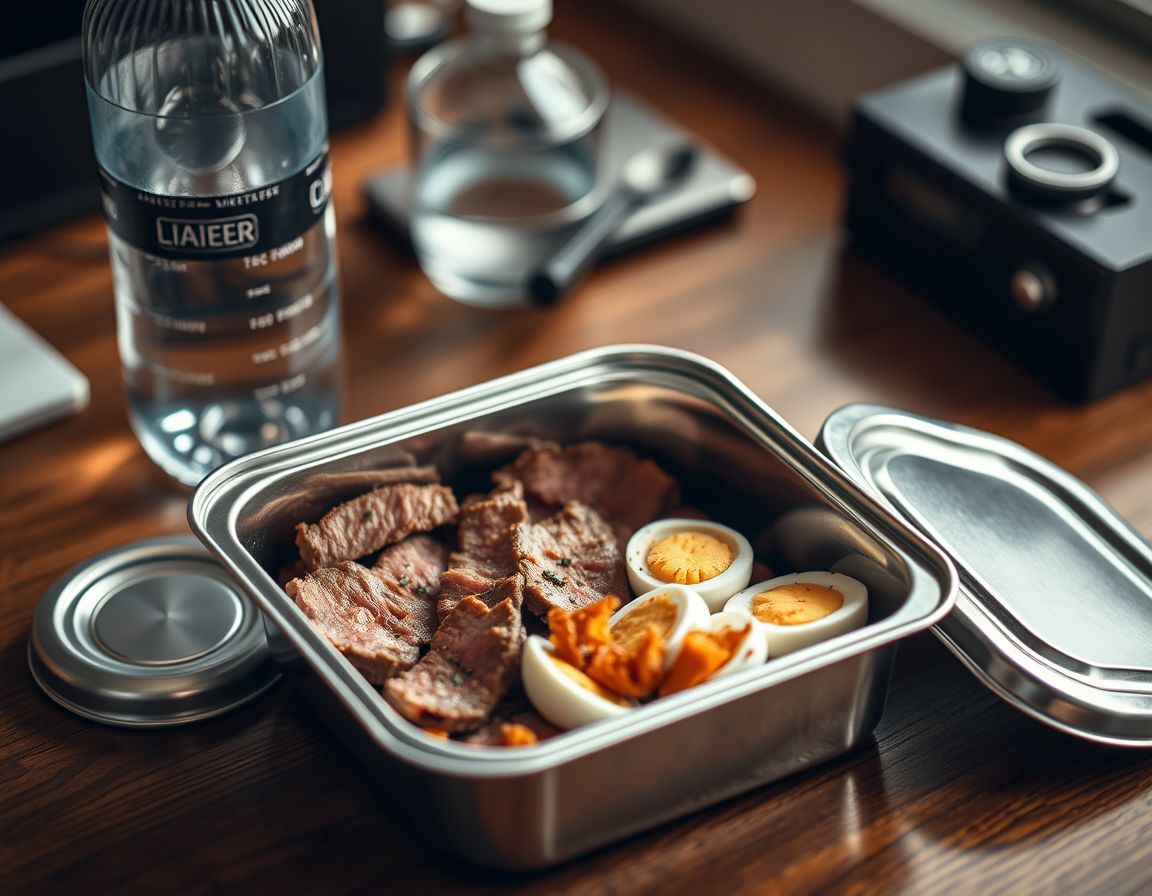
If you want carnivore lunch ideas you can pack ahead, here's the short answer. Cold sliced steak, cold burger patties, roasted meatballs, deboned roasted chicken, hard boiled eggs, and bacon all travel fine and taste fine without a microwave. Pick one main meat, add eggs or bacon to fill the gap, and you're done.
The trick isn't the food. It's building each container so it holds you until dinner, and keeping it cold enough to be safe for six hours in a bag. Every lunch below comes with its protein number so you're not guessing.
The number every packed lunch should hit
Aim for 30 to 40 grams of protein per meal. That's the organizing number here. Spreading protein across your meals works better than one giant dinner, and that gap widens after 50 when your body gets less efficient at using it.
Across the day, most people do well at 0.8 to 1.0 grams of protein per pound of goal body weight, not current weight. Aiming for 150 pounds means 120 to 150 grams a day. Three meals in the 30 to 40 gram range gets you most of the way.
Fat is the lever, not the anchor. Start near a gram of fat per gram of protein and adjust. Hungry at 3 p.m.? Add fat. Not sure where your numbers land, the free macro calculator gives you a starting point in a minute.
Seven lunches that hold up cold
- Two quarter-pound beef patties with the pan drippings spooned over. About 40 g protein. The drippings firm up cold and a lot of people say that's the best part.
- One third-pound patty plus one boiled egg. About 33 g protein. This is the Costco patty size.
- Five ounces of cold sliced steak. About 38 g protein. Slice it before you pack it, against the grain.
- Four hard boiled eggs plus four slices of bacon. About 36 g protein. No cooking gear needed at either end.
- Six one-ounce oven roasted meatballs. About 30 g protein. Add an egg if you want to push it to 36.
- Two deboned roasted chicken thighs, about five ounces of meat. About 36 g protein.
- Two chaffles with bacon in between. Two eggs and two ounces of cheese in the waffle iron, three slices of bacon in the middle. About 35 g protein, and it eats like a sandwich.
Keeping it safe in the bag
This is the part nobody talks about, and it matters more as we get older. Cooked meat shouldn't sit between about 40F and 140F for more than two hours. If it's above 90F out, like a car in August, that window drops to one hour.
The fix is cheap and boring. An insulated bag and one or two frozen gel packs hold food under 40F for six to eight hours. Buy two sets so one's always frozen. That's the whole system.
Two habits help. Chill food fully before it goes in the bag, since a warm container melts your ice pack for nothing. And pack the bag full. A stuffed cooler stays cold far longer than a half empty one.
What actually tastes good cold
Not all meat is equal once it's chilled. Very fatty cuts firm up in the fridge and can go waxy on the tongue. Cold ribeye is a good example. Delicious hot, chalky cold for a lot of people.
What holds up cold: ground beef as patties or meatballs, roast beef and sirloin sliced thin, chicken thighs, bacon, and eggs. What disappoints: heavily marbled steaks and chicken breast, which goes dry and stringy.
Ground beef fat is the exception. Cold drippings on a cold patty is one of the better things in this way of eating, and people who dread cold food often end up liking it. My post on 80/20 versus 93/7 ground beef covers how the fat level changes the way it eats.
Drumsticks work, but they're messy and bone in chicken fills you up less per container than beef. Bring napkins.
One cook session, a week of lunches
Here's a Sunday session that takes about 90 minutes, most of it hands off.
Boil a dozen eggs. Cook two pounds of ground beef in butter. Roast a tray of meatballs and a tray of chicken thighs together at 400F, and slide in a sheet pan of bacon while the oven's hot.
Two pounds of ground beef plus ten eggs comes to about 220 grams of protein. Split that into six containers, not four, and each one lands near 37 grams. Four containers would push you past 55 grams a meal, which is more than your body uses well in one sitting.
Portion into containers while everything's still warm, then get them into the fridge within two hours. Anything past Thursday goes in the freezer and comes out the night before.
When you're cooking for one or two
Most batch advice assumes you're feeding a family. If it's just you, six pounds of patties is a month of the same lunch, and you'll hate it by week two.
Cut every batch in half and rotate two proteins a week instead of one. Beef Monday through Wednesday, chicken or eggs Thursday and Friday. That small change is most of what keeps this going. More on that in cooking carnivore for one.
Cost wise, this lands in the normal range. Most solo eaters run $5 to $10 a day depending on cuts and where they shop, and packed lunches sit at the lower end because you're buying ground beef and eggs instead of restaurant food.
No fridge at the other end
Long drives, appointments, job sites with nothing but a parking lot. The insulated bag is still the answer, but stack the deck.
Freeze one portion solid and let it be its own ice pack. It thaws by noon and keeps everything around it cold. Eggs in the shell are the most forgiving thing you can carry, and butter and hard cheese handle a few hours out fine.
Pack a knife and a small shaker of salt. Cold meat needs more salt than hot meat, and eating a cold steak with your hands in a parking lot is a bad afternoon.
If the bag runs out on a long drive, our sister site ranked the gas station options worth buying. Not all of it is carnivore, but the meat and egg picks are.
If the day goes sideways and lunch stays home, you're not stuck. Here's how to order carnivore at almost any restaurant without much fuss.
I'm not a doctor. I've coached people and competed myself, so I know what works in practice. But I'm not your doctor. If you have health issues or take medication, run dietary changes past someone qualified first. Your results may look different from mine.