
This post may contain affiliate links. For educational purposes only, not medical advice. Details
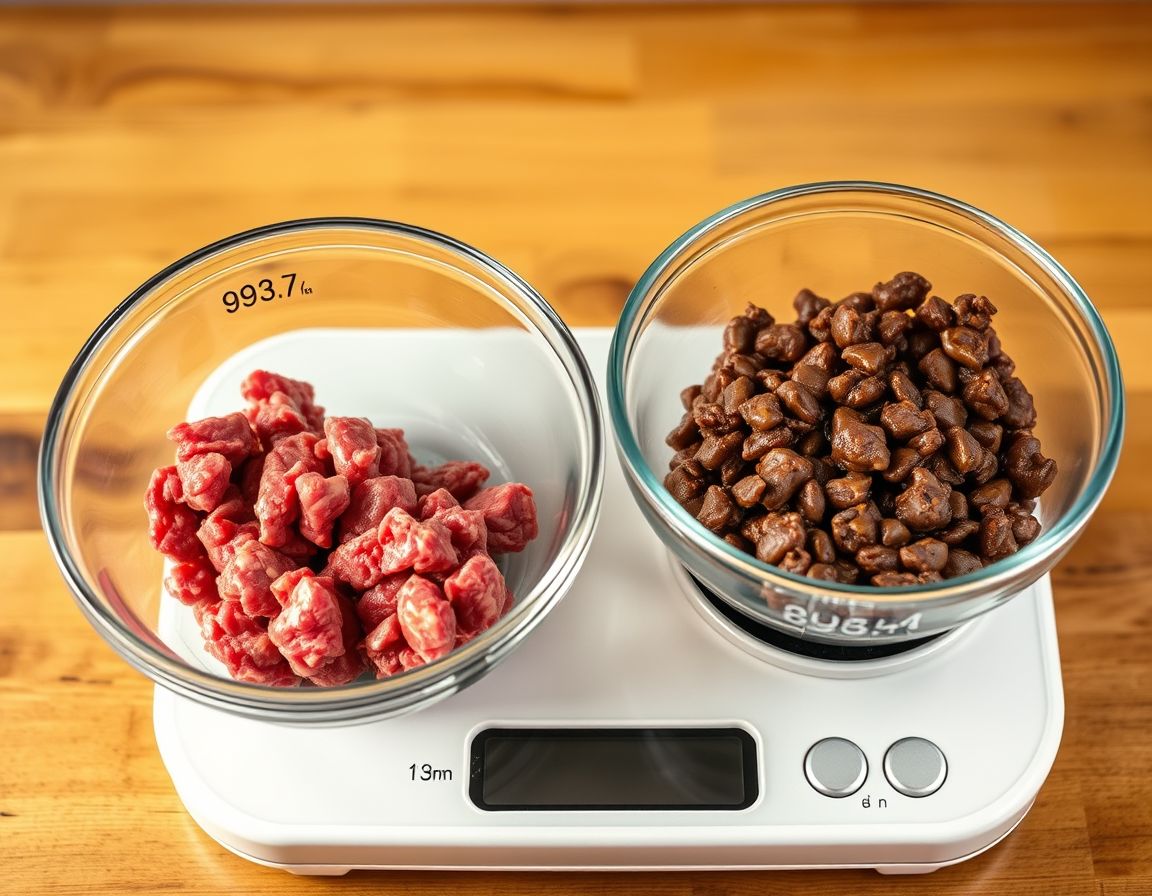
If you're eating carnivore for weight loss and you're standing in front of the meat case trying to decide, here's the short answer. 80/20 is the better pick if you're hungry, eating twice a day, and want your food to be cheap and filling. 93/7 is the better pick if you're a smaller person with a lower calorie ceiling who still needs to hit a real protein number. Both are fine on carnivore. Neither one is cheating.
The internet will tell you 80/20 is the "real" carnivore choice because fat is the whole point. That's an opinion, not math. The actual difference between the two comes down to roughly 460 calories per pound and about 18 grams of protein per pound, and which of those numbers matters more depends entirely on your body and your budget. Let's do the arithmetic so you can decide for yourself in about four minutes.
What the numbers on the package actually mean
80/20 means 80 percent lean, 20 percent fat, by raw weight. Not by calories. That distinction trips up a lot of people.
Twenty percent fat by weight sounds modest. But fat carries more than twice the calories per gram that protein does, so in a package of 80/20, roughly 70 percent of the calories are coming from fat. That's not a flaw. That's just what beef is.
The other thing to know: those percentages describe the meat before it hits the pan. Cooking changes everything, and it changes fattier grinds more than lean ones.
Per raw pound, approximately
These are USDA-ballpark figures for one raw pound (about 454 grams). Round numbers, close enough for planning.
- 80/20: about 1,150 calories, about 78g protein, about 91g fat
- 85/15: about 975 calories, about 85g protein, about 68g fat
- 93/7: about 690 calories, about 96g protein, about 32g fat
Read that spread again. Going from 80/20 to 93/7 cuts about 460 calories off the pound and adds about 18 grams of protein. That's a big swing for two packages that look nearly identical in the case.
Here's the useful ratio: 93/7 gives you roughly 23 percent more protein per pound. 80/20 gives you roughly 67 percent more calories per pound. Hold onto both of those. They do the work later.
Cooked beef is a different animal
A raw pound doesn't stay a pound. Water cooks off, fat renders out, and the fattier the grind, the more you lose.
A pound of 80/20 browned in a pan typically comes out around 11 to 12 ounces. A pound of 93/7 comes out closer to 12 to 13 ounces because there's less fat to render away. So the fattier grind costs a bit more per pound of food that actually lands on your plate.
Then there's the drain question, and it's the biggest calorie lever in this whole article. If you pour the rendered fat off a pound of 80/20, you can drop it by 200 to 300 calories. If you leave it in the pan and eat it, those calories stay. Same package, two different meals.
This is why cooked numbers in apps and on labels never match your raw math. Both can be right. They're measuring different moments.
Pick your ratio from two numbers, not from opinions
You only need two things. Your daily protein target and your daily calorie ceiling. Everything else is noise.
Say you're a 58-year-old woman, 5'4", aiming for around 1,400 calories and 110 grams of protein a day. Try to get that protein from 80/20 alone and you'd need about a pound and a half, which puts you near 1,700 calories before you've added a single egg or pat of butter. The math doesn't fit.
Swap to 93/7 and that same 110 grams costs you about 800 calories. Now you've got room. Add butter or salt to taste, add eggs, and you're still comfortably under your ceiling with a satisfying plate.
Flip the situation. If you're a larger person eating 2,200 calories, or you're doing one big meal a day and struggling to eat enough, 80/20 is doing you a favor. Fewer bites, more calories, better satiety, less money.
If you're not sure what your protein target or calorie ceiling should be, we built a free macro calculator that runs your numbers in a couple of minutes. Some people find it easier to shop once they've seen those two figures written down.
Now the cost math, because it's usually the deciding factor
Two ways to measure value, and they give opposite answers.
Cost per calorie: 80/20 wins almost every time. Say your store charges $4.99 a pound. That's roughly 230 calories per dollar. Prices vary a lot by region, so use your own.
Cost per gram of protein: depends on the price gap. At $4.99 a pound, 80/20 runs about 6.4 cents per gram of protein. If 93/7 is $5.99, it works out to about 6.2 cents. The lean grind is quietly the better protein buy.
But bump 93/7 to $7.99 and it jumps to about 8.3 cents per gram. Now the fatty grind wins on both counts.
So here's the rule worth memorizing. 93/7 has about 23 percent more protein per pound. If it costs less than about 23 percent more than 80/20, it's your cheaper protein. If the premium is bigger than that, 80/20 is cheaper on protein and calories both.
Check the gap on your receipt, not on a forum. In most stores 85/15 lands in an awkward middle, which is fine when it's on sale and unremarkable when it isn't.
What I'd actually do
Buy 80/20 as your default if calories aren't your limiting factor. It's cheap, it's satisfying, and you can always drain the pan on a day you want the calories lower. That flexibility is worth something.
Buy the leaner grind when your calorie ceiling is tight and your protein target is stubborn. Add fat back deliberately with butter or tallow so you control the amount instead of guessing what rendered out.
And stop treating this like a moral decision. It's a spreadsheet decision. Pick the ratio that fits your two numbers and your store's prices, then spend your attention on the part that actually moves the needle, which is eating the same simple meal consistently for the next eight weeks.
I'm not a doctor. I've coached people on nutrition strategy for years, but I'm not your doctor. If you have a health condition or take medication, especially anything for blood pressure, blood sugar, or cholesterol, talk to whoever manages your care before you change how you eat. Dietary changes can shift how some medications work, and that needs professional oversight, not a blog post.