
This post may contain affiliate links. For educational purposes only, not medical advice. Details
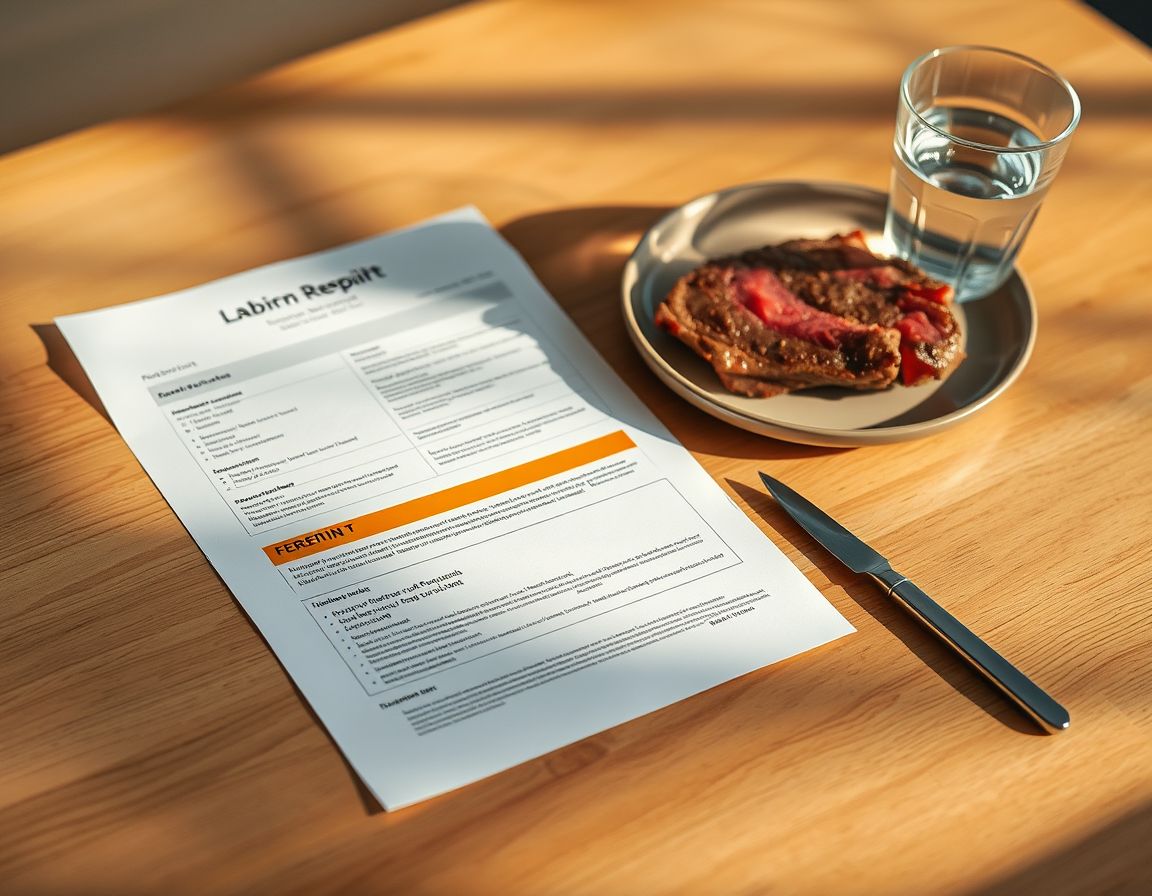
Eating red meat every day can raise your ferritin. Red meat contains heme iron, which your body absorbs more readily than the iron in plants, and ferritin is the protein that stores that iron. So if you've gone from chicken salads to ribeyes and your ferritin came back higher than it used to be, diet is a reasonable part of the explanation.
Here's the part most people miss. Ferritin isn't only an iron gauge. It's also an acute-phase reactant, which means it climbs when your body is dealing with inflammation, infection, alcohol, fatty liver, or even a recent hard workout. A high ferritin reading on its own doesn't tell you whether you're storing too much iron or whether something else is temporarily pushing the number up. That's why a single result isn't a diagnosis, and why nobody should be talking about treatment yet.
Why your ferritin might be higher now, even without the steak
If you're a woman past menopause, this one matters more than your dinner plate. For decades you lost iron every single month. That monthly loss kept ferritin low, sometimes low enough that you were told to take an iron supplement. Once periods stop, that drain stops with them, and ferritin drifts up over the following years no matter what you eat.
This is worth checking before you blame the beef. If you can find labs from a few years back, look at where your ferritin was then. A number that was already climbing before you changed anything tells a very different story than a number that jumped after.
Other things that raise ferritin independent of iron intake:
- Inflammation of any kind, including autoimmune activity, an infection you're getting over, or joint disease
- Fatty liver, which is common and often silent, especially after years of insulin resistance
- Alcohol, even at moderate intake
- Metabolic syndrome, where high ferritin and high insulin travel together
- Recent intense exercise or muscle damage in the days before the draw
Research on iron storage has looked at all of these, and the general pattern is consistent. Ferritin goes up for many reasons, and iron overload is only one of them. This is general education about how lab markers behave, not individualized guidance for your situation.
The labs to ask for before anyone says the word "donate"
If your ferritin is high, the useful next step isn't changing your diet or booking a blood donation. It's getting the rest of the picture. Ask your doctor about running an iron panel alongside inflammation and liver markers, so the ferritin number has context.
- Transferrin saturation. This is the one that separates real iron loading from inflammation. It measures how much of your iron transport capacity is actually filled. High ferritin with normal saturation points away from overload. High ferritin with high saturation is what gets a doctor's attention.
- Serum iron and TIBC. These feed into the saturation calculation and show whether your body is short on transport capacity or running full.
- CRP. A basic inflammation marker. If CRP is elevated, your ferritin is likely reflecting inflammation, and rechecking later once things settle makes more sense than acting on the first number.
- Liver enzymes, ALT and AST. The liver stores iron and also leaks ferritin when it's stressed. These help sort out which is happening.
Reference ranges for all of these vary between labs, and what one lab flags as high another prints in black. Compare your result to the range printed on your own report, not to a number you read online, and let your doctor interpret it against your history.
Hereditary hemochromatosis is real, and it's not a self-diagnosis
There's a genetic condition where the body absorbs too much iron regardless of intake. It's called hereditary hemochromatosis, it runs in families, and it can cause genuine damage to the liver, heart, and pancreas over time if it goes unmanaged for years. It's more common in people of Northern European descent, and it often shows up in midlife.
It's also diagnosed with genetic testing and a full iron panel, ordered and read by a doctor. Not by a ferritin number and an internet search. If your transferrin saturation is persistently high, or hemochromatosis runs in your family, that's the conversation to have at your next appointment.
What I don't want you doing is deciding on your own to donate blood, take an iron chelator, or start any protocol you read about in a forum. Therapeutic blood removal is a real treatment, and it's a medical decision with monitoring attached, not a wellness hack. Donating blood to fix a lab number you haven't confirmed can leave you anemic and no closer to an answer.
How to think about this without panicking
A high ferritin is information, not a verdict. Get the follow-up labs. Look at your trend over years rather than one snapshot. Mention every medication and supplement you take, since some affect these markers. Then decide with your doctor, not before you see them.
This is the same pattern I keep seeing with bloodwork on this diet. Numbers move, people panic, and the context turns out to matter more than the single value. It's what happens with lipids too. I wrote about what actually happened to cholesterol over 90 days, and a longer look at what the data really shows about LDL on carnivore. Same lesson. One marker, read alone, misleads people.
Timing matters as well. If you're a few weeks into this way of eating, your body is still adjusting on several fronts, and that's worth understanding before you read too much into any lab. The adaptation timeline covers what's normal in those early months.
And if you're still working out how much you should be eating in the first place, the free macro calculator gives you a starting point for your numbers. It's a starting point, not a prescription, and you adjust from there based on how you actually feel.
If you're taking medications or have been diagnosed with any medical condition, you need individualized medical oversight. Don't make changes without consulting your doctor.
I'm not a doctor. I've researched this deeply and worked with many people, but I'm not your doctor. If you have health conditions, take medications, or need specific guidance, talk to someone who knows your full medical picture. Everything I write is educational based on research and what I've seen work. Your situation might be different.