This post may contain affiliate links. For educational purposes only, not medical advice. Details
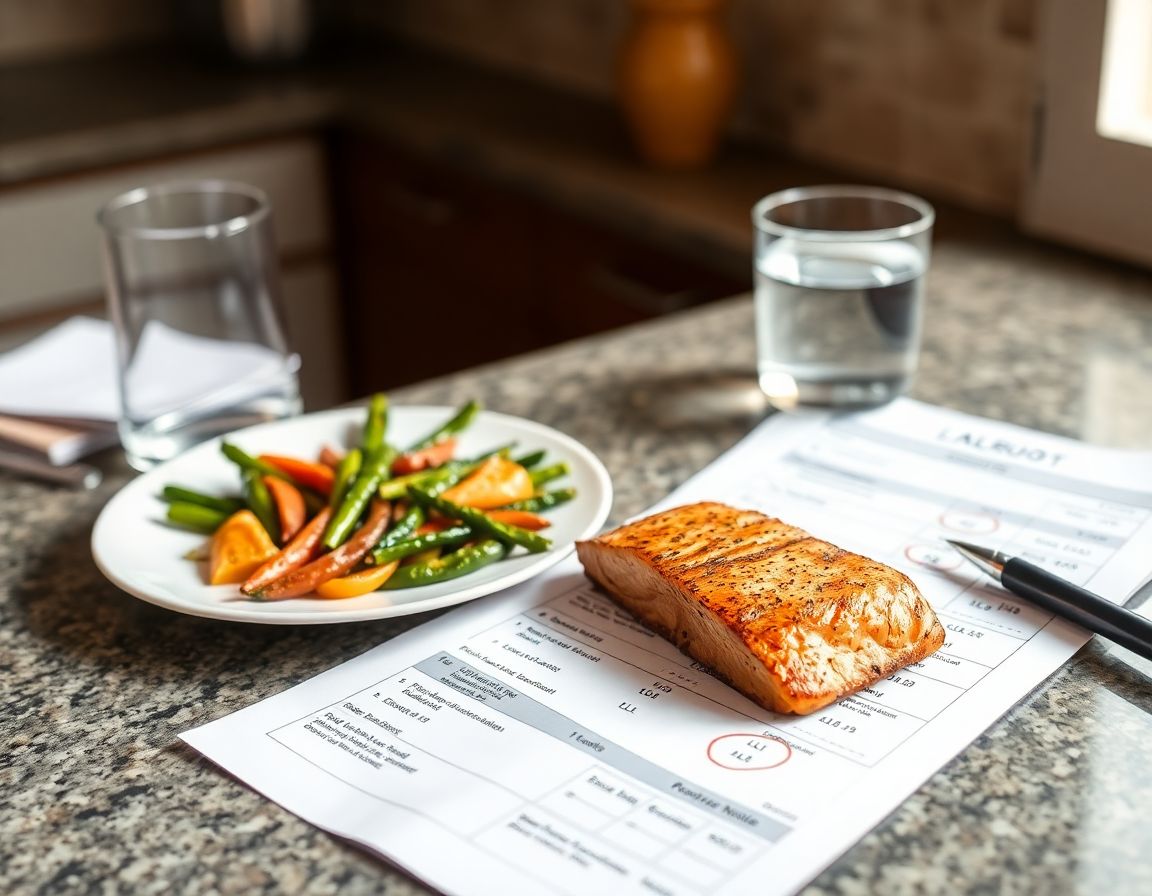
Your 90-Day Bloodwork Just Came Back. Now What?
If you started carnivore in January, there's a good chance you're staring at your 90-day labs right now with a pit in your stomach. Your LDL went up. Maybe way up. Your doctor called. You're wondering if you made a terrible mistake.
You didn't. But let me explain what's actually happening, because the story your bloodwork is telling is almost certainly more complicated than a single number.
Why LDL Goes Up on Carnivore (and Why It's Not the Whole Story)
When you cut carbohydrates dramatically, your body shifts to burning fat for fuel. That means your liver starts processing a lot more fat. It also means it's moving cholesterol around more actively. LDL, which is technically a lipoprotein that carries cholesterol, often rises in this transition.
Here's what matters: not all LDL is the same. There are two main patterns. Pattern A is large, fluffy LDL particles. Pattern B is small, dense LDL particles. Small, dense LDL is the type associated with cardiovascular risk. Large, fluffy LDL? Much less so. Standard bloodwork doesn't distinguish between them. Your doctor's lab report gives you a total LDL number that lumps both together.
Most people on carnivore who see elevated LDL are experiencing a rise in large, fluffy particles, not the dangerous kind. This is sometimes called the "lean mass hyper-responder" pattern, and it's been documented enough that researchers are actively studying it. A high LDL number alone doesn't tell you which type you have.
If you want the real picture, ask your doctor about an NMR lipoprofile or an ApoB test. Those give you particle size and count, which is the data that actually matters. I wrote a deeper breakdown of what carnivore actually does to your cholesterol if you want the full context before your next appointment.
The Numbers You Should Actually Be Watching
Here's what I tell everyone who comes to me panicking about their LDL: pull up your triglycerides and your HDL. Those two numbers together tell you far more than LDL alone.
Triglycerides below 100 mg/dL is a great sign. Below 80 is even better. After 90 days on carnivore, most people see their triglycerides drop significantly, often from 150-200+ down to 70-90. That's your body becoming more efficient at burning fat instead of storing it as triglycerides.
HDL above 60 mg/dL is protective. On carnivore, HDL typically rises over time. The combination of low triglycerides and high HDL is one of the strongest markers of metabolic health we have.
The ratio that matters most is triglycerides divided by HDL. Anything below 2.0 is good. Below 1.5 is excellent. I've seen people come in with a ratio of 4 or 5 at the start, and after 90 days of carnivore it's down to 1.2. That's a dramatic improvement in cardiovascular risk, regardless of what LDL is doing.
Real Numbers From Real People
Here's a pattern I see regularly. Someone starts carnivore with these labs: LDL 120, HDL 45, triglycerides 180, trig/HDL ratio 4.0. At 90 days their LDL is 160, HDL is 62, triglycerides are 75, trig/HDL ratio 1.2. Their doctor flags the LDL increase and tells them to reconsider their diet. But look at the whole picture. Every other marker improved substantially.
That's not a failure. That's a metabolic system learning to work properly again.
Another pattern worth knowing: fasting before your bloodwork matters more on carnivore than it did before. If you ate a fatty meal the night before your draw, your LDL can read high because there's more fat in transit. A true 12-14 hour fast before labs gives you a cleaner reading.
When Should You Actually Be Concerned?
I want to be honest here, because I don't believe in dismissing everything. There are situations where high LDL on carnivore does warrant closer attention.
If your triglycerides are also elevated (say, above 150) alongside high LDL, that's a different pattern than the typical carnivore response. It might mean you're not fully fat-adapted yet, or that dairy and eggs are affecting your response more than average.
If you have a family history of familial hypercholesterolemia, you need individualized medical oversight. Don't make changes without consulting your doctor. Carnivore might still be appropriate, but you need professional monitoring alongside it.
If your total cholesterol is above 400 and rising after 6 months, that's worth investigating with particle size testing, not just watching and waiting.
For the vast majority of people seeing a moderate LDL bump at the 90-day mark with improving triglycerides and HDL? The evidence supports giving it more time and tracking the full picture.
What to Do Before Your Next Appointment
Walk into that follow-up with specific requests. Ask for ApoB or an NMR lipoprofile if your doctor will order it. Ask to see your trig/HDL ratio calculated. Ask what your fasting insulin is, because insulin resistance is a far stronger predictor of cardiovascular risk than LDL cholesterol, and carnivore tends to improve it significantly.
Bring context. If your triglycerides dropped from 180 to 80 and your HDL went from 42 to 65, say that out loud. Doctors often see the flagged LDL and stop there. You can advocate for the full picture without being dismissive of your doctor's concerns.
The 90-day mark is actually an exciting time in this process. Your body has been adapting, your metabolic machinery has been shifting, and your labs are capturing that transition. One number going up while five others improve isn't a red flag. It's evidence of change.
Give it to 6 months. Get the particle size test if you can. Keep tracking. The panic usually fades when the full story becomes clear.
I'm not a doctor, and this isn't medical advice for your specific situation. If you have heart disease, take statins, or have a family history of cardiovascular conditions, please work with your healthcare provider to interpret your labs.