
This post may contain affiliate links. For educational purposes only, not medical advice. Details
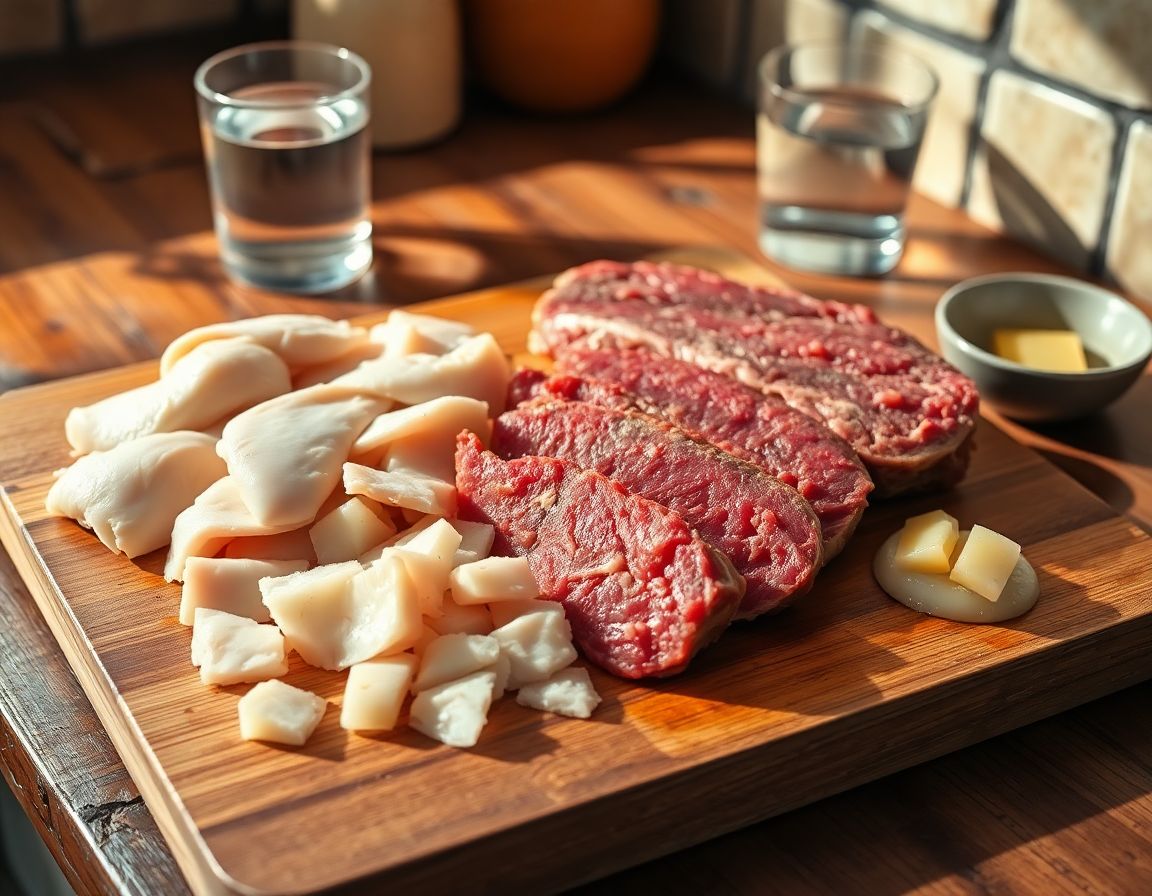
Lean meat alone will break you
Eat nothing but chicken breast and rabbit for two weeks and you won't feel disciplined. You'll feel sick. Nausea, headaches, loose stools, weakness, and a hunger that won't shut off no matter how much you eat.
That's rabbit starvation. It's not folklore. Arctic explorers documented it, Lewis and Clark's crews hit it on lean elk, and Vilhjalmur Stefansson reproduced it under medical supervision at Bellevue Hospital in 1928. When researchers cut his fat and left the protein high, he was sick within two days. They fed him fatty meat and he was fine again in about twelve hours.
Twelve hours. That tells you exactly what the problem is. It's not the meat. It's the ratio.
Why the ceiling exists
Your liver converts excess protein nitrogen into urea so your kidneys can dump it. That conversion has a maximum rate. It doesn't scale infinitely with how much steak you shove in.
Research on urea synthesis puts the practical upper limit somewhere around 3.5 to 4.5 grams of protein per kilogram of bodyweight per day, or roughly 35 percent of your total calories. Push past that and ammonia builds up faster than you can clear it. That's where the nausea and the fog come from.
On carnivore you've got no carbs to buffer the load. So there's only one lever left. Fat.
The fat floor, in one line
Here's the protocol. Your fat grams should never drop below your protein grams. One to one by weight. That's the floor.
The math doesn't lie. Fat runs 9 calories per gram, protein runs 4. At a 1:1 ratio by weight, protein lands at 31 percent of calories. Just under the ceiling. Drop to 0.8 grams of fat per gram of protein and protein jumps to 36 percent. You're over the line.
For training, don't sit at the floor. Target 1.3 grams of fat per gram of protein. That puts protein around 23 percent of calories and leaves you room to eat a lean meal without consequences.
Run your own numbers
Set protein first, based on what you actually do:
- Desk job, walks, occasional lifting: 0.7 g per pound of bodyweight
- Lifting 3 to 4 times a week: 0.9 g per pound
- Hard training, BJJ plus lifting, 5-plus sessions: 1.0 to 1.1 g per pound
Then multiply protein by 1.0 for your floor and 1.3 for your target. Here's what that looks like:
- 150 lb, lifting 3x/week: 135 g protein. Fat floor 135 g. Target 176 g. About 2,120 calories.
- 180 lb, lifting 4x/week: 162 g protein. Fat floor 162 g. Target 211 g. About 2,550 calories.
- 200 lb, lifting 4x/week: 180 g protein. Fat floor 180 g. Target 234 g. About 2,830 calories.
- 220 lb, hard training: 220 g protein. Fat floor 220 g. Target 286 g. About 3,450 calories.
Stop overthinking the calorie column. Set protein, set fat, eat to appetite. The calories sort themselves out.
Which cuts already clear the floor
Some meat does the work for you. Some doesn't come close. Check the ratio before you fill your cart.
- 73/27 ground beef: about 70 g protein and 122 g fat per raw pound. Ratio 1.7:1. Cheap and way above the floor.
- 80/20 ground beef: about 77 g protein and 90 g fat. Ratio 1.17:1. Clears it.
- Chuck roast and pork shoulder: roughly 1:1 to 1.2:1 depending on the trim. Fine as-is.
- Ribeye: around 1:1. Sitting right on the floor, not above it.
- 93/7 ground beef: 95 g protein, 32 g fat. Ratio 0.34:1. Nowhere close.
- Chicken breast: 105 g protein, 6 g fat per pound. This is the rabbit.
Eggs land at about 0.83:1, so they're slightly under the floor on their own. Cook them in butter and they're not.
Closing the gap for almost nothing
This is where people assume high fat means expensive. It doesn't. Fat is the cheapest macro on the shelf if you know where to ask.
Walk up to the butcher counter and ask for beef fat trim. At my shop in Whistler it's a couple bucks a pound and sometimes free. Render it in a slow cooker on low for six hours, strain it, jar it. You've just made tallow for pennies per tablespoon.
Each tablespoon of tallow adds about 13 grams of fat. Butter adds about 11.5. Bacon ends and pieces cost half what strips do and run heavily to the fat side.
So if you're a 180 pound lifter eating 162 g protein from 80/20 beef, you're getting roughly 190 g fat already. Add two tablespoons of tallow across the day and you're at your 211 g target. That's it. That's the whole adjustment.
The one time you can go lower
Cutting changes the math. Body fat is still fat, and your liver doesn't care where it came from.
A pound of body fat holds roughly 390 grams of usable fat. Lose a pound a week and you're pulling about 55 grams of fat per day off your own frame. Subtract that from your dietary floor.
So a 200 pound guy cutting at one pound per week has a 180 g fat floor on paper, but a 125 g dietary floor in practice. Go below that and you're borrowing against a bank that isn't paying out fast enough.
Test it for two weeks
Don't take my word for the numbers. Measure.
- Track fat and protein grams for 14 days. Weigh your food for the first week so you calibrate your eye.
- Log morning energy on a 1 to 10 scale before coffee.
- Log top set weight or rounds rolled per session.
- Log hunger two hours after your biggest meal.
- Weigh in weekly, same time, same conditions.
If energy climbs and hunger drops, your ratio's right. If you're still ravenous an hour after eating a big meal, you're under the floor. Add 30 grams of fat and check again in three days.
Watch for the warning signs too. Persistent nausea, headaches that won't clear, loose stools, and hunger that eating doesn't touch. Those aren't detox. That's your ratio telling you something. Add fat and see if it resolves in a day, the way it did for Stefansson.
Protocol beats willpower. Set the floor, hit it every day, and stop guessing.
Ongoing nausea, weakness, or symptoms that don't clear within a day of adding fat need a doctor's eyes, not a spreadsheet. If you have kidney or liver issues, or you're on medication, protein and fat targets are a medical conversation before they're a nutrition one. Don't run this on your own.
Not a doctor. I'm not a doctor. I've coached people and competed myself, so I know what works. But I'm not your doctor. If you have health issues or take meds, check with someone qualified. Everything here is based on what works in practice and what research supports. Your mileage may vary.