
This post may contain affiliate links. For educational purposes only, not medical advice. Details
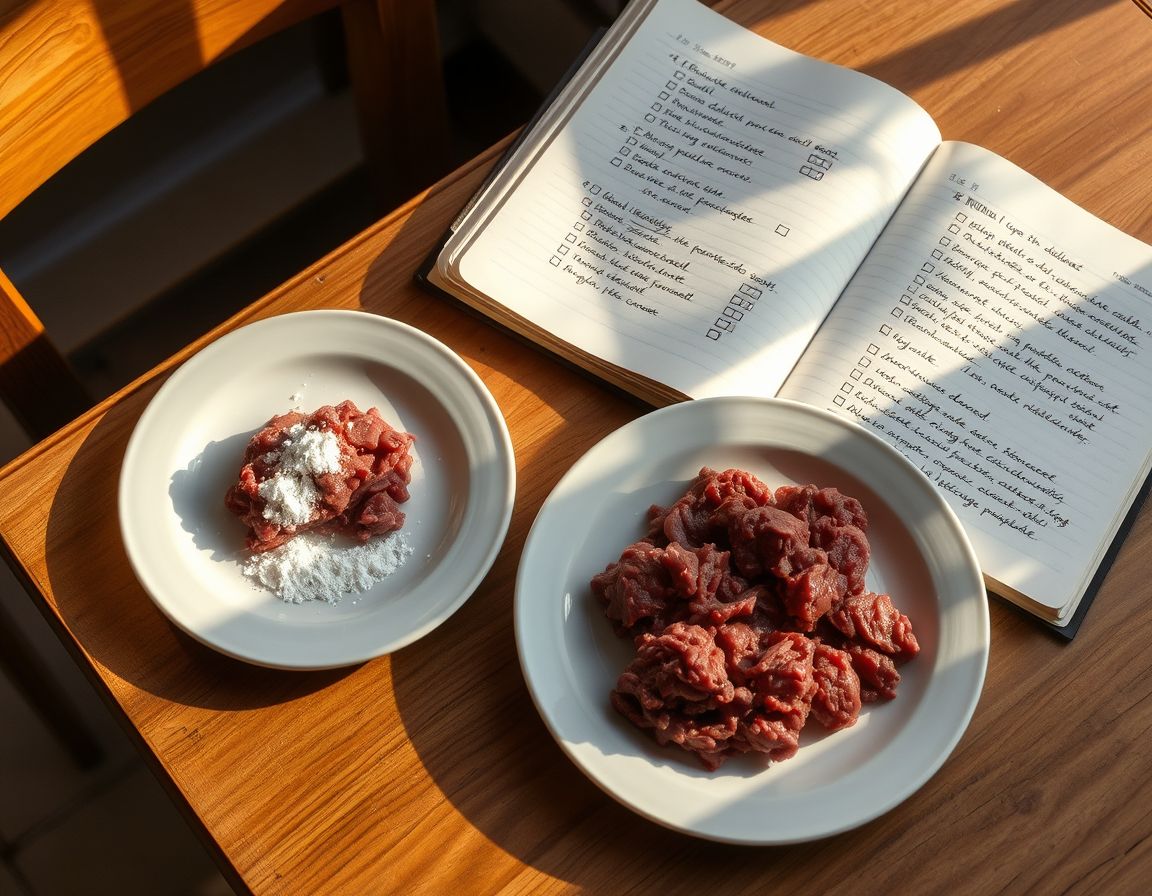
Two years of long covid, and someone tells you meat and salt might help. So let me start with the plain answer: some people over 50 report steadier energy and fewer blood sugar swings after switching to carnivore. Almost nobody reports a cure, and the crash after exertion tends to hang around. The evidence is early and mostly stories, and I'll say that plainly all the way through.
I hear from a lot of readers in their 50s and 60s about this, and the picture is consistent. They can't walk the dog without paying for it the next day. Brain fog makes work hard. They feel wired and tired at the same time. And they ask the same question: did anyone's fatigue actually improve on this diet?
Let me explain what people report, what they don't, and how to run a fair trial without fooling yourself. If you want a starting point for your numbers, the free calculator at /calculator.html gives you a protein and fat target in about a minute.
Long covid or ordinary new-diet tiredness?
Separating these two is most of the work. Long covid fatigue over 50 has a shape. People describe a crash that arrives 12 to 48 hours after modest exertion, not during it. Brain fog comes and goes. Heart rate jumps on standing. Sleep is light and unrefreshing. Appetite is off in one direction or the other.
Ordinary tiredness after 50 tracks with sleep, stress, iron, thyroid and blood sugar, and it usually responds to fixing those. I covered that pattern in Tired All the Time After 50: Can Carnivore Help?. If your tiredness has no delayed crash and no heart rate swings on standing, start there, not here.
What readers say changed, and what didn't
The most common report, by a wide margin, is steadier energy through the day. People describe fewer afternoon slumps and fewer of the shaky, hungry, foggy spells that come with blood sugar swings. A few also say the wired-and-tired feeling eases a month or two in.
Here's what people don't usually report: the post-exertion crash going away. Some say it softens or arrives less often. Many say it's unchanged. If you have that crash, pacing still applies. Nobody in these conversations describes a cure, and anyone selling you one is selling.
Brain fog is mixed. Some report clearer thinking, often tied to the steadier energy. Others notice nothing. Your situation might be different from all of these, which is why you'll want a diary rather than a memory.
Why the evidence is early, and we say so
People try this because of a plausible idea, not a proven one. Long covid research points at lingering inflammation and at mitochondria, the parts of your cells that make energy, not working well. Carnivore drops most common food triggers and lowers insulin, and some people find it eases inflammatory symptoms. I covered what we actually know in Carnivore and Inflammation.
But there are no trials of carnivore for long covid. What exists is a mechanism that might apply, plus what people report. That's enough to make a careful trial reasonable for some people. It's not enough to promise you anything.
Week one can look like a long covid flare
Starting carnivore brings its own fatigue and dizziness, and if you already have long covid you'll feel both at once. Lower insulin makes your kidneys let go of sodium and water, so the first week is a drop of 3 to 7 pounds of water, less in smaller and older bodies, and the roughest patch runs from about day 3 to day 10. Most people on carnivore land around 3 to 5 grams of sodium a day, about 1.5 to 2 teaspoons of salt, spread through the day. This is not for everyone. Talk to your doctor first if you have high blood pressure, kidney or heart problems, diabetes, are pregnant, or take medicine.
How do you tell the two apart? Timing and triggers. New-diet dizziness shows up in the first ten days, hits when you stand, and eases within half an hour of a salty cup of broth. A long covid crash arrives a day or two after exertion and doesn't care how much salt you had.
Heart rate is the other clue. Carnivore can nudge resting heart rate up for a few weeks, which I explained in Resting Heart Rate Went Up on Carnivore. That's different from a heart rate that jumps 30 beats when you stand. If you had the standing jump before the diet, note it in your diary on day one so you don't blame the food for something that was already there.
Give it 60 to 90 days, and judge on a diary
Here's what I've seen work. Before you change a single meal, spend a week writing down four things each evening: energy out of 10, brain fog out of 10, what you did physically, and how you slept. That's your baseline.
Then judge at 60 to 90 days, not before. Weeks 1 and 2 are noise. Weeks 2 and 3 often bring sleep disruption for everyone. Most people feel adapted by weeks 4 to 6, and full fat adaptation can take 8 to 12 weeks. If you quit at day 12 because you felt awful, you learned that adaptation is hard, not whether the diet helps your long covid.
Judge on the diary, not the scale. If your energy drifts from a 3 to a 5 and your crash days drop from four a week to two, that's a real result even if the scale did nothing. If nothing moves by day 90, that's a real result too.
If you're under care or taking medicine for it
Some readers with long covid have tried tirzepatide, the GLP-1 medicine, and a few found it helped but couldn't stay on it. Others take medicines for heart rate, sleep or blood pressure. Carnivore changes how much you eat and how much water and salt you hold, and that can change how those medicines land. Any change to your medicine is your prescriber's decision. Bring your symptom diary to the appointment.
Get care now if
- You have chest pain or pressure.
- You faint, or nearly faint.
- You're breathless while sitting still.
- You have new confusion, trouble speaking, or weakness on one side.
None of those are adaptation. Don't wait them out.
Not a doctor. I'm not a doctor. I've researched this deeply and worked with many people, but I'm not your doctor. Everything I write is educational based on research and what I've seen work. Your situation might be different.