
This post may contain affiliate links. For educational purposes only, not medical advice. Details
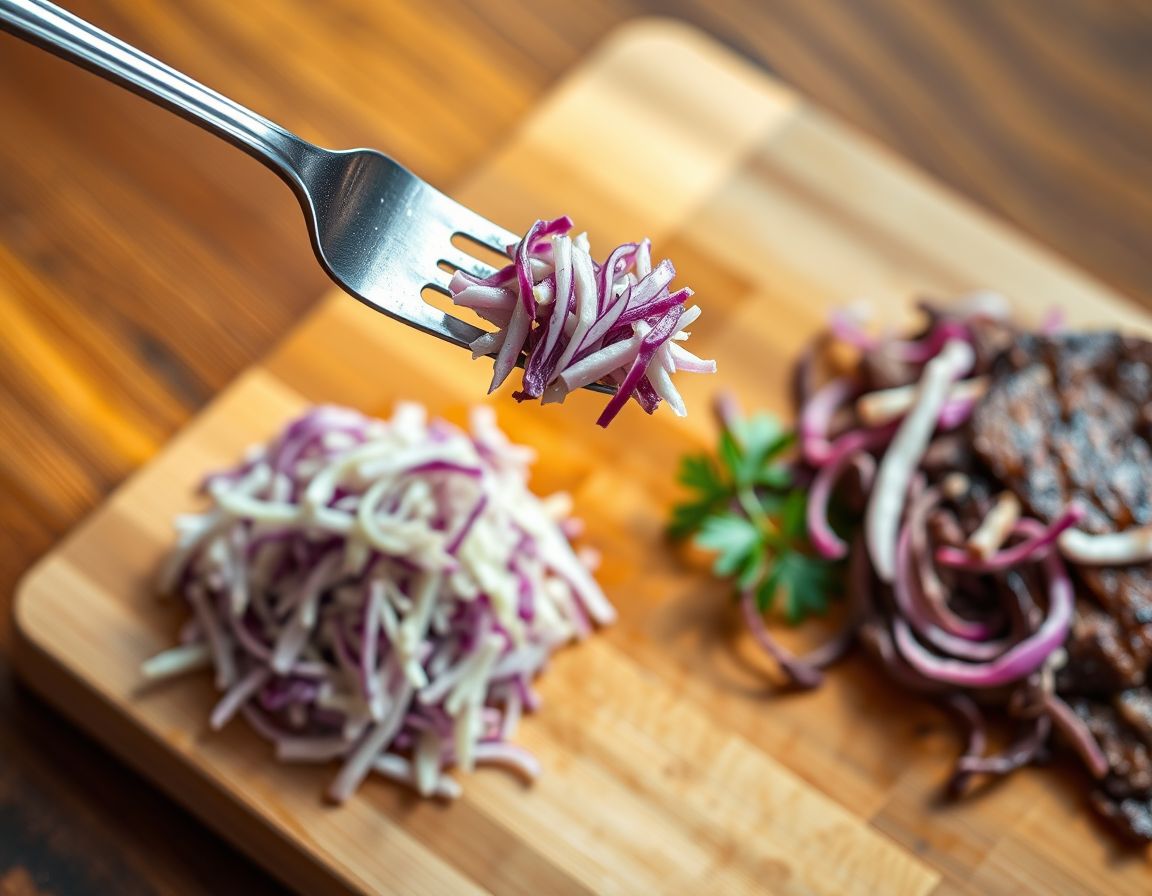
Okay, so here's the confession a lot of people make around week three: "I don't miss bread. I miss cabbage." Or salad. Or the crunch of a raw carrot while you're making dinner. If that's you, you're in very good company.
Let's answer the big question first. No, you don't need vegetables on a carnivore diet. Our stance at Carnivore Weekly is that fiber isn't required when you're eating this way, and plenty of people do well for years without a single leaf. We also don't think vegetables are dangerous or that a forkful of slaw undoes your progress. Both things can be true. Usually what people miss isn't a nutrient. It's texture, ritual, and comfort.
It's the crunch, not the kale
When people talk honestly about missing vegetables, the stories are rarely about vitamins. They're about frying cabbage in bacon grease every single day until they finally got sick of it. About coleslaw at every family barbecue. About using shredded cabbage where noodles used to go in a big bowl of soup.
Then there are people who refused anything in the cabbage family as kids and now can't get enough of it. Many swear the haters only ever had them boiled to mush. Fair point.
So if you feel a pang walking past the produce aisle, it's worth asking what you're really hungry for. Crunch? Something bright on the plate? A dish that feels like your mom's kitchen? Those are real needs, and most of them can be met. And if you want a starting point for your numbers while you figure this out, our free macro calculator works for carnivore and for a keto or low-carb approach too.
What longtime carnivores say helped
Here's what keeps coming up.
- Get your crunch from crispy things. Pork rinds are the obvious one. Crumble them over ground beef like croutons. Crispy bacon, chicken skin roasted until it shatters, and the seared fat cap on a steak all hit that same craving.
- Change the cut, not just the seasoning. Eating the same ground beef patty seven days in a row is how boredom turns into "I miss salad." Rotate in pork shoulder, chicken thighs, lamb chops, short ribs, salmon, or a roast you can slice cold.
- Use heat and fat for texture. A hot cast iron pan is your friend. Hard sears, crispy edges, and rendered fat give you contrast on the plate, which is a lot of what vegetables used to do.
- Keep the ritual. If you loved building a big bowl, build a big bowl. Shredded chicken, crispy pork belly, a soft egg on top. Same comfort, different ingredients.
- Salt properly. Bland food makes you crave everything. Salt to taste. Well-salted food is simply more satisfying. If you have high blood pressure or a salt limit, check with your doctor first.
The first few weeks are the hardest
Real talk: the cravings in weeks one through three feel much louder than they will later. Days 3-10 are usually the roughest stretch, and most people feel settled somewhere around weeks 4-6. A lot of the "I need a salad" feeling fades once your body and your habits catch up.
That's why we suggest giving it a fair trial before you make big calls. Sixty to 90 days is a reasonable window to judge how carnivore works for you. If you're just starting, keep it simple with ground beef and eggs, and let the novelty of new cuts come later.
And if you've heard that skipping vegetables will wreck your gut, it's worth reading our post on gut health without fiber. Many people find their digestion actually calms down once the transition settles.
Cooking for a family that still eats vegetables
This is where it gets personal for a lot of our readers. You're the one making dinner, and your husband, kids, or grandkids still want roasted broccoli and a big salad. You're chopping vegetables you don't eat. Of course you miss them.
A few things people say make this easier:
- Cook one main protein for everyone and let the family add their own sides.
- Make your plate look generous. Two kinds of meat, an egg, a little extra crispy bacon. A sad, small plate next to everyone else's makes the craving worse.
We've got more on this in our family integration guide, including how to handle the "just have a little" comments.
When ketovore is a fair call, not a failure
Here's the thing. Some people add a few low-carb vegetables back in and do great. That way of eating is often called ketovore: mostly meat, eggs, and animal fat, plus a little cabbage, zucchini, spinach, or cucumber. It is not cheating, and it is not quitting.
It can be a sensible choice if:
- You've given strict carnivore a real trial and the craving for vegetables hasn't eased at all.
- Missing them is the thing most likely to make you give up entirely. A plan you keep beats a perfect plan you abandon.
- Family meals have become stressful, and a scoop of buttery fried cabbage alongside everyone else makes dinner feel normal again.
A few tips if you go this route. Add one vegetable at a time so you can notice how you feel. Keep protein as the anchor of every meal, around 30-40 g per meal, especially if you're over 50. And if you're tracking weight loss, notice whether the scale or the tape measure shifts over a few weeks.
If you do move toward ketovore, rerun your numbers on the keto or low-carb setting so your numbers match how you're actually eating. For a list of which vegetables keep carbs low, our sister site has a handy low-carb food list.
The bottom line
You don't need vegetables to do carnivore well. But missing them is normal, and it usually says more about comfort and texture than about nutrition. Try crispy textures, more variety in your cuts, and a little patience through the first few weeks. If you still want that pan of fried cabbage after a fair trial, adding a few low-carb vegetables is a reasonable adjustment. Your plan should fit your life, your kitchen, and your family table.
I'm not a doctor. I'm just someone who's deep in this community and reads everything. I can tell you what people are trying and what tends to help, but you make your own calls. If you have health conditions or take medications, talk with your doctor before changing how you eat.