
This post may contain affiliate links. For educational purposes only, not medical advice. Details
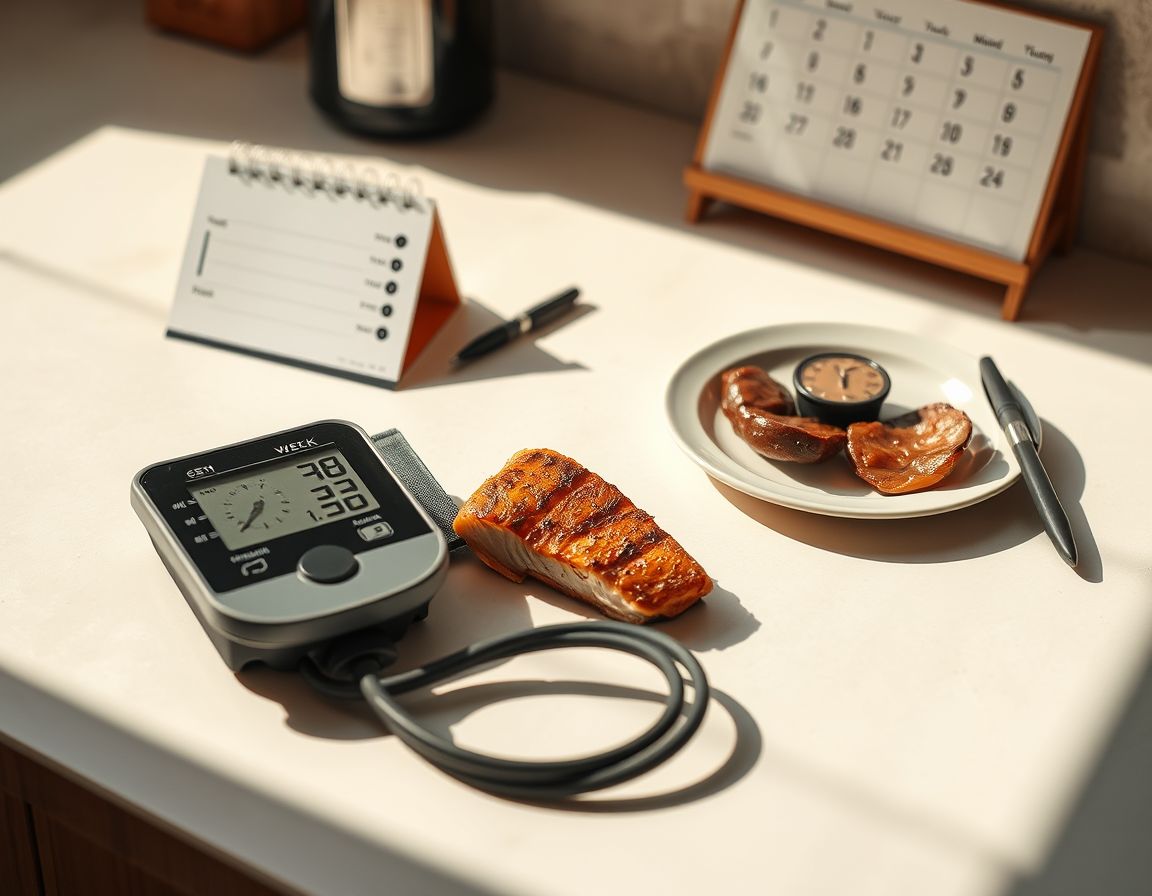
If you're wondering how long carnivore takes to lower blood pressure, here's the honest answer. Many people notice a change in the first one to three weeks, mostly from water loss. A steadier picture usually shows up somewhere around weeks 6 to 12. And some people see little change at all. I can't promise you a number, and nobody honestly can.
If you take blood pressure medication, the timeline matters even more, because your numbers can move before your prescription does. That's why your prescriber needs to be in the loop before you start and during the change. I'll walk through what usually happens, week by week, and what to measure along the way.
Quick tip before we start: if you're also curious about your protein and calorie targets, our free macro calculator gives you a starting point. Now, the timeline.
Week 1: the water drop
When you cut carbs, your body empties its glycogen stores. Glycogen holds water, so you lose a few pounds of it quickly. House rule of thumb: 3 to 7 pounds in week one, and often less in smaller or older bodies.
Insulin also drops, and lower insulin tells your kidneys to release more sodium and water. Less fluid in your bloodstream can mean lower pressure on your artery walls. This is the first and fastest effect, and it's mostly water, not fat loss or "healing."
Here's what I've seen: some people feel a little lightheaded, tired, or headachy in days 3 to 10. That's the same stretch where the water and salt shift is biggest. For someone with normal or high blood pressure and no medication, that can be mild. For someone already on a blood pressure pill, it can be a real problem.
Weeks 2 to 6: settling in
After the water drop, your body adjusts. Sleep can be bumpy in weeks 2 and 3. Most people feel adapted somewhere between weeks 4 and 6.
Blood pressure during this stretch can bounce around. A reading that was low in week one may creep back up as your fluid balance steadies. That's not failure. It's your body finding a new normal, and one good or bad day tells you very little.
The research shows that low-carb eating can lower blood pressure for some people, and that weight loss itself tends to help. The effect varies a lot from person to person, and results aren't guaranteed. Your situation might be different.
Weeks 6 to 12: the picture that counts
Full adaptation can take 8 to 12 weeks, and a fair trial is 60 to 90 days. This is when your readings become more meaningful, because the early water effects have faded. If your pressure is lower by then, it's more likely tied to real changes like weight, sleep, and stress, though no one can say exactly which.
If you read our post on what to do when blood pressure drops too low on carnivore, you know the risk side of this. This post is the timeline side: when changes tend to show up, and when to speak up.
The sodium question
Some people find that salting their food to taste helps them avoid dizziness and cramps in the early weeks, when the water and salt shift is biggest. We don't give a daily sodium number, and on this topic that matters most.
But here's the catch. If you have high blood pressure, you're on blood pressure medication, or you have a heart or kidney condition, don't just add salt. Check your sodium plan with your doctor first. Your medication, your kidneys, and your heart all change what's right for you.
Why medication needs your prescriber, before and during
Blood pressure medication is dosed for the body you had when it was prescribed. If your diet shifts your fluid balance and your weight, the same dose may suddenly be too much. That can mean dizziness, fainting, or falls.
Deciding to change or stop a medication is your prescriber's call, never ours and never a guess on your own. Please don't cut a pill because your numbers look good for a week. Our job here is to help you know what to measure and what to ask.
Tell your doctor before you start. Then keep them updated as you go, especially in the first three months. A good prescriber would much rather hear from you early.
What to measure and what to ask your doctor
Measure:
- Home cuff readings at the same time every day, seated and rested for five minutes. Write them down.
- A reading both morning and evening if your doctor agrees.
- Dizziness or lightheadedness, especially when you stand up quickly.
- Headaches, unusual fatigue, or muscle cramps.
- Your weight once a week, so your doctor can see the water drop.
- Any new symptoms, with the date they started.
Ask your doctor:
- "I'm changing how I eat. How often should I send you my home readings?"
- "What reading or symptom means I should call you the same day?"
- "Is the sodium plan I'm considering safe with my medication, heart, and kidneys?"
- "Should we recheck my bloodwork, including electrolytes and kidney function, in the first few weeks?"
- "Could my dose need to be reviewed as my weight changes?"
Get urgent help right away for chest pain, fainting, severe dizziness, or trouble breathing. Don't wait for a scheduled appointment.
The realistic takeaway
Expect early changes in the first couple of weeks that are mostly water. Expect a bumpy middle. Judge the real trend at 60 to 90 days, using your written readings, not a single day. And keep your doctor involved the whole way.
I'm not a doctor. I've researched this deeply and worked with many people, but I'm not your doctor. If you have health conditions, take medications, or need specific guidance, talk to someone who knows your full medical picture. Everything I write is educational based on research and what I've seen work. Your situation might be different.