This post may contain affiliate links. For educational purposes only, not medical advice. Details
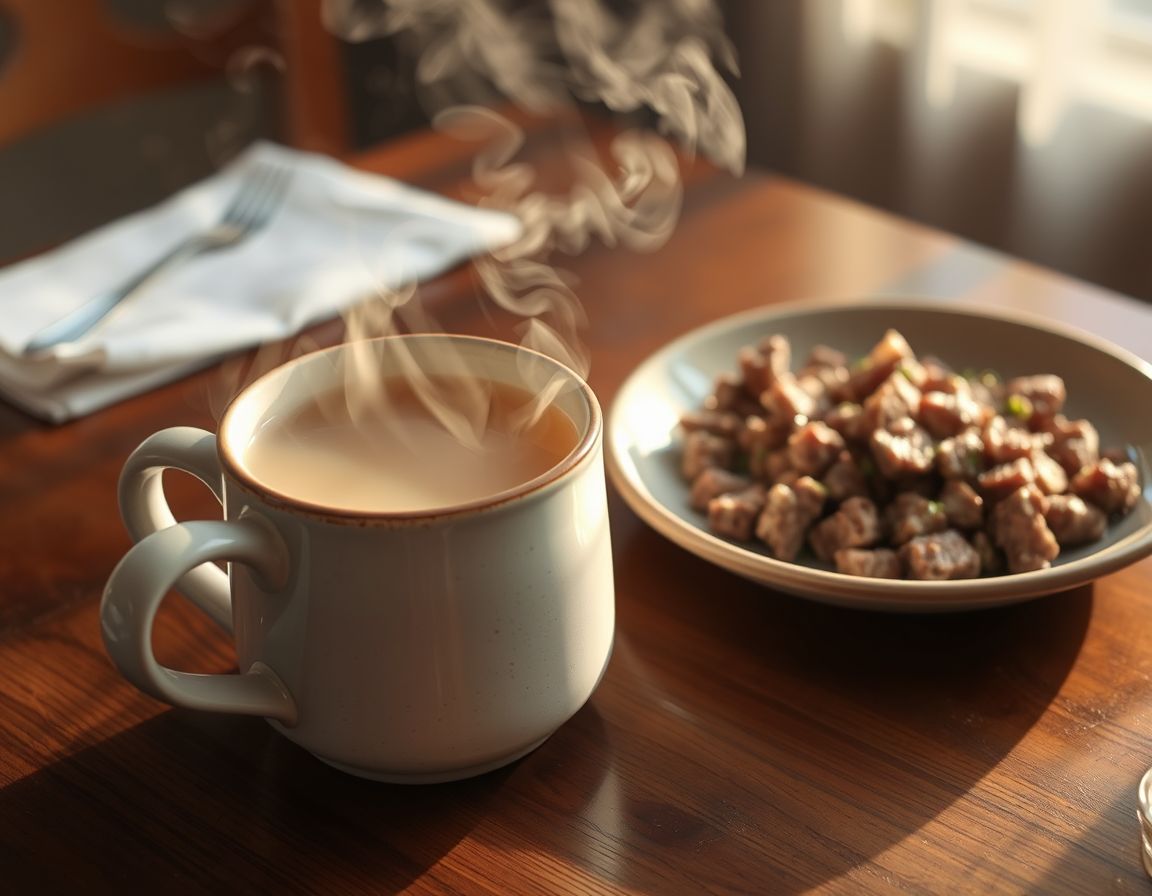
Short answer: yes, bone broth has a real place on carnivore, but not the one it usually gets sold as. It's a genuinely useful food when your digestion is struggling, when your appetite has disappeared, or when you need salt and warm fluid in a form your stomach will accept. It is not a protein source, and it is not a cure for anything.
That distinction matters more than it sounds. I've watched people swap real meals for broth for a week because they read it heals the gut, then wonder why they feel weak, cold, and flat. The broth wasn't the problem. The missing 60 grams of protein was.
What's actually in the cup
Bone broth is water, minerals, gelatin, and free amino acids pulled out of bone and connective tissue over a long simmer. The star is glycine, along with proline and hydroxyproline. Those are the building blocks of collagen, and they're the ones most people eating muscle meat get the least of.
Here's the part that gets glossed over. Collagen protein is incomplete. It's very low in tryptophan and short on other essential amino acids, so your body can't use it to hold onto muscle the way it uses beef or eggs. A cup of homemade broth might show 6 to 10 grams of protein on paper. Don't count it toward your daily total. It's a bonus, not a building block.
The mineral content is also more modest than the marketing suggests, and it swings a lot between batches depending on your bones and simmer time. The one mineral you control precisely is the salt you add yourself.
When broth genuinely earns a place in your day
Solid food isn't going in. This is the clearest use. Post-stomach-bug, mid-flare, or during the first ugly week of transition when everything feels heavy. Warm salted broth is easy to swallow, asks almost nothing of your digestion, and keeps something in your system while things settle.
Your appetite has genuinely vanished. This happens a lot in the first month, especially for women over 50, and it also happens with age on its own. Broth won't fix low appetite, but it gets you started. Many people find that half a cup of hot broth wakes up their hunger enough to eat the steak sitting on the plate.
You need sodium and you're sick of choking down salt water. A well-salted mug of broth is one of the most pleasant ways to get sodium in. Our position on the numbers hasn't changed: most adults on carnivore do well on 3 to 5 grams of sodium a day, and 1 teaspoon of salt gives you about 2.3 grams of that. A cup of broth with a quarter teaspoon of salt stirred in contributes meaningfully. If cramps, headaches, or 3am waking are your complaints, a small salty mug in the evening is a fine place to put some of it. I go deeper on the whole picture in why most people on carnivore run low on electrolytes.
You're recovering. Surgery, illness, a sore joint or tendon. The glycine and collagen amino acids are relevant here, and the research on collagen for connective tissue is cautiously encouraging. Supportive, not curative.
What broth does not do
It doesn't heal your gut by itself. Most of what people credit to broth on carnivore comes from what they removed, not what they added. I wrote about that mechanism in the carnivore gut health paradox, and it's worth reading before you spend $40 a week on broth expecting it to do the work.
It doesn't replace meals or build muscle. It won't cover a protein gap, and it isn't a weight loss tool. It also isn't required. Plenty of people do beautifully having never made a pot of it.
How to bridge without letting protein collapse
This is the whole game. Broth is a bridge, not an island.
- Set a floor and defend it. Most readers do well at 0.8 to 1.0 grams of protein per pound of goal body weight, in 30 to 40 gram servings per meal. That per-meal number gets more important after 50, not less. Here's the full breakdown on protein needs. If you want a starting point for your own numbers, the free macro calculator will give you one in about a minute.
- Pair it, don't substitute it. Broth alongside two eggs. Broth alongside four ounces of ground beef. Never broth instead of either.
- Use the easiest protein you can tolerate while you're in the rough patch. Slow-cooked ground beef, eggs cooked soft, poached fish, tender pot roast. Steak can wait.
- Give it a time limit. If broth is still carrying a third of your day after a week, that's not a bridge anymore.
Making it actually gel
If your broth comes out thin, you used the wrong parts. Gelatin comes from joints and skin, not marrow bones. Knuckles, oxtail, feet, necks, and wings do the work.
Some people swear by chicken feet, and they're right that nothing gels harder. Ask your butcher counter to order them, since many will and they're cheap. Asian and Latin grocers usually stock them already. For pastured ones, a farmers market poultry vendor is your best bet, and around here in Whistler that's how I get mine, frozen by the bag. Six or eight feet in a regular pot will turn it to jelly in the fridge.
If you take medication
Broth is a salt delivery system, and salt isn't neutral for everyone. If you're on blood pressure medication, a diuretic, or you have a kidney or heart diagnosis, the general sodium ranges above are not your instructions. Ask your prescriber how much sodium is right for you, and bring your actual intake, not a guess. Medication use and diagnosed conditions require professional medical management. Do not alter your treatment plan based on general information.
The short version
Broth is a good tool with a small job. Use it when eating is hard, when your appetite is gone, when you're recovering, or when you need sodium in a form you'll actually enjoy. Keep the protein where it belongs, and let broth go back to being a nice mug of something warm instead of a project.
I'm not a doctor. I've researched this deeply and worked with many people, but I'm not your doctor. If you have health conditions, take medications, or need specific guidance, talk to someone who knows your full medical picture. Everything I write is educational based on research and what I've seen work. Your situation might be different.