
This post may contain affiliate links. For educational purposes only, not medical advice. Details
Start here: he's not arguing with you, he's scared for you
Okay so your husband saw your plate of steak and eggs and said some version of "that can't be good for your heart." And now you're trying to figure out how to explain carnivore to someone who thinks it's going to hurt you. Here's the short answer, and it's probably not what you expected: don't explain the diet. Explain the plan.
What actually lands is this. Tell him you're doing it for a set stretch of time, that you're getting bloodwork before and after, and that if the numbers go somewhere your doctor doesn't like, you'll change course. That's it. You don't need studies, you don't need a podcast link, and you definitely don't need to win. You need him to know there's a referee and a stopping point. Most worried partners relax the second they hear those two things, because what they're actually afraid of is you disappearing into something with no brakes on it.
What he's really saying
When a partner says "this diet is unhealthy," he's usually not making a nutrition claim. He's making an emotional one. Underneath it is something more like "I don't want to lose you, and I don't understand what you're doing."
Real talk: that's a reasonable thing to feel. He grew up hearing that red meat and eggs clog your arteries. That message ran unopposed for forty years. It was in the commercials, on the cereal boxes, in his dad's cardiologist's office. You've spent the last three months reading and watching and thinking about this. He's had one conversation about it, at dinner, while you were already eating.
The gap isn't intelligence. It's exposure. You've had a hundred hours with this idea and he's had twenty minutes.
Why the cholesterol thing hits so hard
Everyone talks about the cholesterol argument like it's a debate. In most marriages it isn't. It's a memory.
Ask him sometime, gently, if anyone in his family had a heart attack. A lot of the time you'll find out his uncle went at 58, or his mother spent a decade on statins and talked about it constantly. When he sees a plate of ribeye, he isn't seeing your food. He's seeing a hospital waiting room he already sat in once.
You cannot argue someone out of a memory. You also can't argue someone out of a worry by producing a better citation than theirs. I've watched people in this community try for years. It goes nowhere, and it turns dinner into a courtroom.
The three things that actually calm a worried partner
1. Labs, before and after. This is the single most useful move available to you, and it does double duty. It gives your doctor real information, and it hands your husband something to hold onto. Get a full panel before you start, or as close to the start as you can manage. Then get another one at three or six months, whatever your doctor suggests.
The point isn't that the numbers will vindicate you. They might not. Some people's numbers move in directions that need a real conversation with a real physician. The point is that you've made your doctor the referee instead of the internet. That's a genuinely different posture, and worried people can feel the difference.
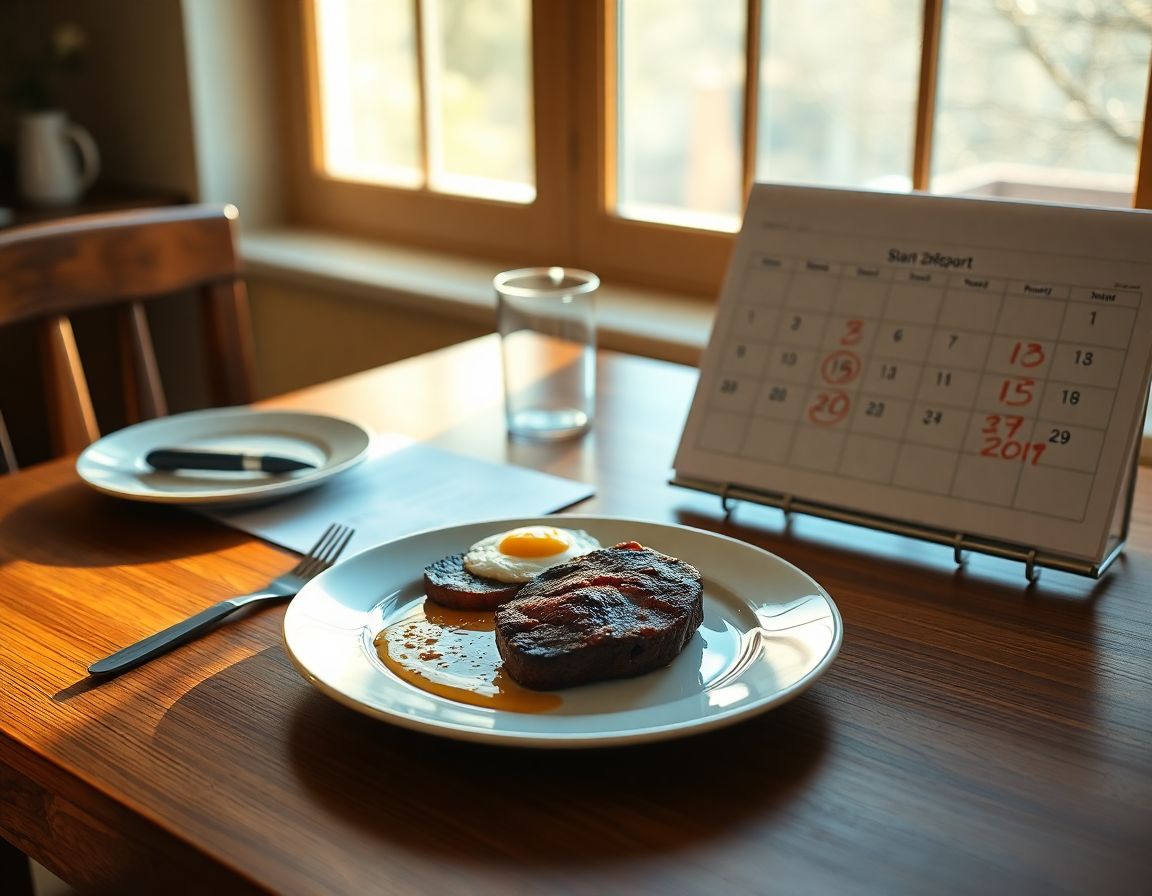
2. A time box. "I'm doing this for 90 days" is a completely different sentence than "this is how I eat now." The first one sounds like an experiment. The second one sounds like a door closing.
Give him an end date. Tell him you'll sit down together when you hit it, look at the labs, look at how you feel, and decide. You can always renew. But an open-ended commitment feels like something you're doing to the marriage, and a 90-day trial feels like something he can wait out with you.
3. Let him see you, not hear you. This is the one nobody wants to hear, because it's slow. But it's the one that works.
If you start sleeping through the night, he'll notice. If your knees stop hurting on the stairs, he'll notice. If you're not wrecked at 3pm anymore, he'll notice that too, probably before you do. Six weeks of him watching you have more energy does more than any conversation you could have this week. Let the change do the talking.
The fights to skip entirely
Some arguments have no bottom. Here are the ones I'd walk away from every time:
- Dueling studies. He has a headline, you have a paper. Nobody wins, and both of you leave angrier than you started.
- His doctor versus your podcast host. This one gets personal fast, and it turns a health conversation into a loyalty test.
- Defending the whole diet as a concept. You're not the spokesperson for carnivore. You're one woman trying to feel better. Keep the conversation about you.
- Anything that starts with "you don't support me." Maybe true, maybe not, but the second it's on the table you're fighting about the marriage instead of the food.
One more, and this is the one I see wreck the most households. Don't try to convert him. He didn't sign up for this. If he asks questions, answer them. If he doesn't, cook your food and let him cook his. Most of the tension I see in this community isn't about the diet at all. It's one person quietly waiting for the other to admit they were right.
A few practical things that lower the temperature
If knowing your actual numbers would help you feel steadier going into that conversation, our free macro calculator is at /calculator.html. Some people find that having a plan on paper, rather than a vibe, makes them sound a lot less like they're winging it.
Also worth saying: if it's not just your husband but the whole extended family raising eyebrows, that's a different problem with a different fix. We wrote about that one separately in being the only carnivore at family dinner. And if it's reached the point where friends and coworkers are chiming in too, we went through handling that kind of social pressure without turning every meal into a debate.
And keep the food boring at home for a while. Steak, salt, done. There's something about a plate that looks like normal food that makes the whole thing feel less like a phase.
I'm not a doctor. I'm someone who's deep in this community and reads everything people are trying. Nothing here is medical advice, and I'm not making any claim about what this way of eating does to cholesterol or heart health, because that's genuinely not my lane. If you have a diagnosed condition or you're on medication, your doctor needs to be involved in any diet change. That's not a formality. That's the whole point of this post.
The thing worth remembering
Your husband being worried is not your husband being an obstacle. He's paying attention to you. That's a good problem to have, and a lot of people in this community are eating alone with nobody asking.
Give him a timeline, give him the labs, and give him a few months of watching you feel better. That's a fair deal, and most people take it.