
This post may contain affiliate links. For educational purposes only, not medical advice. Details
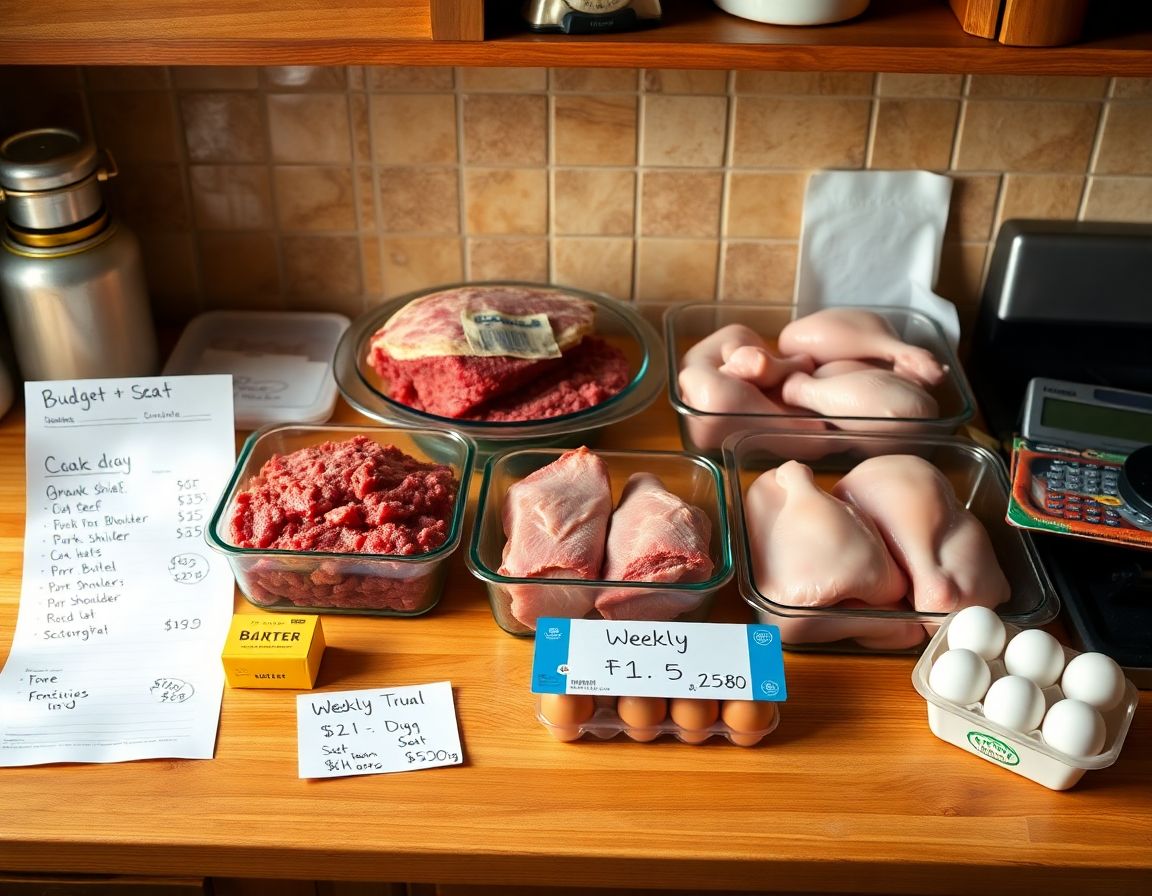
The short answer: five cuts, about $70, seven days of food
If you want to eat carnivore on a budget, you don't need a specialty butcher or a chest freezer full of grass-fed ribeye. You need five cuts that go a long way: chuck roast, ground beef, pork shoulder, chicken thighs, and eggs. That's the whole grocery list. Add butter and a pound of bacon and you're feeding one person for a week on roughly $70, which works out to about $10 a day.
Here's the honest version of that list with approximate US supermarket prices. Prices swing a lot by region and by store, so treat these as a starting point, not a promise. Meat runs cheaper in the Midwest than in coastal cities, and sale cycles change everything.
- Chuck roast, 3 lb at roughly $5 to $7 per lb: about $18
- Ground beef, 80/20, 3 lb at roughly $4 to $6 per lb: about $15
- Pork shoulder (butt), 4 lb at roughly $2 to $3 per lb: about $10
- Chicken thighs, bone-in, 3 lb at roughly $2 to $3 per lb: about $7
- Eggs, 2 dozen at roughly $4 per dozen: about $8
- Bacon, 1 lb: about $6
- Butter, 1 lb: about $5
That's roughly $69 and about 14 pounds of food. For most women in the 45 to 70 range eating for weight loss, that's a comfortable week with leftovers. If you're cooking for two, you're not doubling everything. Bump the chuck and the pork shoulder up a couple pounds and you're closer to $95 for the pair, which is still under $7 per person per day.
Why these five cuts and not the pretty ones
The cheap cuts are cheap because they're tough. Chuck and pork shoulder come from muscles the animal actually used, so they're full of connective tissue. Cook them fast and they're like shoe leather. Cook them slow and that connective tissue melts into gelatin and the meat falls apart.
That's the whole trick. You're not buying worse meat. You're buying meat that needs three hours of low heat instead of eight minutes in a pan. And most of those three hours you're not even in the kitchen.
Chicken thighs deserve a mention too. Bone-in, skin-on thighs are usually a third the price of chicken breast, they're harder to overcook, and the skin crisps up beautifully. Breast meat is the expensive, dry, disappointing option. Skip it.
A rough seven-day plan
You don't need a plan for every meal. You need two or three cooking sessions and a fridge that's already full.
Sunday: Salt the chuck roast heavily, put it in a covered pot at 275°F for about three hours. While that's going, roast the whole tray of chicken thighs at 400°F for 40 minutes. Two proteins done, one oven.
Monday through Wednesday: Eggs and bacon in the morning. Chuck roast or chicken thighs for your main meal. If you're hungry in the evening, two more eggs fried in butter.
Wednesday night: Salt the pork shoulder and cook it low, around 275°F for four to five hours, until it shreds with a fork. That's a big batch. Pull it, portion it, and you've covered the back half of the week.
Thursday through Sunday: Pulled pork, ground beef patties, and whatever's left of the chicken. Ground beef is your fast option. Six minutes in a hot pan and dinner's done on the nights you don't want to think.
If you're not sure how much meat you actually need per day, guessing high gets expensive fast and guessing low leaves you hungry by 3 p.m. The free macro calculator at /calculator.html gives you a starting number based on your body and your goal, which makes the shopping list a lot less of a coin flip.
The three habits that cut the bill most
The list above is the floor. These three habits are what keep you there week after week.
1. Buy on markdown. Every grocery store discounts meat that's close to its sell-by date, usually 30 to 50 percent off. Most stores do this in the morning, before the day's fresh stock goes out. Ask the person behind the meat counter when they mark down. They'll tell you, and then you know to shop Tuesday at 8 a.m. instead of Saturday at noon.
Sell-by is not a safety date. It's a stocking date. Meat marked down today is fine cooked today or frozen today.
2. Cook tough cuts low and slow. This is what makes cheap meat taste like expensive meat. A Dutch oven, a slow cooker, or a covered pan in a low oven all do the same job. Salt it, cover it, leave it alone. The one mistake people make is cooking it hot to save time, which does the opposite of what they want.
It also saves money in a second way. Slow cooking a 4-pound pork shoulder once takes about the same effort as cooking a single pork chop, but it feeds you four times.
3. Freeze in meal-size portions. Not one big block. Portions you'll actually thaw. When ground beef goes on sale, buy five pounds, split it into one-pound bags, press them flat, and freeze them. Flat bags thaw in a bowl of cool water in about 20 minutes.
Same with cooked food. Portion the pulled pork into single servings before it goes in the freezer. A meal you can grab and heat is the difference between sticking with this and ordering takeout on a tired Tuesday.
Two things that quietly cost you money
Buying pre-cut, pre-marinated, or pre-cooked anything. You're paying someone else $4 a pound to do 10 minutes of work.
And throwing food out. Budget carnivore falls apart when good meat goes bad in the back of the fridge. Cook it or freeze it within two or three days of buying. That single habit probably saves more than any coupon ever will.
Start with one week
Don't rebuild your whole kitchen. Buy the seven items above, do one Sunday cooking session, and see how the week goes. Track what you actually ate and what got wasted. Adjust the amounts next week.
Most people find they were overbuying on variety and underbuying on the two or three things they actually like. That's the real savings. Not the coupons, just knowing what you eat.
I'm not a doctor. I've coached people through this and eaten this way myself, but I'm not your doctor. If you have health issues or take medication, especially blood pressure or diabetes medication, talk to someone qualified before you make a big change to how you eat. What works for one person doesn't always work for the next one.