This post may contain affiliate links. For educational purposes only, not medical advice. Details
Okay, so your feed is basically a meat locker now
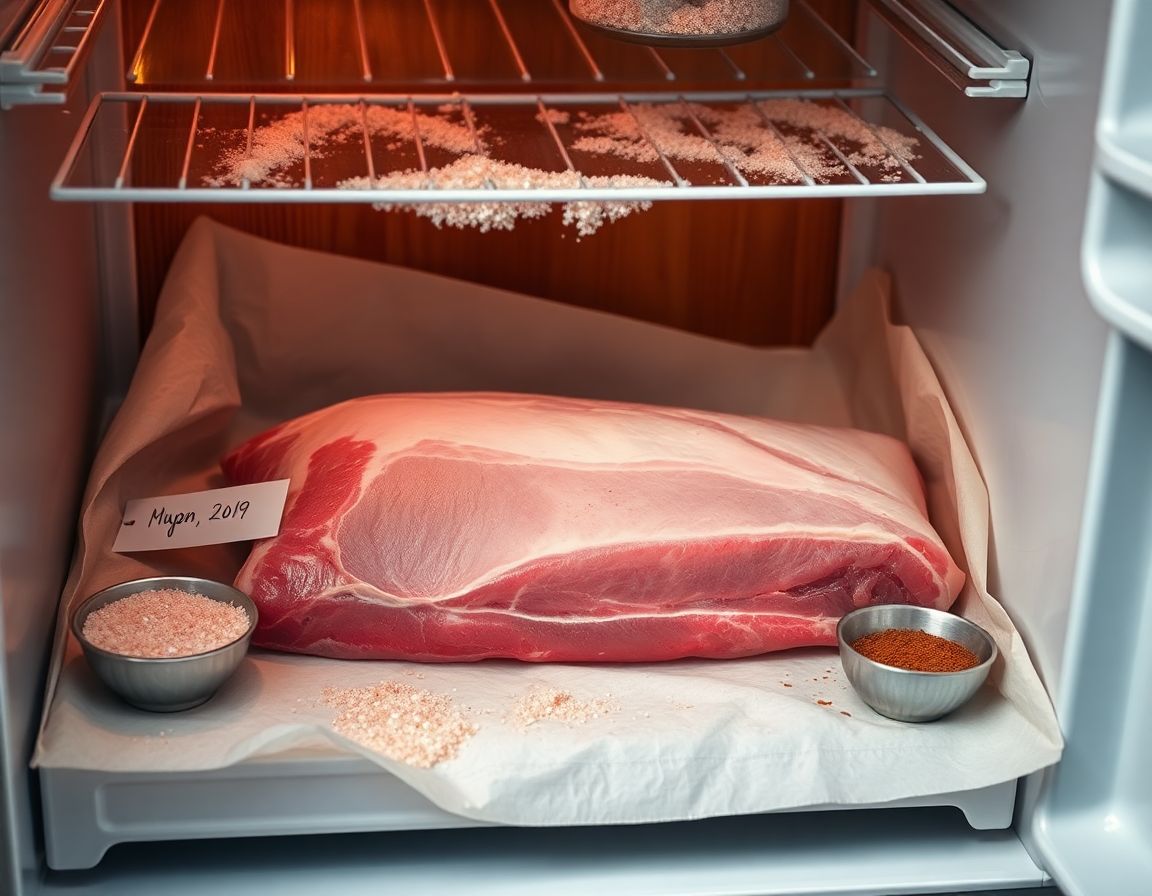
Somewhere between March and now, half the carnivore internet decided to become charcutiers. My saved posts folder is 80% pork belly. Somebody in a Discord I'm in posted a picture of a biltong box he built out of a plastic storage tote and a computer fan, and it got more engagement than any actual health discussion that week.
Real talk: I didn't see this one coming. I figured the DIY wave would be tallow or bone broth. Instead it's bacon, biltong, and jerky, and it's everywhere. r/carnivore has a home-curing post near the top most days now. YouTube's pushing me hour-long videos of guys narrating a pork belly's nine-day nap in a fridge.
So let's talk about why everyone's doing this, and what goes sideways the first time. Because a lot goes sideways the first time.
Reason one: people got tired of reading labels
Here's the thing. If you've spent any time in this community, you've watched somebody flip a bacon package over and start listing off ingredients like they're reading a rap sheet. Sugar. Maple syrup. "Natural flavors." Celery powder in the uncured stuff, which is just nitrates wearing a hat.
None of that is necessarily the villain people make it out to be. But the frustration is real, and it's not irrational. If your whole approach is "meat, salt, water," and then your bacon has six ingredients you didn't sign up for, that's annoying. Especially when you're paying a premium for it.
Curing your own bacon means you control the whole list. Pork belly, salt, maybe curing salt, maybe pepper. Done. That's the appeal, and I get it completely.
Biltong's the same story with a different accent. The South African folks in the community have been quietly making it forever, and now everyone else caught on. Beef, vinegar, salt, coriander, black pepper. Air-dried, no heat. It ends up tasting like beef concentrated into a snack, and you know exactly what's in it.
Reason two: the math actually works
I ran the numbers in Whistler, which is not a cheap place to buy anything. Pork belly at my butcher runs about $9 a pound. Decent no-sugar bacon at the grocery store is $14 to $18 a pound depending on the week. That's a real gap.
Beef is even more dramatic. A whole eye of round for biltong or jerky costs a fraction of what you'd pay for the same weight in bagged snack meat. And bagged jerky is usually sweetened anyway, so you're paying more for a product you'd have to reject.
The catch nobody mentions in the excited posts: drying meat removes a lot of water. Three pounds of beef becomes about one pound of biltong. So your cost per finished pound isn't as low as your cost per raw pound, and people get surprised by that. It's still cheaper. Just not the 70% savings someone claimed in a thread I read last month.
Reason three: honestly, it's fun
I'm not going to pretend this is purely practical. There's something satisfying about pulling a slab of bacon out of your fridge that you made. People post those photos with the energy of someone showing off a newborn.
And it's a low-stakes hobby that fits the diet instead of fighting it. Most food hobbies are baking or fermenting or cocktails. This one's just meat. Of course the community grabbed it with both hands.
What actually goes wrong the first time
I've been collecting the failure posts, because those are more useful than the wins. Here's the pattern.
- Salt math. This is the big one. People eyeball the salt, and either the meat comes out inedibly salty or it doesn't cure properly. Curing is a ratio by weight, not a handful. You need a kitchen scale. Not optional.
- Confusing curing salt with regular salt. Pink curing salt (sodium nitrite, sometimes called Prague Powder #1) is not the same thing as pink Himalayan salt, and mixing those up is genuinely dangerous. I've seen this exact mistake in a comment thread twice. Curing salt is potent and has strict usage limits.
- Skipping the cure entirely. Some people go nitrite-free on principle, which is a legitimate choice, but it changes the rules. Nitrite-free bacon needs to be treated like fresh pork and eaten quickly. It won't keep the way cured bacon does.
- Humidity problems. Biltong needs airflow and low humidity. People in humid places hang beef in their kitchen, come back in three days, and find fuzz. Then they post asking if it's "the good mold." It usually isn't.
- Case hardening. Drying too fast seals the outside while the inside stays wet. Looks done, isn't done. This is the sneaky one because it doesn't look like a failure.
- Impatience. Seven days feels like forever when you've got a pork belly sitting in your fridge. People pull it on day four and wonder why the middle tastes like raw pork. Because it is raw pork.
If you want to try it
Start with biltong or jerky, not bacon. The turnaround is faster, the failure is cheaper, and you learn what properly dried meat feels like before you commit ten days to a pork belly.
Buy a scale. Read an actual curing guide from someone who does this professionally, not a Reddit comment. Follow the ratios exactly the first three times before you start improvising with spices and timing.
And if something smells wrong, looks slimy, or grows something you can't identify, throw it out. Every experienced person in these threads says the same thing, and every beginner tries to talk themselves out of it. Meat that's gone bad isn't a puzzle to solve. It's compost.
Food safety with cured meats isn't a vibes-based practice. Botulism is rare but serious, and it's the whole reason curing salts exist in the first place. If you're going nitrite-free, understand what you're trading away and store accordingly. When in doubt, look up guidance from a food safety authority, not a comment section.
I'm not the only one who finds this trend weirdly wholesome. It's people getting more involved with what they eat instead of less. That's a good instinct, even when the first batch is a disaster.
Mine was. I made jerky that could've been used as a shoe sole. Second batch was fine. Third was actually good. That's usually how it goes.
Not a doctor. I'm just someone who's deep in the community and reads everything. Take all health stuff with a grain of salt (pun fully intended). I can tell you what people are trying and what's trending, but you've got to make your own calls. And if you're on medications or managing a diagnosed condition, especially anything involving sodium or blood pressure, talk to your healthcare provider before loading up on cured meat.