This post may contain affiliate links. For educational purposes only, not medical advice. Details
Okay, So Everyone's Talking About Raw Meat Right Now
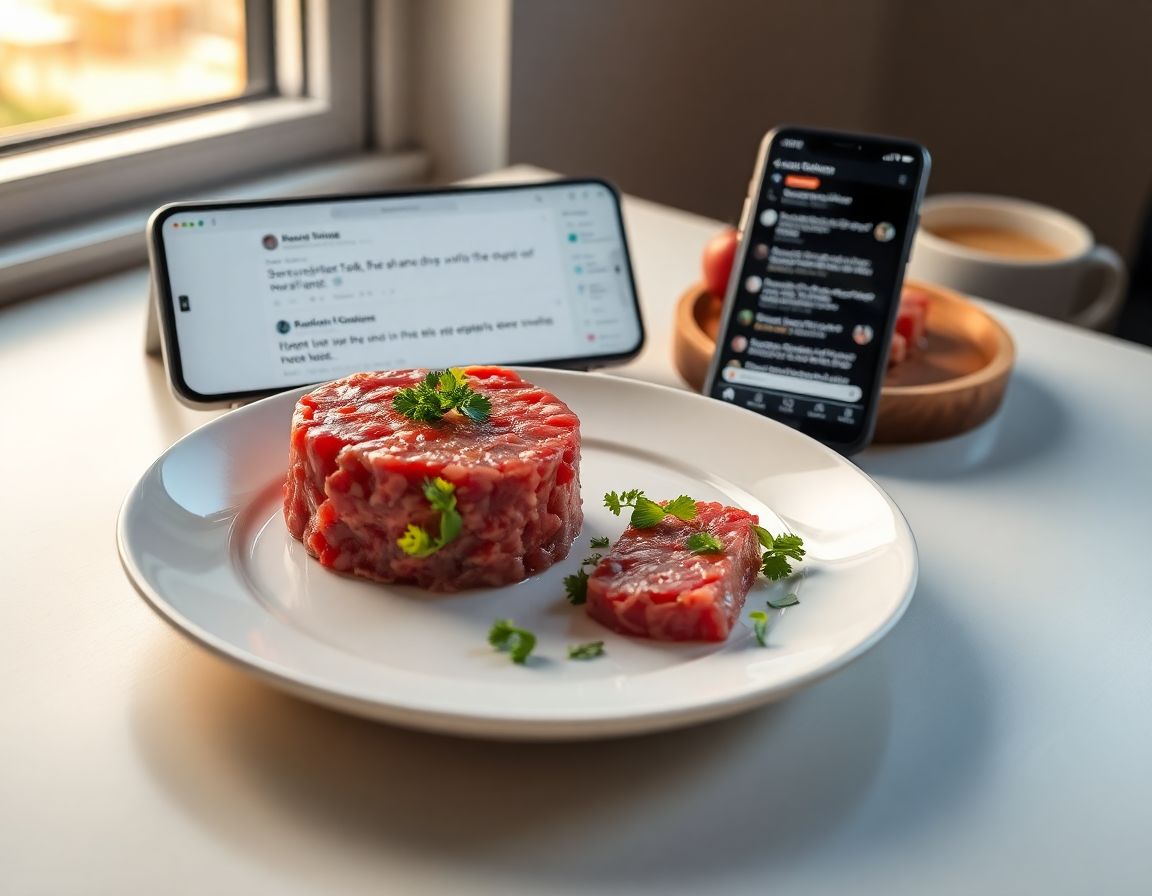
If you've spent any time in r/carnivore this week, you've probably seen it. The raw meat posts are everywhere. People sharing photos of their raw beef. Folks asking whether they should try it. And a comment section that is absolutely not holding back.
This isn't brand new territory for the carnivore community. But something shifted in the last few months. The conversations got louder, the posts got more frequent, and the debate got a lot more intense. Here's what's actually happening.
What the Raw Meat Advocates Are Saying
The people pushing for raw meat eating are coming from a pretty specific place. Their argument is ancestral. Humans ate raw meat for hundreds of thousands of years before fire. Cooking destroys enzymes. It denatures proteins. It changes the nutritional profile of the food in ways that might not be good for us.
One of the most upvoted comments from a recent thread put it this way:
"We're the only animals on the planet that cook our food. Every other carnivore eats raw. My digestion improved more in two weeks of raw beef than it did in six months of cooked carnivore."
The bioavailability argument comes up a lot too. The idea is that raw animal foods, especially organ meats, contain nutrients in forms that are more absorbable before heat gets involved. There's also a real community of people who say they've had health wins they couldn't get any other way. People with autoimmune conditions, people who tried every elimination diet. These testimonials drive a lot of the interest.
What the Other Side Is Saying
The people pushing back aren't being quiet about it either. And their arguments aren't just "ew, gross." They're pointing at actual data.
Salmonella. E. coli O157:H7. Campylobacter. Listeria. These are real pathogens that live in raw meat, and they cause real illness. The CDC tracks foodborne illness outbreaks every year, and raw or undercooked meat shows up consistently as a major source.
One commenter who said they work in food safety wrote:
"I support carnivore completely. But the raw meat trend worries me. Healthy adults might be fine most of the time. But you're rolling the dice, and the consequences of losing aren't just a bad stomach day. We're talking about HUS, organ failure, hospitalization."
The counterargument to the ancestral eating point is also pretty sharp. Yes, our ancestors ate raw meat. They also had a much shorter average lifespan, didn't have centralized slaughterhouses processing thousands of animals per day, and weren't dealing with modern bacterial strains that have adapted to industrial agriculture.
There's also a sourcing question that keeps coming up. The raw advocates say you need to source from high-quality farms. The skeptics point out that most people don't have access to that, and even high-quality sourcing doesn't eliminate pathogen risk entirely.
The Ground Rules People Are Actually Using
Even among people who are trying raw meat, there's a specific set of practices that get talked about as the baseline for doing it more carefully.
- Source matters a lot. Almost everyone on the pro-raw side says you need to know your farm. Direct from small-scale regenerative operations, not grocery store meat.
- Beef over other meats. The community strongly discourages raw pork or raw chicken. Beef, especially whole muscle cuts, is treated as lower risk.
- Fresh is non-negotiable. Not frozen-and-thawed multiple times, not sitting in the fridge for a week. As close to the source as possible.
- Start slow. A recurring recommendation is to start with small amounts and see how your body responds before going further.
None of this eliminates the risk. The skeptics are quick to say that. But it gives you a picture of how the people actually doing it are thinking about it.
The Creator Angle
A few bigger voices in the carnivore space have been posting about raw meat recently, and that's definitely contributing to the spike in discussion. When someone with a large platform starts eating raw liver on camera, it moves through the community fast.
What's notable is that even some creators who support the practice have started adding more nuance. There's been pushback from within the pro-carnivore space itself, with people saying they don't want the diet to become associated with practices that could hurt people or invite more regulatory scrutiny on the broader carnivore approach.
That tension is real. The community has worked hard to get carnivore taken seriously as a legitimate dietary approach. Some people worry that the raw meat trend could make that harder.
Where the Community Is Landing
Honestly, it's not landing anywhere clean. You've got people with genuine health improvements they attribute to raw meat. You've got food safety professionals saying the risk is real. You've got sourcing advocates saying the conversation can't happen without talking about where the meat comes from.
The thread that sparked this wave had over 400 comments. The upvote ratios on pro-raw versus skeptical comments were almost exactly even. People are genuinely split.
What You Should Actually Know
Raw meat eating exists on a spectrum of risk. That risk is higher for some people than others, specifically pregnant women, immunocompromised individuals, young children, and older adults.
The ancestral argument has some merit as a philosophical framework, but it doesn't automatically override modern food safety data. And the food safety data doesn't automatically override people's actual lived experiences with their own health.
I'm not a doctor, and I'm definitely not a food safety expert. I'm someone who watches this community closely and reports back on what's actually being said. Make your own call, talk to people you trust, and if you're in any of the higher-risk categories, this is genuinely a conversation worth having with a healthcare provider before you experiment.
But if you want to understand what carnivore people are actually debating right now? This is it. And it's not going quiet anytime soon.